
Understanding the fundamental difference between discipline and punishment is crucial for parents, educators, and anyone invested in personal development. While these terms are often used interchangeably, they represent vastly different approaches to behavior modification and character development. This comprehensive guide explores why discipline builds lasting character while punishment often falls short.
Understanding the Core Difference Between Discipline and Punishment
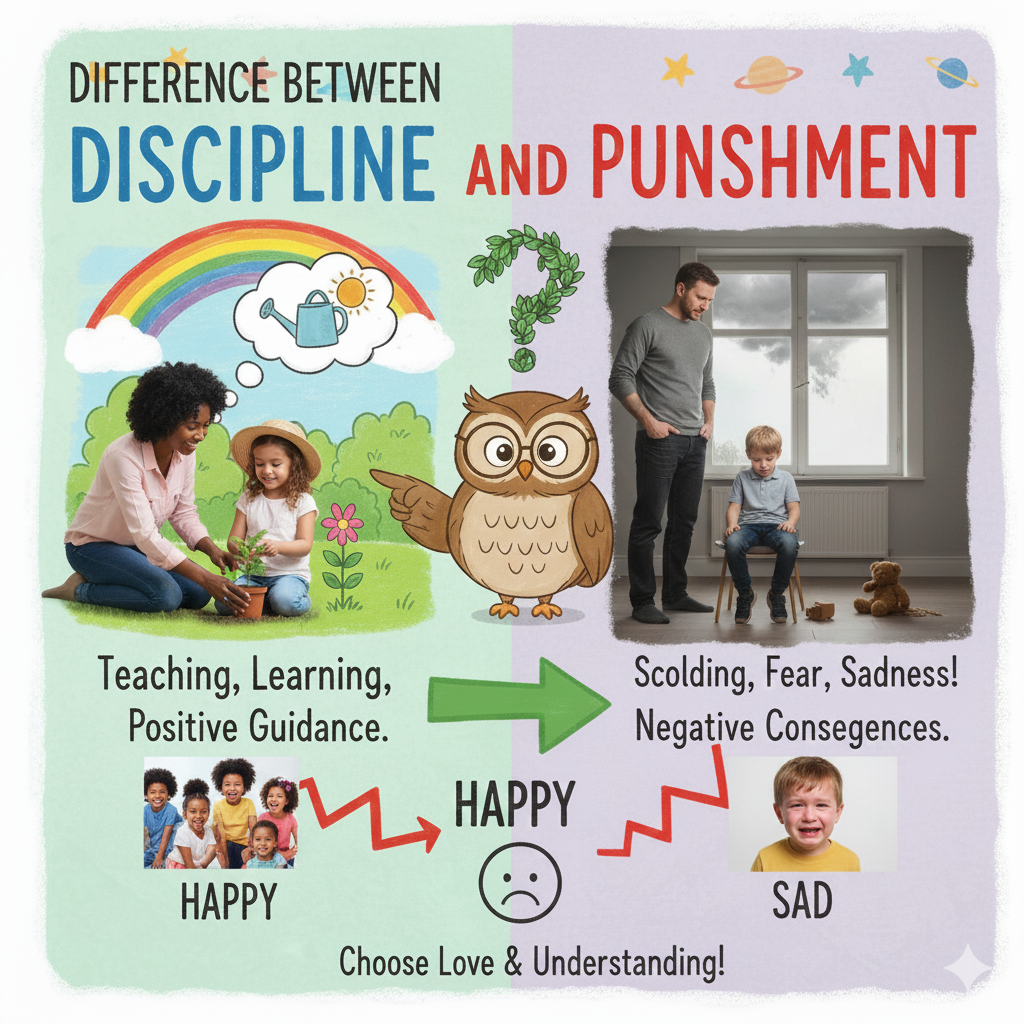
The distinction between discipline and punishment lies not just in semantics but in philosophy and outcomes. Discipline derives from the Latin word “disciplina,” meaning teaching or learning. It focuses on guiding individuals toward self-control and better decision-making. Punishment, conversely, emphasizes penalizing wrongdoing with the primary goal of causing discomfort or pain to deter future misbehavior.
Discipline is forward-looking and educational, while punishment is backward-looking and retributive. When we discipline, we teach. When we punish, we simply penalize. This fundamental difference shapes how individuals respond, learn, and ultimately develop their character.
The Psychology Behind Positive Discipline and Character Building
Research in developmental psychology consistently demonstrates that positive discipline techniques foster intrinsic motivation and moral development. When children or individuals experience discipline rather than punishment, their brains process the experience differently. The prefrontal cortex, responsible for decision-making and self-regulation, engages more actively with disciplinary approaches that encourage reflection and understanding.
Positive discipline creates neural pathways that support self-control, empathy, and problem-solving skills. These are the building blocks of character. The approach respects human dignity while simultaneously holding individuals accountable, creating an environment where personal growth becomes possible.
Studies show that children raised with consistent discipline develop stronger emotional intelligence, better conflict resolution skills, and higher self-esteem compared to those primarily subjected to punitive measures.
Why Punishment-Based Parenting Fails to Build Character
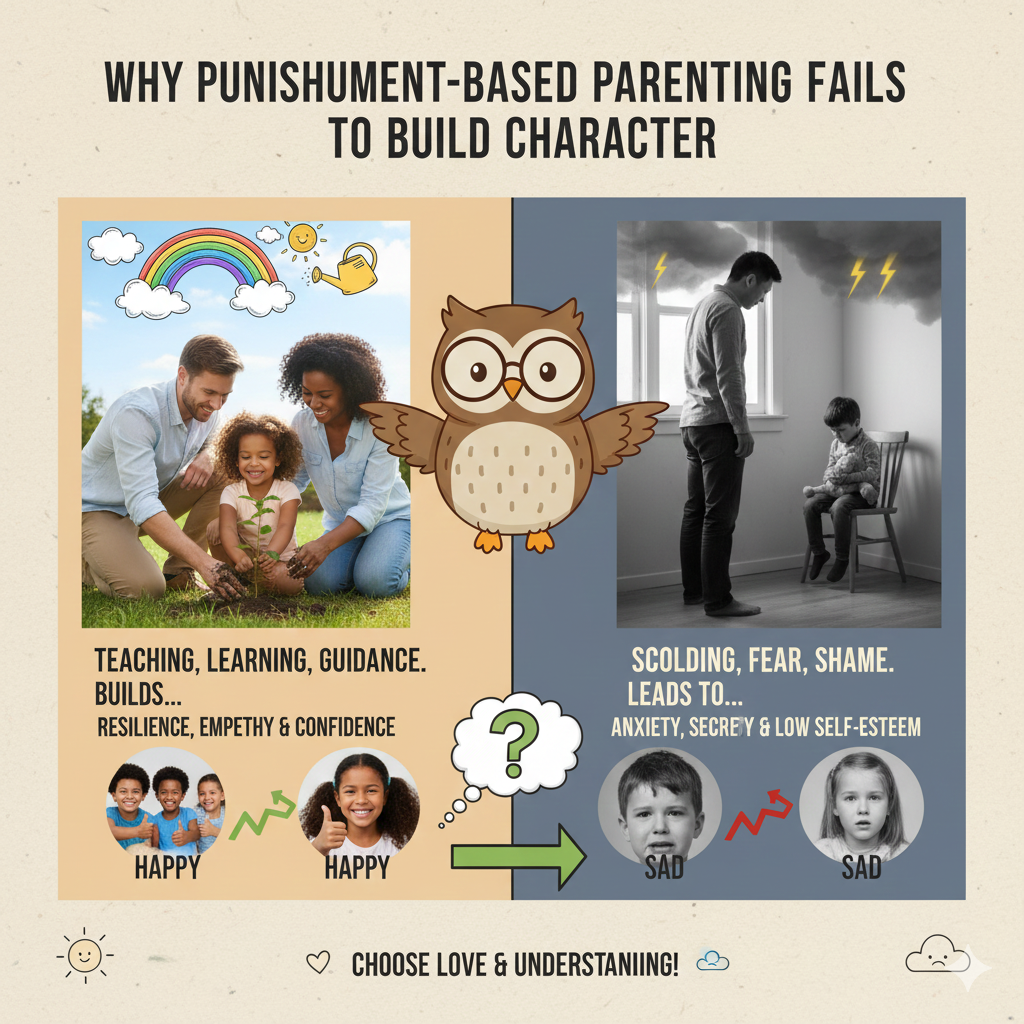
Punishment-based parenting often produces compliance through fear rather than understanding. While it may stop unwanted behavior in the short term, it fails to teach the underlying lessons necessary for character development. Children learn to avoid getting caught rather than understanding why certain behaviors are problematic.
The negative effects of punishment include increased aggression, damaged parent-child relationships, heightened anxiety, and reduced self-worth. When punishment becomes the primary tool, children may become either overly submissive or rebellious, neither of which represents healthy character development.
Furthermore, harsh punishment can activate the amygdala, the brain’s fear center, triggering a fight-or-flight response that actually impairs learning. In this state, the child is physiologically incapable of the reflective thinking necessary for genuine character growth.
Effective Discipline Strategies for Parents and Educators
Implementing effective discipline requires intentionality and consistency. Here are evidence-based strategies that build character:
Natural and Logical Consequences: Allow children to experience the natural results of their actions when safe to do so. If a child refuses to wear a coat, they feel cold. These experiences teach cause and effect without shaming.
Clear Expectations and Boundaries: Establish age-appropriate rules with explanations for why they exist. When children understand the reasoning, they’re more likely to internalize values rather than simply follow rules.
Collaborative Problem-Solving: When misbehavior occurs, engage the child in finding solutions. Ask questions like “What could you do differently next time?” This approach develops critical thinking and personal responsibility.
Time-In Over Time-Out: Instead of isolation, use “time-in” where you stay with the child to help them process emotions and understand their behavior. This builds emotional regulation skills.
Consistent Follow-Through: Discipline requires consistency. When consequences are predictable and fairly applied, children develop a sense of security and understanding of boundaries.
The Long-Term Impact of Discipline on Child Development
Longitudinal studies reveal that children raised with disciplinary approaches rather than punitive ones demonstrate significantly better outcomes across multiple domains. These children show stronger academic performance, healthier relationships, and better mental health into adulthood.
Character traits developed through discipline include resilience, self-discipline, empathy, responsibility, and integrity. These aren’t taught through fear or pain but through guidance, modeling, and consistent expectations paired with love and respect.
Adults who experienced discipline rather than punishment as children report higher life satisfaction, better stress management, and more successful careers. They learned not just to avoid bad behavior but to actively pursue good choices.
Teaching Self-Discipline and Self-Control Through Guidance
Self-discipline is the ultimate goal of external discipline. The purpose of guiding children’s behavior is to eventually make that guidance unnecessary. This happens when children internalize the values and reasoning behind expectations.
Teaching self-discipline involves gradually increasing autonomy while maintaining support. Young children need more direct guidance, but as they demonstrate understanding and capability, they earn more freedom to make decisions. This scaffolding approach respects developmental stages while promoting independence.
Modeling is crucial here. Children learn self-control by observing adults who demonstrate it. When parents manage their own emotions effectively, apologize when wrong, and show self-discipline in daily life, they provide a living curriculum in character development.
Behavior Modification Techniques That Respect Human Dignity
Effective behavior modification doesn’t require humiliation or physical pain. Techniques rooted in respect produce better outcomes and preserve the relationship between adult and child.
Positive Reinforcement: Acknowledging and rewarding desired behaviors is far more effective than only addressing negative ones. Catch children being good and specifically describe what you appreciate.
Redirection: For young children especially, simply redirecting attention to appropriate activities often prevents problems without confrontation.
Teaching Replacement Behaviors: Instead of just stopping unwanted behavior, teach what should be done instead. “Use gentle hands” is more instructive than “Stop hitting.”
Restorative Practices: When harm is done, focus on repairing relationships and making amends. This teaches accountability and empathy simultaneously.
Authoritative Parenting vs. Authoritarian Parenting Styles
Parenting research identifies authoritative parenting as the most effective style for character development. This approach combines high expectations with high responsiveness—clear rules paired with warmth and communication. It represents discipline at its best.
Authoritarian parenting, conversely, emphasizes obedience and punishment with little explanation or emotional support. This style produces compliance but not character. Children may behave out of fear but fail to develop internal moral compasses.
Authoritative parents explain their reasoning, listen to their children’s perspectives, and adjust expectations as children demonstrate maturity. They’re firm but kind, consistent but flexible when circumstances warrant. This balance teaches children that rules serve important purposes while respecting their growing autonomy.
The Role of Emotional Intelligence in Character Formation
Discipline naturally cultivates emotional intelligence, while punishment often suppresses it. When adults help children identify and manage emotions rather than simply demanding they “stop crying” or “calm down,” they build crucial life skills.
Emotional intelligence includes self-awareness, self-regulation, motivation, empathy, and social skills. Each component contributes to character. Disciplinary approaches that acknowledge feelings while guiding behavior strengthen all these areas.
Teaching children to recognize emotions in themselves and others, to delay gratification, and to consider multiple perspectives creates emotionally mature individuals. These capabilities are impossible to develop through punishment, which often requires suppressing authentic emotional responses.
Implementing Restorative Justice Practices in Schools and Homes
Restorative justice represents a paradigm shift from punishment to accountability through repair. When someone causes harm, instead of simply imposing consequences, restorative practices ask: Who was harmed? What are their needs? Whose obligation is it to meet those needs?
In schools, this might mean a student who spreads hurtful rumors sits down with the affected person to understand the impact and determine how to make amends. At home, a child who breaks a sibling’s toy works to repair or replace it while learning about respect for others’ property.
This approach teaches empathy, accountability, and problem-solving. It transforms mistakes into learning opportunities and strengthens community bonds rather than isolating offenders.
Building Intrinsic Motivation and Personal Responsibility
Perhaps the greatest difference between discipline and punishment is their impact on motivation. Punishment creates extrinsic motivation—behaving to avoid negative consequences. Discipline fosters intrinsic motivation—behaving because it aligns with personal values.
Children who develop intrinsic motivation make better choices even when no one is watching. They’ve internalized the reasons for good behavior rather than simply calculating whether they’ll get caught.
Building intrinsic motivation requires involving children in decision-making, allowing age-appropriate autonomy, connecting expectations to meaningful values, and acknowledging effort and growth rather than just outcomes. These practices help children see good behavior as something they choose, not something imposed upon them.
Common Mistakes Parents Make When Disciplining Children
Even well-intentioned parents sometimes undermine their disciplinary efforts. Common mistakes include:
Inconsistency: Allowing behavior sometimes but not others confuses children and prevents learning. Consistency is fundamental to effective discipline.
Empty Threats: Making threats you won’t follow through on teaches children to ignore your words. Every stated consequence should be one you’re willing and able to enforce.
Disciplining in Anger: When emotional, adults often react harshly rather than responding thoughtfully. Taking a moment to calm down produces better outcomes.
Expecting Too Much Too Soon: Developmental appropriateness matters. Expecting a two-year-old to sit still for an hour or a six-year-old to always remember their responsibilities sets everyone up for failure.
Focusing Only on Negatives: Children need to hear what they’re doing right, not just what they’re doing wrong. Positive feedback fuels continued growth.
Age-Appropriate Discipline Methods for Different Developmental Stages
Effective discipline adapts to developmental capabilities. What works for a toddler differs dramatically from what works for a teenager.
Toddlers (1-3 years): Simple, immediate consequences work best. Redirection and distraction are primary tools. Short explanations (“Hot! Hurt!”) paired with removing them from danger teaches safety without shame.
Preschoolers (3-5 years): They can understand cause and effect with simple explanations. Natural consequences become more viable. Time-in for emotion processing helps develop self-regulation.
School-Age Children (6-12 years): They can handle more complex reasoning and participate in problem-solving. Logical consequences that relate to the misbehavior teach accountability. Increasing responsibilities with appropriate freedoms builds competence.
Teenagers (13-18 years): They need respect for their growing autonomy while still requiring guidance. Collaborative decision-making, natural consequences, and maintaining connection while enforcing boundaries are key. Focus shifts toward mentoring rather than managing.
The Science of Consequences: Natural vs. Logical vs. Punitive
Understanding different types of consequences helps parents and educators choose responses that teach rather than simply penalize.
Natural Consequences: These occur without adult intervention. A child who refuses lunch feels hungry. They’re powerful teachers when safe to allow.
Logical Consequences: These are imposed by adults but directly relate to the misbehavior. A child who misuses a bike loses bike privileges temporarily. The connection between behavior and consequence reinforces the lesson.
Punitive Consequences: These have no logical connection to the behavior. A child who lies loses screen time for a week. While it may stop behavior, it doesn’t teach truth-telling.
Research consistently shows that natural and logical consequences produce better learning outcomes than punitive ones. The direct relationship between action and outcome helps children understand cause and effect, developing the capacity for better decision-making.
How Discipline Fosters Moral Development and Ethical Thinking
Moral development—the process of learning right from wrong—requires more than knowing rules. It requires understanding the reasoning behind them and developing empathy for how actions affect others.
Discipline supports moral development by engaging children’s thinking rather than demanding blind obedience. When adults explain why certain behaviors matter (“We don’t hit because it hurts people and makes them feel unsafe”), they give children the framework for moral reasoning.
As children mature through stages of moral development, disciplinary conversations can become more sophisticated. Young children focus on avoiding punishment or gaining rewards. With guidance, they progress to understanding social norms, then to recognizing universal principles of fairness and human dignity. Punishment keeps children at early stages; discipline helps them advance.
Creating Consistent Boundaries While Maintaining Emotional Connection
One of the greatest challenges in discipline is maintaining warmth and connection while enforcing limits. Some parents fear that firm boundaries will damage relationships, but research shows the opposite is true.
Children feel most secure when they know what to expect and when adults follow through consistently. Clear boundaries paired with emotional warmth create the optimal environment for character development.
The key is separating the behavior from the child. “I love you, and this behavior isn’t acceptable” maintains connection while addressing the issue. Staying calm, listening to the child’s perspective, and enforcing consequences with empathy rather than anger preserves the relationship while teaching important lessons.
Transforming Conflict Into Learning Opportunities for Growth
Every behavioral challenge represents an opportunity for growth when approached with a disciplinary rather than punitive mindset. Instead of viewing misbehavior as something to be crushed, see it as information about what the child needs to learn.
When siblings fight, the learning opportunity might be about conflict resolution, sharing, empathy, or managing frustration. When a child lies, the opportunity involves discussing honesty, building trust, and problem-solving to address whatever motivated the lie.
This reframing transforms the adult’s role from enforcer to teacher and guide. It also shifts the child’s experience from shame and defensiveness to curiosity and growth. Over time, both parties develop skills for handling challenges constructively.
Breaking the Cycle: Moving From Punishment to Positive Discipline
Many adults were raised with punishment and initially find disciplinary approaches uncomfortable or unfamiliar. Breaking generational patterns requires conscious effort, self-reflection, and often healing from one’s own childhood experiences.
Start by recognizing what you experienced and how it affected you. Did punishment teach character or just compliance? Did it strengthen or damage relationships? Understanding your history helps you make intentional choices for the next generation.
Begin with small changes. Instead of yelling, pause and breathe. Instead of imposing consequences in anger, take time to calm down first. Instead of lectures, ask questions. These incremental shifts accumulate into transformative change.
Seek support through parenting classes, books, or therapy. Many communities offer positive parenting programs based on evidence-based approaches. Remember that change is a process, and self-compassion is essential.
Conclusion: Cultivating Character Through Intentional Guidance
The distinction between discipline and punishment isn’t merely semantic—it’s foundational to human development. Discipline builds character by teaching self-control, empathy, responsibility, and ethical thinking. Punishment may control behavior temporarily but fails to cultivate the internal qualities that define good character.
Effective discipline respects human dignity, connects consequences to behaviors logically, engages the mind rather than just controlling the body, and maintains relationships while enforcing boundaries. It requires patience, consistency, and intentionality, but the long-term outcomes justify the effort.
Children raised with discipline rather than punishment become adults with strong moral compasses, healthy relationships, and the self-regulation necessary for success and wellbeing. They carry forward not just memories of rules but internalized values that guide their choices throughout life.
By choosing discipline over punishment, parents and educators invest in character development that serves individuals, families, and communities for generations to come. The question isn’t whether we’ll guide behavior—that’s necessary in any case—but whether we’ll do so in ways that build or diminish human potential. Discipline chooses building, always.