
Parenting Psychology & Emotional Health
The Mental Load of Motherhood: How to Share the Invisible Work
By Prasad Fernando | Parenting Psychology & Emotional Health | Updated May 2026 | 18 min read
Professional Disclaimer: This article is for general informational and educational purposes only. It does not constitute professional relationship counselling, psychological, or legal advice. If mental load imbalance is contributing to significant relationship distress, please consider consulting a licensed couples therapist or family counsellor.

📋 Table of Contents
- What Is the Mental Load? Defining the Invisible Work
- The Research Behind the Invisible Labour of Parenting
- Why the Mental Load Falls Disproportionately on Mothers
- The Real Cost of Carrying the Mental Load Alone
- Recognising the Mental Load in Your Own Home
- How to Have the Conversation with Your Partner
- 10 Practical Strategies for Sharing the Mental Load
- Making the Change Stick: Sustainable Sharing Over Time
- Managing the Mental Load as a Single Parent
- Frequently Asked Questions
- Sources & References
You remembered to email the school about the allergy. You noticed that the cough medicine was nearly empty and added it to the shopping list before it ran out. You tracked which friend’s birthday party was this weekend, bought the present, wrapped it, and wrote the card. You remembered which child needs their PE kit tomorrow and has a library book due, and which one has been quieter than usual for three days and might need a check-in conversation before bed.
You did all of this while also doing your job, making dinner, and responding to a message from your partner asking: “What do you want to do for dinner tonight?”
This is the mental load of motherhood — the vast, invisible cognitive infrastructure that keeps a family running, and that, in the majority of households, is carried almost entirely by one person.
It is not a new phenomenon, but it is newly named. The concept gained widespread cultural traction following French cartoonist Emma Clémont’s 2017 viral comic “You Should’ve Asked,” which depicted the exhausting cognitive labour women perform invisibly in family life. The academic literature, however, had been documenting this phenomenon for decades — and its findings are both well-established and worth taking seriously.
This article examines what the mental load actually is, what the research says about who carries it and why, what it costs the people who bear it, and — most practically — how couples can begin to share the invisible labour of parenting in ways that are fairer, more sustainable, and ultimately better for the whole family.
What Is the Mental Load? Defining the Invisible Work
The mental load — sometimes called cognitive labour, invisible labour, or the second shift — refers to the planning, anticipating, coordinating, monitoring, and managing required to run a household and raise children. It is distinct from the physical tasks of domestic labour (cooking a meal, doing laundry, taking a child to the doctor) — though it drives those tasks. The mental load is what happens before and alongside those tasks: noticing that the meal needs to be planned, tracking that the laundry is running low, remembering that the doctor appointment needs to be scheduled and knowing who needs to go and when and which form needs to be filled in.
The Four Dimensions of Cognitive Labour
Sociologist Allison Daminger’s research, published in the American Sociological Review in 2019, provides the most rigorous academic analysis of cognitive household labour to date. Daminger identified four distinct cognitive processes that constitute the mental load:
- Anticipating: Identifying needs before they become problems — noticing that the summer clothes will need to come out, that a permission slip deadline is approaching, that one child seems to be outgrowing their shoes.
- Identifying options: Researching and generating possible solutions — finding after-school activities, comparing health insurance options for a child, identifying which friend might be available for a play date.
- Deciding: Making the final choice from available options — selecting the activity, choosing the doctor, deciding what to serve at the birthday party.
- Monitoring: Tracking ongoing processes to ensure completion — checking that the form was returned, following up on the appointment, noticing whether the decided solution is working.
Daminger’s research found that women in heterosexual partnerships performed a disproportionate share of every one of these processes — and particularly the anticipating and monitoring functions, which are the least visible and most cognitively demanding.
Why “Invisible” Is the Operative Word
The defining characteristic of the mental load is its invisibility. Physical tasks can be seen and counted — who cooked dinner, who did the school run, who cleaned the bathroom. Cognitive labour cannot. The partner who tracked that the permission slip was due, researched the correct form, printed it, reminded the child three times, and followed up with the school when it was not received has done as much work as the partner who physically dropped it at the school office — but only the latter is visible to an observer counting contributions.
This invisibility has two consequences: it makes the labour difficult to acknowledge and value (including by the person performing it), and it makes equitable distribution very hard to achieve without deliberate effort — because what is not seen cannot be divided.
The Research Behind the Invisible Labour of Parenting
The academic literature on the gendered division of household labour is extensive and spans several decades. Several landmark studies define the current understanding of who carries the mental load, how much of it they carry, and what the consequences are.
Daminger (2019): Cognitive Labour Is Highly Gendered
Daminger’s qualitative and survey-based research is the most rigorous academic treatment of cognitive labour in family life. Her findings confirmed that women dominated cognitive household labour even when both partners reported believing in equal division of family work. Critically, Daminger found that men were significantly more likely to participate in the deciding phase of cognitive labour (choosing from options their partners had already identified) than in the earlier anticipating and identifying phases — a pattern she describes as participating in the visible tip of an invisible iceberg.
Hochschild (1989): The Second Shift
Sociologist Arlie Hochschild’s foundational research, published as The Second Shift, documented that women in dual-income households worked approximately one month more per year than their male partners when household and childcare labour was included in the calculation. Hochschild’s work predated the specific concept of the mental load but established the empirical baseline for understanding the gendered distribution of family labour — a baseline that subsequent decades of research have consistently confirmed and refined.
More Recent Data: The Gap Persists
Research from the Office for National Statistics (UK), the Bureau of Labor Statistics (US), and equivalent bodies in Australia, Canada, and across Europe consistently shows that despite significant changes in women’s workforce participation over the past 40 years, the gender gap in domestic and care labour has narrowed far more slowly than the employment gap. Data from the American Time Use Survey indicates that women continue to spend significantly more time than men on household management and childcare, even when both partners work full-time. Research specifically on the mental load — as distinct from physical labour — suggests the gap in cognitive labour may be even larger than the physical task gap.

📖 Related Reading: Mom Burnout Is Real: 10 Signs You’re Running on Empty (and What to Do) — The mental load of motherhood is one of the primary structural drivers of maternal burnout. Understanding the two together gives a more complete picture of why cognitive labour redistribution matters so urgently.
Why the Mental Load Falls Disproportionately on Mothers
Understanding why the mental load concentrates in maternal hands — even in partnerships that consider themselves egalitarian — is essential for addressing it. The causes are multiple, overlapping, and deeply embedded in both cultural and psychological systems.
Cultural Expectations and Maternal Gatekeeping
Culture assigns the responsibility for children’s wellbeing, household functioning, and family administration disproportionately to mothers — a set of expectations so thoroughly internalised that many mothers enforce them on themselves without external pressure. Research on “maternal gatekeeping” — the tendency of mothers to take control of childcare and domestic tasks, discourage paternal participation, or redo tasks performed by partners — identifies this pattern as one of the mechanisms by which maternal cognitive dominance of family life perpetuates itself, even in the absence of deliberate intent.
The Default Parent Phenomenon
In most families — including those where both parents work similar hours outside the home — one parent becomes the default: the one the school calls first, the one the children bring their needs to, the one whose phone the appointment reminders arrive on, the one who mentally holds the full picture of the household. Default parenthood is not always chosen; it often accumulates through small, compounding decisions and social assumptions over years. Once established, the default parent position generates cognitive labour simply by existing: every incoming piece of family information routes through one brain, creating a continuous background processing load that has no off switch.
The Socialization of Noticing
Research in gender socialisation identifies that women are trained, from childhood, to be attuned to the needs of others — to notice when someone needs something, to anticipate problems before they arise, to track the emotional landscape of those around them. Men are, by contrast, often socialised in ways that do not similarly develop these attentional habits. This is not a statement about innate capacity — the research evidence clearly shows that cognitive household labour habits are learned and socially reinforced rather than biologically determined. But the consequence is that many men in partnerships genuinely do not notice what their partners notice — not because they do not care, but because they have not been trained to look.
The “Just Ask Me” Problem
A common response from partners who are not carrying the mental load is “you should just tell me what needs to be done and I’ll do it.” This well-intentioned offer reveals and perpetuates the exact problem it is trying to solve: the cognitive labour of identifying what needs to be done, deciding the priority order, and managing the task through completion is still being performed by one person. The partner who is told what to do has been given a task; the partner who identified the task, decided it was important, and knew who to delegate it to is still performing the mental load. “Just ask me” places the administrative overhead of the mental load firmly and permanently back with the person who already has it.
The Real Cost of Carrying the Mental Load Alone
The consequences of chronic mental load imbalance extend across the personal, relational, and family domains — and understanding them in full makes the case for redistribution far more compelling than simple fairness arguments, however well-founded those are.
The Cognitive Cost
Working memory — the brain’s capacity for holding and manipulating multiple pieces of information simultaneously — is a finite resource. The mental load of motherhood consumes working memory on a continuous basis: tracking ten concurrent threads of family administration while simultaneously performing professional work, maintaining adult relationships, and engaging with children creates a cognitive multitasking demand with measurable costs to attention, decision quality, creativity, and executive function. Research on cognitive load theory demonstrates that sustained high working memory demand reduces performance in every domain that competes for it.
The Emotional Cost
The emotional labour component of the mental load — managing the emotional lives of children, anticipating and mitigating family conflict, maintaining relationships with extended family and social networks on behalf of the whole household — is among the most depleting and least acknowledged elements. Research on emotional labour, pioneered by sociologist Arlie Hochschild in the professional context and extended to family life by subsequent researchers, identifies sustained emotional management as a significant driver of psychological depletion, relationship dissatisfaction, and burnout.
The Relationship Cost
Research consistently identifies perceived unfairness in the division of domestic and family labour as one of the strongest predictors of relationship dissatisfaction, particularly in mothers. Studies by John Gottman and colleagues at the Gottman Institute found that a husband’s willingness to share household and family responsibility was one of the most reliable predictors of marital satisfaction in mothers — more so than romantic gestures or emotional expressiveness. The resentment that accumulates from sustained mental load imbalance is not a personality problem — it is a rational response to a sustained structural injustice that erodes the relationship over time.
The Impact on Children
Children raised in households where domestic and family labour is distributed along traditional gendered lines internalise these patterns as the natural template for adult relationships. Research on the transmission of gender role attitudes from parents to children consistently shows that children’s expectations about who should manage household and family work are significantly shaped by what they observe in their primary caregivers. Redistributing the mental load more equitably is therefore not only a contribution to parental wellbeing — it is one of the most direct available interventions for interrupting the intergenerational transmission of gender inequality.
Recognising the Mental Load in Your Own Home
Because the mental load is invisible by nature, making it visible — as a concrete, mappable set of responsibilities rather than an amorphous feeling of being overwhelmed — is the essential prerequisite for addressing it. The following exercise helps partners understand and acknowledge the full scope of cognitive household labour before attempting to redistribute it.
The Full Inventory Exercise
Take one week. Ask both partners to independently write down every piece of cognitive household labour they performed — every item they noticed, tracked, planned, researched, decided, reminded, followed up on, or worried about. The lists that result — both their content and their asymmetry — typically make the invisible load immediately visible in a way that abstract conversation cannot.
Common categories of cognitive household labour include:
- Children’s health and development: medical appointments, developmental tracking, school communication, emotional monitoring
- Children’s social lives: birthday parties, playdates, friendships, extracurricular logistics
- Household administration: bills, insurance, subscriptions, repairs, maintenance tracking
- Food and nutrition: meal planning, shopping lists, dietary tracking, school lunches
- Family relationships and social life: managing contact with extended family, social obligations, gift-giving
- Financial management: budgeting, savings, future planning, tax administration
- Domestic scheduling: knowing who is where when, arranging childcare, managing school and activity calendars
When both partners have completed their lists, comparing them — ideally with a commitment to listening rather than defending — typically produces a level of mutual understanding about the distribution of cognitive labour that no argument could achieve.

How to Have the Conversation with Your Partner
The conversation about the mental load is one that many couples need to have and few find easy. The partner carrying the load often approaches the conversation from a place of exhaustion and resentment that makes the language of grievance almost inevitable — while the partner who has not perceived the imbalance may respond with defensiveness or confusion that feels, to an already depleted person, like further dismissal.
Setting Up for Success
The timing and framing of this conversation matters significantly. Bringing up mental load in the middle of a conflict, immediately after a specific incident, or while one partner is stressed and time-constrained is unlikely to produce the quality of listening required. A better approach is to request a specific, scheduled conversation: “I want to talk about how we’re sharing the family management work. Can we find an hour this weekend when we’re both not rushed?”
Before the conversation, it may help to share something concrete — the inventory exercise results, or a framework for understanding the mental load (such as a brief explanation of Daminger’s four phases) — so that both partners are working from a shared conceptual starting point rather than one partner’s felt sense of grievance and the other’s incomplete picture.
The Most Effective Framing
Research on productive couple communication — particularly the Gottman Institute’s decades of research on relationship dynamics — consistently identifies several framing principles that produce better outcomes in difficult conversations:
- Frame it as a joint problem, not a verdict: “Our family isn’t working sustainably” rather than “You don’t do enough.”
- Use specific examples rather than global characterisations: “I’ve noticed I’m the one who tracks all the medical appointments” rather than “You never think about the children.”
- Acknowledge what is already shared: Beginning by recognising the partner’s genuine contributions reduces defensiveness and creates an atmosphere of collaborative problem-solving.
- Focus on the structure, not the person: The mental load imbalance is largely the product of cultural and social forces, not individual failings. Framing it as a systemic problem you are both embedded in — rather than a character deficiency in one of you — makes the conversation easier and the solutions more durable.
What to Ask For
The most effective requests are specific and ownership-oriented rather than task-oriented. The difference between “Can you help with the school admin?” and “Can you take complete ownership of all school communication, including knowing the calendar, responding to emails, and tracking what each child needs?” is the difference between adding another task to the mental load (checking whether the help was done, following up if not, deciding what help is needed) and genuinely redistributing a domain of cognitive labour.
📖 Related Reading: Keep Your Marriage Strong After Kids | Proven Habits — The mental load conversation is among the most important a couple can have. Understanding the broader context of relationship health after children helps partners approach it with the partnership it requires.
10 Practical Strategies for Sharing the Mental Load
The following strategies are grounded in research on domestic labour redistribution, cognitive load management, and relationship psychology. They are not quick fixes — sustainable change in deeply embedded patterns requires sustained effort from both partners. But they are practical, evidence-informed starting points.
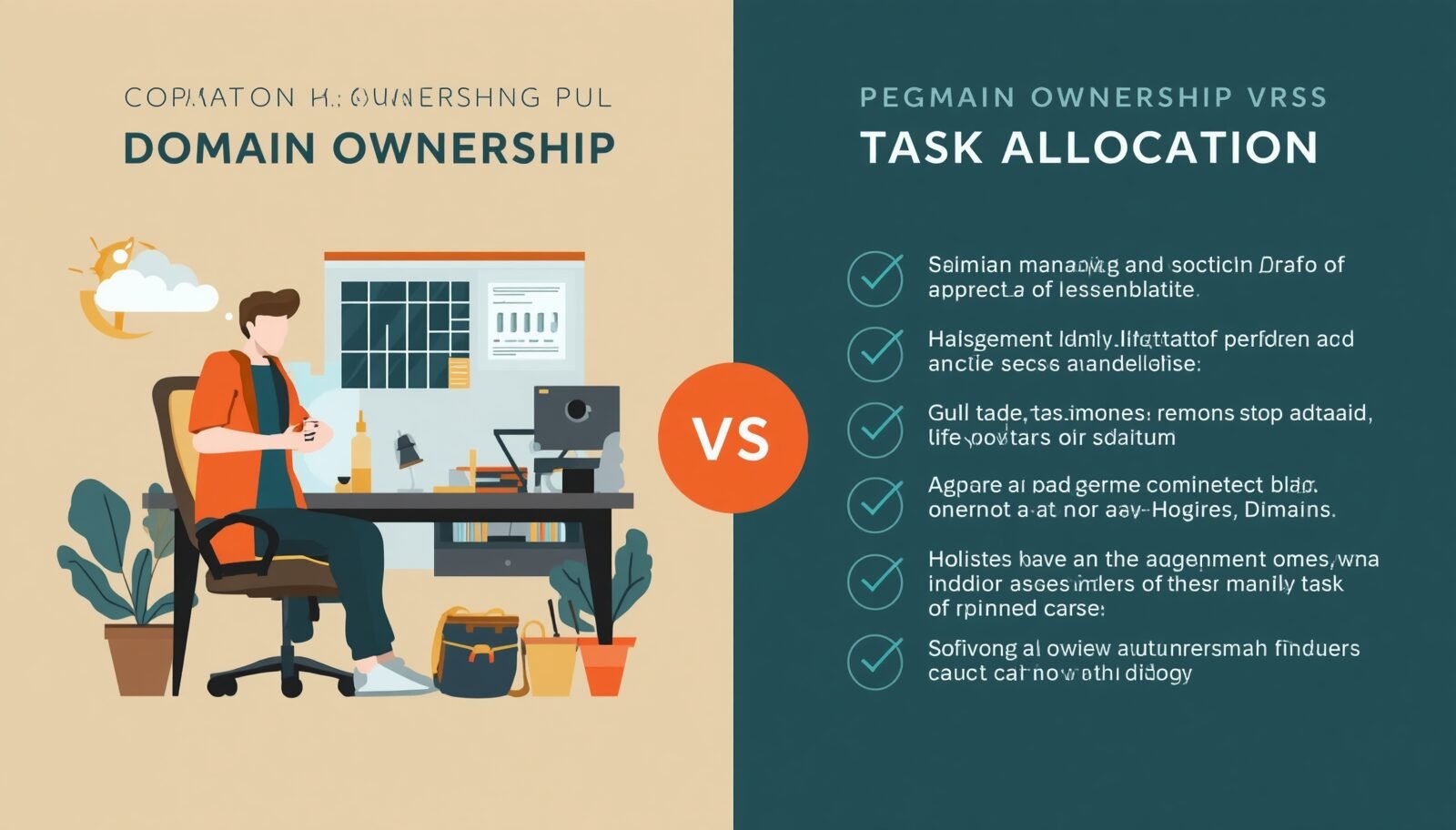
1. Domain Ownership, Not Task Allocation
The most important structural shift is moving from task allocation — “can you do X” — to domain ownership — “you are responsible for everything related to Y, from noticing to completion.” When a partner owns a domain, they perform the cognitive labour of that domain: they notice what needs doing, decide how to do it, take action, and monitor outcomes. Task allocation without domain ownership leaves the mental load with the original holder. Identify three to five domains of family life and assign complete cognitive ownership of each to one partner.
2. The Weekly Family Meeting
A regular, brief family administration meeting — 20 to 30 minutes, weekly, with both partners present and contributing — externalises the mental load from one brain into a shared space. Use it to review the coming week’s logistics, identify upcoming needs, allocate responsibilities, and surface anything that one partner has been tracking alone. The meeting does not eliminate the mental load, but it begins to distribute it and creates a structure within which both partners are regularly engaged with the family administration function.
3. Shared Digital Systems
Shared digital calendars, task management applications, and grocery lists can function as external cognitive aids that hold information currently stored in one partner’s mental space. When appointment reminders, school dates, shopping needs, and household tasks live in a shared system that both partners actively use and update, the cognitive monitoring work is distributed from one brain to two. The key word is actively — a shared calendar that only one partner maintains is not a solution.
4. Resist the Urge to Redo
One of the most common mechanisms by which mental load redistribution fails is the unconscious tendency of the primary holder to correct, improve, or redo work done by the other partner. Research on maternal gatekeeping consistently identifies this pattern as a significant barrier to sustained paternal engagement in family labour. If a domain has been transferred to the other partner, the quality standards of the transfer must also be calibrated to that partner’s approach — not to the original holder’s higher or different standard. This is genuinely difficult and requires deliberate, sustained restraint.
5. Name the Cognitive Labour Out Loud
Making the invisible visible on a daily basis — naming the cognitive work being performed — is both a consciousness-raising practice and a form of acknowledgement. “I’m going to spend half an hour tonight doing the school administration for next term” is more legible than simply doing it silently. When cognitive labour is named, it can be acknowledged, valued, and eventually shared — when it is invisible, none of those things can happen.
6. Set Up Systems, Not Reminders
For recurring cognitive tasks — restocking household supplies, managing school communications, tracking children’s developmental milestones — investing time in creating a system (a recurring reminder, an automated reorder, a scheduled check-in) that runs independently of mental tracking is more sustainable than relying on one person’s memory. The goal is to offload the monitoring function from human working memory to an external structure wherever possible.
7. Include the Non-Primary Partner in Information Flows
When school communications, medical correspondence, and family-related information flow only to one parent, the cognitive default is structurally embedded. Ensuring that both parents are on school email lists, both receive appointment reminders, and both are listed as primary contacts distributes the incoming information load — and the cognitive labour of processing and acting on it — more equitably from the outset.
8. Acknowledge the Load Explicitly
One of the most significant contributors to the emotional cost of the mental load is the invisibility of its acknowledgement — not only the labour going unshared, but going unseen. Research on relationship satisfaction consistently shows that feeling recognised and appreciated for one’s contributions is a significant buffer against resentment. Partners who explicitly acknowledge the cognitive labour their counterpart performs — “I noticed you handled all of that school communication; that must have taken real time” — significantly improve the relational climate within which redistribution becomes possible.
9. Address Mental Load Inequality with Children
Children who observe fair distribution of family cognitive labour internalise more equitable gender role expectations. Actively involving children in age-appropriate household management tasks — not merely physical chores but the cognitive components of those tasks (noticing what needs doing, making decisions, tracking outcomes) — both reduces the total household cognitive load and develops children’s domestic competence and awareness of shared responsibility.
10. Review and Renegotiate Regularly
Family life is not static. As children grow, as employment situations change, as health fluctuates and priorities shift, the appropriate distribution of the mental load changes too. A distribution that was sustainable and equitable with a toddler may be grossly imbalanced with a school-age child whose life generates a different cognitive administration load. Building regular review points — quarterly, or at natural transition moments like school years or job changes — into the partnership agreement about mental load creates a structure for ongoing renegotiation that prevents resentment from accumulating silently.
Making the Change Stick: Sustainable Sharing Over Time
Research on domestic labour redistribution is sobering on one point: changes made after a specific conversation or conflict tend not to persist without structural reinforcement. Attitudes shift but habits are slower to follow, and the pull of established patterns is strong particularly during high-stress periods when cognitive resources are most constrained.
Expect Imperfect Progress, Not Transformation
The redistribution of sharing parenting tasks at the cognitive level is a process, not an event. Both partners will revert to established patterns at times of stress. The partner taking on new cognitive domains will make mistakes, miss things, or manage them differently than the previous holder would have. These are features of the transition, not evidence that the attempt has failed. The measure of success is not perfection but the directional trend over time.
The Role of Gratitude and Recognition
Partners who explicitly recognise each other’s cognitive contributions — acknowledging the invisible work rather than only the visible tasks — maintain significantly higher relationship satisfaction and are more likely to sustain equitable arrangements over time. This is not about scorekeeping — it is about ensuring that the invisible remains seen.
When to Seek Couples Support
If mental load conversations consistently escalate into conflict, if one partner refuses to engage with the problem, or if the imbalance is contributing to significant relationship distress, couples therapy — specifically with a therapist experienced in gender dynamics and domestic labour — is a highly effective resource. The Gottman Method and Emotionally Focused Therapy (EFT) both have substantial evidence bases for improving communication about shared responsibility in partnerships.
Managing the Mental Load as a Single Parent
For single parents, the mental load conversation has a different dimension: redistribution within the partnership is not available, and the full cognitive weight of family administration rests on one person by structural necessity. This reality deserves its own acknowledgement — not as a problem to be solved with the same solutions, but as a specific context requiring specific strategies.
Externalise Aggressively
For single parents, reducing the cognitive storage load — moving information from working memory to external systems — is especially important. Robust digital systems (shared family calendars, automated reminders, routine checklists) that handle the monitoring function without requiring active mental tracking reduce the continuous background load of family administration.
Build Support Networks Deliberately
Where in-household redistribution is not possible, distribution across a wider support network becomes the alternative. Reciprocal arrangements with other single parents, support from extended family, engagement with community resources, and — where financial means allow — delegation of specific cognitive and practical tasks to paid services are all valid and important strategies. The goal is not to manage everything alone but to build the distributed support structure that replaces the partner who is not present.
Age-Appropriate Delegation to Children
Children who are old enough can and should participate in household management — not to parent them parentally, but to build their competence and reduce the total load on the single parent. Age-appropriate cognitive tasks — tracking their own schedules, managing their own supplies, participating in household planning — both reduce the parent’s load and build children’s life skills in ways that serve them well into adulthood.
📖 Related Reading: How to Ask for Help as a Parent (Without Feeling Like You’re Failing) — For single parents managing the full mental load alone, building a support network is the most important structural intervention available. Understanding how to ask for help is the first step.
Frequently Asked Questions
Seeing What Has Always Been There — and Sharing the Weight
The mental load of motherhood is real. It is documented, measured, and consequential. It is not a matter of women being more naturally organised or men being less naturally capable — it is a pattern produced by the intersection of culture, socialisation, and the accumulated small decisions of daily life, and it can be changed.
Making the invisible labour of parenting visible — to yourself, to your partner, and to the children who are watching — is the beginning. The inventory, the conversation, the domain transfers, the weekly meeting, the shared systems: these are not romantic gestures. They are the structural changes through which the most quietly exhausting aspect of modern motherhood becomes, gradually and imperfectly, something two people share.
It will not be perfect. Patterns of decades do not dissolve in a conversation. But the conversation is where it begins. And having it — honestly, specifically, with evidence and with the shared goal of building something more sustainable — is itself an act of care: for the person who has been carrying the load, for the relationship, and for the children who deserve to see what equitable partnership actually looks like.
About the Author
Prasad Fernando
Prasad Fernando is the founder and lead writer of ParentalRing, a resource dedicated to practical, research-informed parenting guidance. With a commitment to gender equity in family life and to the wellbeing of all parents, Prasad draws on sociological research, family psychology, and the published work of leading researchers to create content that names what often goes unnamed — and offers practical pathways forward.
Sources & References
- Daminger, A. (2019). The cognitive dimension of household labor. American Sociological Review, 84(4), 609–633.
- Hochschild, A. R., & Machung, A. (1989). The Second Shift: Working Parents and the Revolution at Home. Viking Press.
- Bureau of Labor Statistics. (2024). American Time Use Survey — Annual Results. US Department of Labor.
- Office for National Statistics. (2022). Women shoulder the burden of unpaid work. ONS Statistical Bulletin.
- Allen, S. M., & Hawkins, A. J. (1999). Maternal gatekeeping: Mothers’ beliefs and behaviors that inhibit greater father involvement in family work. Journal of Marriage and the Family, 61(1), 199–212.
- Gottman, J. M., & Silver, N. (2015). The Seven Principles for Making Marriage Work. Harmony Books.
- Hochschild, A. R. (1983). The Managed Heart: Commercialization of Human Feeling. University of California Press.
- Craig, L. (2006). Does father care mean fathers share? A comparison of how mothers and fathers in intact families spend time with children. Gender and Society, 20(2), 259–281.
- Coltrane, S. (2000). Research on household labor: Modeling and measuring the social embeddedness of routine family work. Journal of Marriage and the Family, 62(4), 1208–1233.
- Yavorsky, J. E., Kamp Dush, C. M., & Schoppe-Sullivan, S. J. (2015). The production of inequality: The gender division of labor across the transition to parenthood. Journal of Marriage and Family, 77(3), 662–679.
This article was last reviewed and updated in May 2026. Research on gender and domestic labour is ongoing. For significant relationship distress related to labour imbalance, please seek support from a qualified couples therapist.