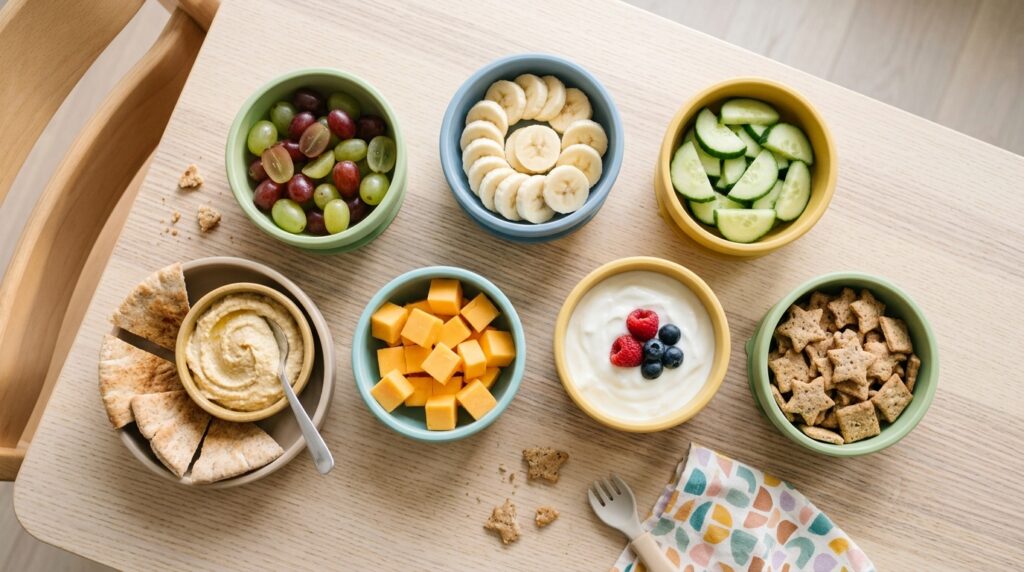
Toddlers have small stomachs and big energy needs, so snacks are not a treat for them. They are a real part of the day’s food. The challenge is finding snacks that are healthy, quick, safe for little mouths and actually eaten. This guide gives you 25 easy ideas, plus how to plan snack times so they support meals instead of replacing them.
Why Snacks Matter for Toddlers
Most toddlers do best with three meals and two or three planned snacks a day, spaced about two to three hours apart. A good snack bridges the gap between meals, keeps energy and mood steady, and is another chance to offer nutritious foods like fruit, vegetables, whole grains and protein.
The key word is planned. All-day grazing and snacks right before meals are one of the most common reasons toddlers refuse dinner. (See our guide on what to do when your toddler refuses dinner.)
A Simple Formula for a Balanced Snack
Aim to combine two of these food groups in each snack:
- Fruit or vegetable
- Protein such as yogurt, cheese, eggs, beans, hummus or a thin spread of nut butter
- Whole grain such as oats, whole wheat bread or crackers
Pairing a carbohydrate with protein or healthy fat tends to keep children fuller for longer than crackers or fruit alone.
Choking Safety First
The American Academy of Pediatrics recommends waiting until about age 4 before offering certain foods that are common choking hazards, or preparing them carefully. These include:
- Whole grapes, cherry tomatoes and other round foods (cut into quarters lengthwise)
- Hot dogs and sausages (cut lengthwise and then into small pieces)
- Chunks of cheese or meat (cut into small pieces)
- Raw carrots, celery and hard raw vegetables (cook until soft or grate)
- Hard raw fruit like apple chunks (slice thinly, grate or cook)
- Nuts, seeds and popcorn
- Thick globs of peanut butter or other nut butters (spread thinly instead)
- Hard, sticky or chewy candy and marshmallows
The AAP suggests cutting food into pieces no larger than half an inch. Always have your toddler sit down to eat, and stay with them while they eat.
25 Healthy Snack Ideas for Toddlers
Fruit-based snacks
- Banana “coins” with a thin spread of nut or seed butter
- Quartered grapes or berries with plain yogurt for dipping
- Thin apple slices or grated apple sprinkled with cinnamon
- Soft pear or peach slices (ripe or canned in juice, drained)
- Orange or clementine segments, cut into small pieces for younger toddlers
- Frozen mango or blueberries, slightly thawed, for teething toddlers
Vegetable-based snacks
- Steamed carrot or sweet potato sticks with hummus
- Cucumber “moons” (thin half-slices) with a yogurt dip
- Soft-cooked broccoli or cauliflower “trees”
- Avocado slices or mashed avocado on toast fingers
- Peas or corn, thawed from frozen, served as finger food
- Veggie mini muffins made with grated zucchini or carrot
Protein snacks
- Plain yogurt topped with mashed berries
- Hard-boiled egg, chopped
- Small cubes of mild cheese (cut small) or thin cheese slices
- Cottage cheese with diced peaches
- Soft black beans or chickpeas, lightly mashed for younger toddlers
- Hummus with soft pita triangles
- Mini egg muffins (see our freezer breakfast ideas)
Whole grain snacks
- Whole grain toast fingers with a thin layer of nut butter or cream cheese
- Oatmeal or baked oatmeal cups with fruit
- Whole grain crackers with cheese
- Mini whole wheat pancakes made in a batch and frozen
- Rice cakes broken into pieces with a thin spread of mashed banana
- Whole wheat pasta shapes tossed with a little olive oil and cheese
Sample Day of Meals and Snacks
Here is how snacks can fit around meals for a toddler who wakes around 6:30am and goes to bed around 7:30pm. Adjust times to fit your family.
| Time | Meal or snack | Example |
|---|---|---|
| 7:00am | Breakfast | Oatmeal with mashed banana, milk in an open cup |
| 9:30am | Morning snack | Plain yogurt with berries, water |
| 12:00pm | Lunch | Pasta with peas and cheese, soft pear slices, milk |
| 3:00pm | Afternoon snack | Hummus with steamed carrot sticks and pita, water |
| 5:30pm | Dinner | Family meal with one familiar “safe” food, milk |
Notice the gaps of about two and a half to three hours. This spacing gives your toddler time to get hungry again before the next meal, which makes them more likely to eat well at the table.
Batch-Prep Snacks to Save Time
A little weekend prep makes weekday snacks much easier. Wash and cut fruit into toddler-safe pieces and store it in clear containers at eye level in the fridge. Steam a batch of carrot or sweet potato sticks. Make a tub of hummus or a yogurt dip. Bake a tray of veggie or banana oat muffins and freeze them individually. Pre-portion crackers into small containers so you are not serving straight from the box, which makes it easier to keep portions toddler-sized.
What to Drink With Snacks
Water is the best drink with most snacks. Milk is best kept mainly to mealtimes so it does not fill your toddler up between meals, and juice is not needed. For full guidance by age, see our article on how much milk a toddler should drink.
How to Make Snack Time Work
- Set times, not open access. Offer snacks at roughly the same times each day, such as mid-morning and mid-afternoon.
- Serve at the table. Sitting down is safer and helps children notice when they are full.
- Keep portions small. A toddler snack might be a few crackers, a small cheese portion and some fruit. Let them ask for more.
- Offer, do not pressure. You decide what and when; your child decides whether and how much. This approach, known as the division of responsibility in feeding, helps reduce food battles.
- Use snacks to try new foods. Put a small amount of a new food next to a familiar one, with no pressure to taste.
- Avoid using snacks as rewards or comfort. It can teach children to eat for reasons other than hunger.
Snacks for On the Go
For outings, pack snacks that travel well and are easy to eat sitting down: banana, soft pear, whole grain crackers, cheese slices, mini muffins and a water bottle. Avoid giving snacks while a child is walking, running or in a moving car where you cannot supervise closely.
Frequently Asked Questions
How many snacks does a toddler need a day?
Most toddlers do well with two to three planned snacks a day, between three meals. Some children need fewer, especially if their meals are large.
Are store-bought toddler snacks healthy?
Some are fine, but many puffs, bars and fruit snacks are low in nutrients or high in added sugar. Check labels, and treat them as occasional convenience foods rather than daily staples.
My toddler only wants crackers. What should I do?
Keep crackers as one part of the snack and pair them with a fruit, vegetable or protein. Offering familiar foods alongside new ones, without pressure, works better than taking favorites away.
The Bottom Line
Healthy toddler snacks are simple: plan two or three snack times a day, pair two food groups, keep portions small, serve water, and prepare foods safely to prevent choking. For more ideas for little eaters, see our guide to healthy lunch box ideas for picky eaters.
Sources
- American Academy of Pediatrics. Choking Prevention. HealthyChildren.org.
- American Academy of Pediatrics. Recommended Drinks for Young Children Ages 0–5. HealthyChildren.org.
This article is for general information only. Talk to your pediatrician or a registered dietitian about your child’s nutrition needs or food allergies.