
Child Development & Life Stages • Toddlers
How to Encourage Independent Play in Toddlers (Ages 1–3)
By Prasad Fernando • Updated April 2026 • 14 min read
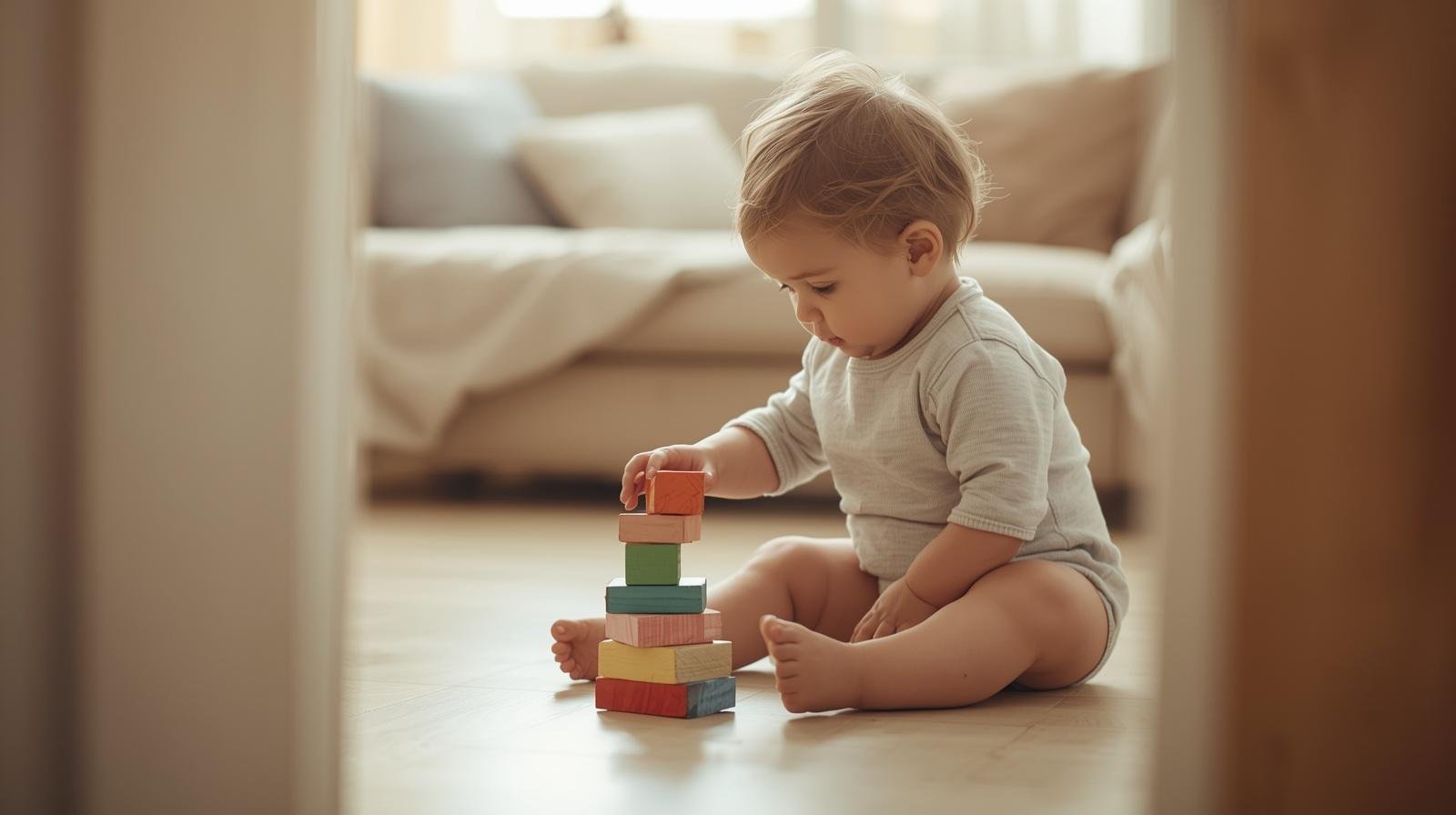
Every parent has wondered: “Is it okay if my toddler plays alone?” The answer is not just yes — it’s essential. Independent play in toddlers is one of the most valuable developmental skills your child can build between the ages of 1 and 3. When toddlers learn to entertain themselves, they develop creativity, problem-solving abilities, emotional regulation, and a healthy sense of confidence that follows them well into childhood and beyond.
Yet many parents feel guilty about stepping back. Modern parenting culture often equates good parenting with constant engagement, making it feel wrong to let a child play without adult direction. The reality is that giving your toddler the space for self-directed play isn’t neglect — it’s one of the greatest gifts you can offer their developing brain.
This comprehensive guide walks you through everything you need to know about encouraging independent play in toddlers: why it matters developmentally, how much is appropriate at each age, which toddler activities work best, how to set up your environment for success, and how to gently transition a clingy toddler toward more independent play — all backed by child development research and practical, real-world strategies.
📑 What You’ll Learn in This Article
- What Is Independent Play and Why Does It Matter?
- 8 Developmental Benefits of Self-Directed Play
- Age-by-Age Guide: What to Expect from 1 to 3
- Setting Up the Perfect Play Environment
- 15 Best Toddler Activities for Independent Play
- How to Start: Step-by-Step Transition Guide
- 7 Common Mistakes Parents Make (and How to Avoid Them)
- What If Your Toddler Refuses to Play Alone?
- Safety Considerations for Independent Play
- Frequently Asked Questions
What Is Independent Play and Why Does It Matter?
Independent play (also called self-directed play or solo play) is when a child engages in an activity on their own, without direct adult instruction, participation, or entertainment. This doesn’t mean you leave the room and forget about your child. It means you’re nearby and available, but the child is leading their own play experience — deciding what to do, how to do it, and when to move on.
Child development experts, including those at the American Academy of Pediatrics, consistently emphasize that unstructured play is critical for healthy brain development. When a toddler plays independently, they’re not “just playing” — they’re building neural pathways, practicing decision-making, and learning to regulate their own emotions.
Renowned pediatrician and parenting expert Dr. Magda Gerber, founder of the RIE (Resources for Infant Educarers) approach, was a strong advocate for giving children space to play without constant adult interference. Her philosophy holds that children are naturally competent and capable, and that hovering over them during play actually hinders their development rather than helping it.
In practical terms, independent play in toddlers might look like a 15-month-old examining and stacking plastic cups, a 2-year-old pretending to cook in a play kitchen, or a 3-year-old building an elaborate block tower while narrating a story to themselves. In each case, the child is the director of their own experience.
8 Developmental Benefits of Self-Directed Play
The benefits of encouraging self-directed play in toddlers extend far beyond giving parents a few minutes of quiet. Research in developmental psychology consistently demonstrates that children who regularly engage in independent play develop stronger skills in multiple areas:
1. Enhanced Creativity and Imagination
When there’s no adult directing the activity, toddlers must create their own narratives, invent their own games, and discover new uses for everyday objects. A wooden spoon becomes a microphone, a blanket becomes a fortress, and a cardboard box becomes a rocket ship. This kind of creative thinking is the foundation of innovation and flexible problem-solving later in life. Studies have shown that children with more unstructured play time score higher on creativity assessments than those with heavily scheduled, adult-directed activities.
2. Stronger Problem-Solving Skills
Independent play naturally presents small challenges: a block tower that keeps falling, a puzzle piece that won’t fit, a lid that’s hard to open. When parents resist the urge to immediately help, toddlers learn to try different approaches, tolerate frustration, and experience the satisfaction of solving a problem on their own. This persistence — often called “grit” — is one of the strongest predictors of success in school and beyond.
3. Improved Focus and Attention Span
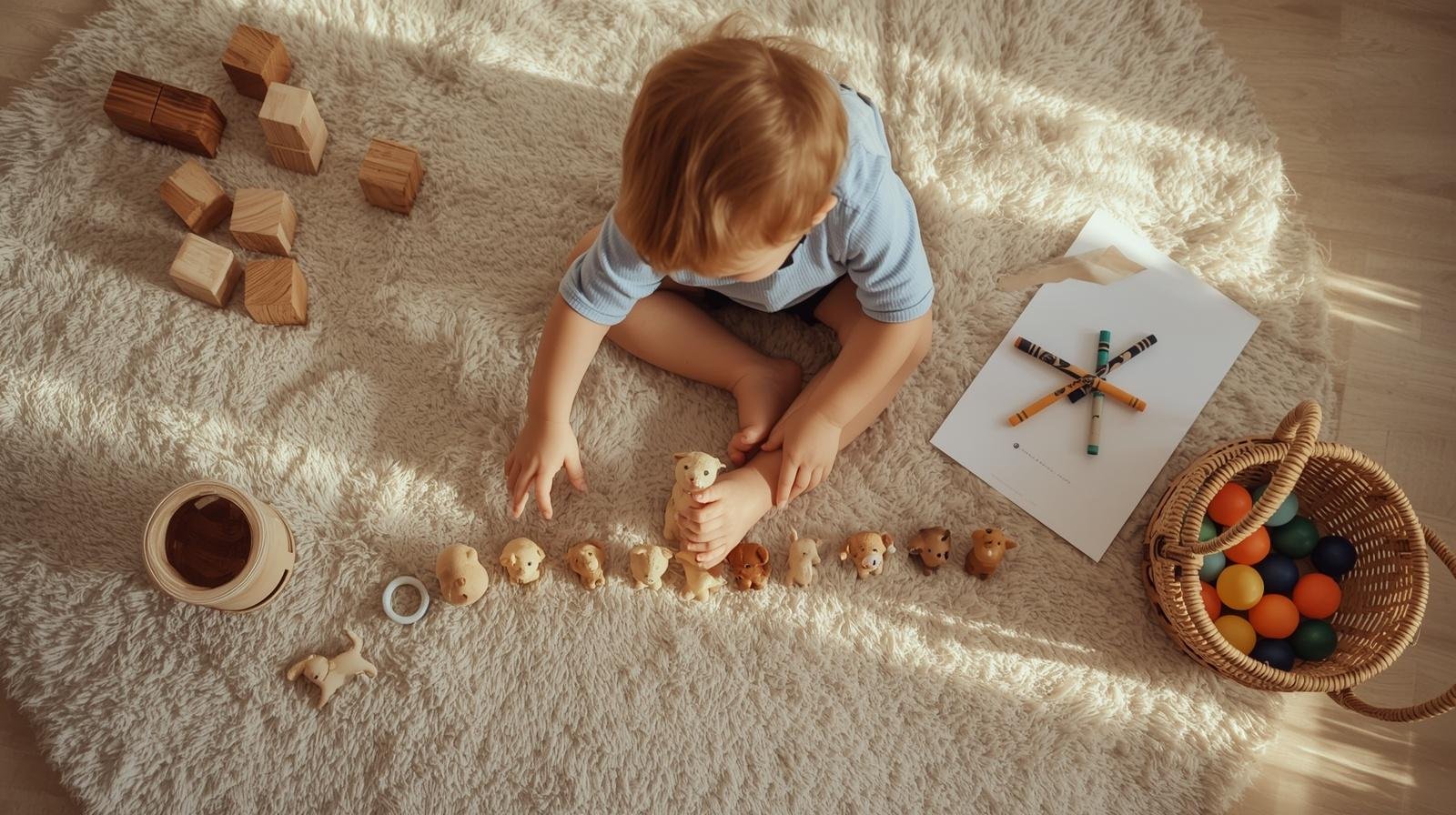
In a world of constant stimulation, the ability to sustain attention on a single activity is becoming increasingly valuable. Self-directed play trains this skill naturally. When a toddler is deeply engrossed in pouring water between cups or lining up toy animals, they’re practicing sustained attention — the same skill they’ll need for reading, learning, and academic focus later on.
4. Greater Emotional Regulation
During independent play, toddlers encounter mild frustrations and learn to manage them without immediate adult intervention. They discover they can calm themselves down, redirect their attention, and cope with small disappointments. Over time, these micro-experiences build a strong emotional regulation toolkit that helps children handle bigger emotions as they grow.
5. Increased Self-Confidence
Every time a toddler successfully completes a task on their own — stacking a tower, fitting shapes into a sorter, or “reading” a book by themselves — they experience a sense of competence. These small victories accumulate into a deep, internal confidence that says, “I am capable. I can figure things out.” This intrinsic self-confidence is far more durable than praise-dependent confidence.
6. Better Language Development
Surprisingly, independent play can boost language skills. Toddlers often narrate their play, talk to their toys, or practice new words during solo play. This private speech, as developmental psychologists call it, is an important step in language development and self-regulation. It’s how children internalize language and practice using it in meaningful contexts.
7. Healthier Parent-Child Relationship
When parents don’t feel pressured to entertain their children every minute, the time they do spend together becomes higher quality. Instead of burned-out, resentful engagement, you can offer fresh, genuine connection. Both parent and child benefit from having some breathing room throughout the day.
8. Preparation for School and Social Settings
Children who are comfortable playing independently transition more smoothly into preschool and kindergarten environments. They’re better equipped to handle moments when the teacher is busy with other children, when they need to work on an activity alone, or when a playdate partner isn’t engaging with them. Independent play builds social resilience.
Age-by-Age Guide: What to Expect from 1 to 3
Understanding age-appropriate expectations prevents frustration for both you and your toddler. Here’s what independent play typically looks like at each age, and how long you can realistically expect your child to play alone:
12–18 Months: The Explorer
Realistic independent play duration: 5–15 minutes at a time
At this age, toddlers are just discovering the world through their senses. Self-directed play at 12–18 months looks like picking up objects and examining them, banging things together, opening and closing containers, and simple cause-and-effect exploration (pressing buttons, pulling strings). Your toddler will frequently check back in with you visually — looking over to make sure you’re still nearby. This is called “social referencing” and it’s completely normal and healthy.
Best toddler activities for this age: Stacking cups, soft blocks, ball dropping toys, simple shape sorters, sensory baskets with safe household items (wooden spoons, fabric scraps, clean sponges).
18–24 Months: The Experimenter
Realistic independent play duration: 15–30 minutes at a time
Between 18 and 24 months, toddlers become more purposeful in their play. They start to experiment with how things work, engage in simple pretend play (feeding a doll, talking on a toy phone), and become more interested in filling and dumping containers. Their growing language skills mean they may narrate their play with single words or short phrases.
Best toddler activities for this age: Play kitchen, baby dolls with accessories, large crayons and paper, water play with cups and funnels, simple puzzles (3–5 pieces), stacking and nesting toys.
2–3 Years: The Creator
Realistic independent play duration: 30–60+ minutes (in stretches)
This is the golden age for independent play in toddlers. Children between 2 and 3 develop rich imaginative worlds. They create elaborate pretend scenarios, build structures with blocks, draw with increasing intention, and can sustain engagement with a single activity for much longer periods. They may still check in with you periodically, but their play becomes deeper and more self-sustaining.
Best toddler activities for this age: Building blocks (Duplo, Mega Bloks, wooden blocks), play dough with cookie cutters, dress-up clothes, toy vehicles with ramps, arts and crafts supplies, simple board books for independent “reading,” miniature figures and playsets.
⚠️ Important Note: These are general guidelines, not rigid rules. Every child develops at their own pace. Some 18-month-olds can play independently for 30 minutes, while some 3-year-olds still prefer shorter stretches. The goal is gradual progress, not comparison. If your child currently manages only 3 minutes of independent play, that’s your starting point — and it’s perfectly valid.
Setting Up the Perfect Play Environment
The physical environment plays a crucial role in supporting self-directed play. A well-designed play space invites exploration and makes it easy for your toddler to engage independently. Here’s how to set it up:
Create a “Yes Space”
A “Yes Space” is an area where everything is safe and accessible for your toddler — a zone where you don’t need to constantly say “no” or “don’t touch.” This might be a gated section of a room, a play corner, or even an entire childproofed room. When toddlers can explore freely without constant redirection, they settle into play more easily and for longer periods.
How to create one:
- Childproof the area thoroughly (cover outlets, anchor furniture, remove choking hazards).
- Place toys on low, open shelves where your child can see and reach them independently.
- Use baskets or bins to organize toys into visible, accessible groups.
- Keep the space relatively uncluttered — too many options overwhelm rather than inspire.
- Include a soft seating area (small chair, cushion, or mat) for comfort.
Rotate Toys Strategically
One of the most effective strategies for sustaining independent play in toddlers is toy rotation. Instead of having all toys available at once, keep out only 8–12 toys at a time and swap them every 1–2 weeks. Toys that have been put away feel new and exciting when they reappear, reigniting your child’s interest without any new purchases.
How to implement toy rotation:
- Sort toys into 3–4 groups of roughly 8–12 items each.
- Display one group at a time on open shelves.
- Store the remaining groups in bins or closets out of sight.
- Rotate every 1–2 weeks, or sooner if your child loses interest.
- Each rotation group should include a mix: something creative, something physical, something for pretend play, and something for fine motor skills.
Choose Open-Ended Toys Over Electronic Ones
Open-ended toys — those that can be used in multiple ways — are far superior to electronic or single-purpose toys for self-directed play. Battery-operated toys that light up, talk, and play music do the “playing” for the child, leaving little room for imagination. Open-ended toys require the child to bring the creativity.
Best open-ended toys for independent play:
- Wooden blocks — the gold standard for creative building.
- Play dough or clay — endless possibilities for creating and reshaping.
- Dress-up clothes and scarves — fuel for imaginative role play.
- Art supplies — crayons, washable markers, paper, stickers, stamps.
- Dolls and stuffed animals — companions for pretend scenarios.
- Toy vehicles — cars, trucks, trains for building worlds.
- Natural materials — pinecones, smooth stones, shells (age-appropriate sizes only).
- Cardboard boxes — inexpensive and infinitely versatile.
🖼️ IMAGE PLACEHOLDER
Alt Text: Organized Montessori-inspired toddler play space with low shelves, open-ended toys, and a soft play mat in natural light
AI Image Prompt: A beautifully organized toddler play corner showing low open wooden shelves with neatly arranged toys: wooden blocks in a basket, a small play kitchen in the corner, a few picture books on a low shelf, crayons in a cup, and a soft play mat on the floor. The space is minimal, warm, and inviting with natural light. Montessori-inspired aesthetic. Style: interior design editorial photography, clean and airy, warm wood tones. No text or logos.
Caption: A well-organized, accessible play space with limited toy options encourages longer independent play
15 Best Toddler Activities for Independent Play
Not all activities hold a toddler’s attention equally. These 15 toddler activities are specifically chosen because they promote sustained, independent engagement without requiring constant adult involvement. Each one supports important developmental skills while keeping your child happily occupied.
Sensory Activities (Great for All Ages 1–3)
1. Sensory Bins: Fill a shallow plastic bin with rice, dried pasta, or kinetic sand and add scoops, cups, and small toys. Toddlers can spend 20–40 minutes exploring textures, pouring, and digging. Always supervise younger toddlers to prevent mouthing.
2. Water Play: Set up a small basin of water with cups, funnels, squeeze bottles, and waterproof toys. Lay towels underneath and let your toddler experiment. Water play is one of the most absorbing toddler activities for independent engagement.
3. Play Dough Station: Provide play dough with simple tools: cookie cutters, a garlic press (for making “hair”), plastic knives, and rolling pins. Toddlers naturally become absorbed in sculpting and creating.
Creative Activities (Best for Ages 18 Months–3)
4. Open Art Table: Set up a dedicated art space with large paper, chunky crayons, washable markers, and stickers. Let your toddler create freely without instructions or expectations. Process over product is the goal.
5. Collage Making: Provide glue sticks, torn paper scraps, fabric pieces, and stickers. Even toddlers as young as 18 months can enjoy the process of sticking materials onto paper.
6. Window Painting: Use washable window markers or finger paint on a sliding glass door. The vertical surface engages different muscles and the transparency fascinates toddlers.
Pretend Play Activities (Best for Ages 2–3)
7. Play Kitchen Cooking: A simple play kitchen with pots, pans, play food, and utensils can keep a toddler engaged for remarkably long stretches. They’ll mimic cooking, serving, and cleaning up — practicing life skills through imagination.
8. Baby Care Station: Set up a doll or stuffed animal with a blanket, a toy bottle, a small cloth for wiping, and a basket as a “bed.” Toddlers practice nurturing skills and emotional expression through caring for their “baby.”
9. Cleaning and Chores Play: Give your toddler child-sized cleaning tools: a small broom, a spray bottle with water, and a cloth. Toddlers love imitating adult tasks and can “clean” for extended periods.
Building and Problem-Solving Activities (All Ages)
10. Block Building: Keep a variety of blocks available: wooden, Duplo, or Mega Bloks. Building and knocking down is deeply satisfying for toddlers and builds spatial awareness and fine motor skills.
11. Simple Puzzles: Choose puzzles appropriate for your child’s level — knob puzzles for younger toddlers, 4–8 piece interlocking puzzles for older ones. Rotate puzzles regularly to maintain interest.
12. Stacking and Nesting: Stacking cups, rings, or boxes are among the most engaging toddler activities for building concentration and spatial reasoning.
Quiet Independent Activities (Great for Wind-Down)
13. Book Basket: Place a small basket of board books in an accessible spot. Even before children can read, they enjoy turning pages, looking at pictures, and “reading” to themselves or their stuffed animals.
14. Threading and Lacing: Large wooden beads on a thick lace (for ages 2+) develop fine motor skills and concentration. Start with just 3–5 large beads and increase as skills improve.
15. Sorting Activities: Provide bowls and a collection of safe items to sort: large buttons (supervision required), pompoms, wooden shapes, or colored pasta. Sorting is naturally calming and develops early math skills like classification and counting.
🖼️ IMAGE PLACEHOLDER
Alt Text: Happy toddler finger painting at a low table during independent creative play time with washable paints
AI Image Prompt: A cheerful toddler (around age 2) sitting at a low child-sized table, hands covered in washable finger paint, creating a colorful abstract painting on large paper. Paint cups in primary colors are nearby. The child is smiling and fully absorbed. Bright, clean playroom setting with white walls and natural light. Style: candid lifestyle parenting photography, vibrant colors, joyful mood. No text or logos.
Caption: Process-focused art activities like finger painting are excellent for building independent play skills
How to Start: A Step-by-Step Transition Guide
If your toddler currently wants you involved in every moment of play, the transition to independent play needs to be gradual and gentle. Here’s a proven step-by-step approach that works for most families:
Step 1: Start By Playing Together (Days 1–3)
Begin by sitting on the floor near your toddler and playing alongside them — not directing, but present. Follow their lead. If they’re stacking blocks, stack a few of your own nearby. This is called parallel play and it’s the foundation for independence. Your presence provides the security they need to start focusing on the activity rather than on you.
Step 2: Gradually Reduce Your Involvement (Days 4–7)
Once your toddler is comfortably engaged in play with you nearby, start doing less. Stop building your own tower. Sit quietly beside them. Read a book or fold laundry nearby. The key is to still be physically present but no longer actively participating. If your child tries to pull you back in, acknowledge them warmly: “I can see you’re building! I’m right here watching” — and then gently redirect your attention.
Step 3: Increase Physical Distance (Week 2)
Move from sitting right beside your toddler to sitting a few feet away, then across the room. Continue doing a quiet activity of your own (reading, working on your phone, folding clothes). Stay visible and available but not engaged in their play. Offer brief verbal reassurance if they look up at you: a smile, a nod, or a simple “you’re doing great.”
Step 4: Step Out Briefly (Week 3–4)
Once your toddler is comfortable playing while you’re across the room, begin stepping out briefly. Tell them: “I’m going to get some water. I’ll be right back.” Leave for 1–2 minutes, then return. Gradually extend these absences. Always tell your child where you’re going and that you’re coming back — this builds trust and security.
Step 5: Build a Routine (Week 4+)
Incorporate independent play into your daily routine at a consistent time. After breakfast, after nap time, or during a specific “play time” block work well. Consistency helps your toddler know what to expect and reduces resistance. Over time, they’ll begin to anticipate and even look forward to their solo play time.
💡 Pro Tip: The best time to introduce independent play is when your toddler is well-rested, well-fed, and in a good mood. Never try to push independent play when they’re tired, hungry, or recovering from a transition (like just arriving home from daycare). Set them up for success by choosing the right moments.
7 Common Mistakes Parents Make (and How to Avoid Them)
Mistake 1: Offering Too Many Toys at Once
The problem: When toddlers are surrounded by 30 toys, they feel overwhelmed and flit from one thing to the next without engaging deeply with anything. Paradoxically, more options lead to less play.
The fix: Keep only 8–12 toys accessible at a time. Use toy rotation to keep things fresh. Less clutter creates more focus.
Mistake 2: Jumping In to “Help” Too Quickly
The problem: When you see your toddler struggling with a puzzle or a tower that keeps falling, the instinct is to step in and fix it. But rescuing them from every frustration robs them of the satisfaction of figuring it out themselves.
The fix: Wait. Count to ten before intervening. Often, your toddler will solve the problem on their own, try a different approach, or happily move on to something else. Only help if they’re genuinely distressed, and then offer the minimum assistance needed (“Try turning that piece” rather than doing it for them).
Mistake 3: Expecting Too Much Too Soon
The problem: Hoping your 14-month-old will play alone for 45 minutes leads to frustration and feelings of failure for both of you.
The fix: Start with realistic expectations based on age (see the age guide above). Celebrate small wins. Five minutes of independent play in a 15-month-old is a success worth recognizing.
Mistake 4: Using Screens as a Substitute
The problem: Handing a toddler a tablet keeps them quiet, but it’s passive consumption, not active play. Screen time doesn’t build the same neural pathways as hands-on, creative, self-directed play.
The fix: Reserve screens for specific, limited times and offer hands-on toddler activities as the default. If you need a break, set up an engaging activity station rather than turning on a screen.
Mistake 5: Narrating or Directing Constantly
The problem: “Oh, you’re building a tower! Put the blue one there! Great job! Now what are you going to do?” This well-intentioned commentary actually interrupts your child’s flow state and makes them dependent on your feedback.
The fix: Practice what child development expert Janet Lansbury calls “sportscasting” only when your child looks to you for acknowledgment. Otherwise, stay quiet and let them immerse themselves in their play.
Mistake 6: Feeling Guilty About Not Playing Together
The problem: Many parents, especially mothers, feel intense guilt when they’re not directly engaging with their child. This guilt can lead to sabotaging independent play by constantly interrupting it.
The fix: Remember that independent play IS beneficial play. You’re not being lazy or neglectful — you’re giving your child exactly what they need for healthy development. Quality connection during other parts of the day is more important than quantity of play time together.
Mistake 7: Giving Up After One Attempt
The problem: Your toddler cries for 30 seconds when you step away, and you conclude that “independent play just doesn’t work for my child.”
The fix: Building this skill takes time. Some children need weeks of gradual transition. Be patient, consistent, and compassionate with both your toddler and yourself. Progress isn’t always linear — there will be good days and harder days.
What If Your Toddler Refuses to Play Alone?
Some toddlers are naturally more inclined toward independent play, while others prefer constant companionship. If your child falls into the latter category, don’t despair. Here are targeted strategies for encouraging independent play in toddlers who are especially clingy:
Fill their “connection cup” first: Before expecting independent play, spend 10–15 minutes of focused, undivided attention with your toddler. Get down on their level, follow their lead, and be fully present. Once their emotional need for connection is met, they’re more likely to be content playing alone for a while.
Use transitional objects: Give your toddler something of yours to hold while they play — a scarf that smells like you, a family photo nearby, or a special “mommy/daddy toy” that represents your presence. This can ease the anxiety of separation.
Play “near but not with”: Instead of leaving the room, stay nearby doing your own tasks. Many clingy toddlers are satisfied simply knowing you’re close. They’ll gradually become absorbed in their own activity while you fold laundry, read, or cook.
Normalize separation through daily routines: Use everyday moments like bathroom trips and cooking as natural, brief separations. “I’m going to stir the soup. You play with your blocks and I’ll be right here in the kitchen.” These micro-separations build tolerance gradually.
Rule out underlying issues: If your toddler’s clinginess is sudden and extreme, consider whether something has changed: a new sibling, a recent move, starting daycare, illness, or a disrupted routine. Address the underlying cause with extra reassurance and patience.
🖼️ IMAGE PLACEHOLDER
Alt Text: Mother reading on sofa while toddler plays independently nearby on the floor with wooden toys in a cozy living room
AI Image Prompt: A gentle photograph of a mother sitting on a sofa reading a book while her toddler plays contentedly on the floor nearby with wooden toys. The mother is relaxed and occasionally glancing at the child with a warm smile. Cozy living room with soft natural light, warm earth tones, and a calm, peaceful atmosphere. Style: authentic family lifestyle photography, candid moment, warm tones, editorial quality. No text or logos.
Caption: Staying nearby while doing your own activity helps clingy toddlers gradually build confidence in independent play
Safety Considerations for Independent Play
Independent play does not mean unsupervised play, especially for toddlers. Safety is always the top priority. Here’s how to keep your child safe during self-directed play:
- Always be within earshot: You should be able to hear your toddler at all times, even if you’re not in the same room. Silence can be a warning sign with toddlers.
- Childproof the play area thoroughly: Secure furniture to walls, cover outlets, remove small objects that pose choking hazards (anything smaller than a toilet paper roll), and eliminate access to cords, chemicals, and sharp objects.
- Check toys regularly: Inspect toys for broken parts, loose batteries, or peeling paint. Remove damaged items immediately.
- Supervise water play closely: Never leave a toddler unattended around water, even small amounts in a basin. Drowning can happen in as little as one inch of water.
- Match activities to developmental level: Don’t offer toys with small parts to a child who still mouths everything. Choose age-appropriate toddler activities that match your child’s current abilities.
- Set clear boundaries: If there are areas or objects that are off-limits, use physical barriers (baby gates, locked cabinets) rather than relying on verbal instructions, which toddlers can’t consistently follow.
A good rule of thumb: You should be able to check on your toddler visually every few minutes. Independent play means your child is leading the play — not that they’re unsupervised.
Frequently Asked Questions About Independent Play in Toddlers
Is it normal for a toddler to prefer playing alone?
Yes, absolutely. Some toddlers are naturally more introverted and enjoy solo play from an early age. This is a temperament trait, not a social deficit. As long as your child shows appropriate social skills during interactive situations (responding to their name, making eye contact, engaging with you during play when you initiate), a preference for independent play is perfectly healthy and actually shows strong self-regulation skills.
How much independent play is too much?
There’s no hard rule, but balance is key. Toddlers also need interactive play with caregivers and peers for social development. Aim for a mix throughout the day: some one-on-one play time with you, some independent play, and (when possible) some parallel or cooperative play with other children. If your toddler seems to actively avoid all social interaction or shows no interest in other people, discuss this with your pediatrician.
Should I praise my toddler during independent play?
Use praise sparingly during solo play to avoid interrupting their focus. Instead of constant “great job!” commentary, wait until they naturally pause or show you something. Then offer specific, observation-based feedback: “You stacked five blocks — that’s really tall!” rather than generic “good job!” This encourages intrinsic motivation rather than performance for approval.
What if siblings keep interrupting independent play?
If you have multiple children, consider staggering independent play times or creating separate play zones. You can also give each child their own basket of special toys that are only for solo play time. Teaching older siblings about respecting boundaries (“Your sister is having her play time right now”) is an important social lesson in itself.
Can independent play help with separation anxiety?
Self-directed play can absolutely support a child working through separation anxiety. By practicing small separations during play (you moving across the room, briefly stepping out), your toddler builds confidence that you will always come back. The key is to never sneak away — always tell your child where you’re going and follow through on your promise to return. Trust is built through consistent, predictable behavior.
Do I need expensive Montessori toys?
Not at all. While beautifully designed Montessori materials are appealing, effective toddler activities for independent play can be created with everyday household items. Wooden spoons, plastic containers, cardboard boxes, fabric scraps, pots and pans, and nature items are all excellent free or low-cost alternatives. The principles matter more than the products: open-ended, child-accessible, and inviting.
Final Thoughts: Giving Your Toddler the Gift of Independent Play
Encouraging independent play in toddlers is not about disengaging from your child. It’s about trusting their natural competence, providing a safe and stimulating environment, and stepping back just enough to let their creativity, resilience, and confidence flourish.
The transition won’t happen overnight. Some days your toddler will happily play alone for 30 minutes; other days they’ll cling to your leg after two minutes. That’s normal. Development isn’t linear, and your child’s needs will fluctuate based on their mood, health, growth phases, and what’s happening in their world.
What matters most is your consistent effort to create the conditions for self-directed play: a safe space, engaging toddler activities, realistic expectations, and the patient confidence that your child is capable of more than you might think.
You’re not stepping away from your child. You’re stepping back just enough to let them discover who they are — and that’s one of the most powerful things you can do as a parent.
🖼️ IMAGE PLACEHOLDER
Alt Text: Toddler peacefully absorbed in playing with a wooden toy train by a sunlit window during independent play time
AI Image Prompt: A warm, emotional photograph of a toddler (around age 2-3) sitting in soft afternoon light by a large window, deeply absorbed in playing with a simple wooden toy train on the floor. The child is seen from the side, bathed in golden light. The scene radiates calm, independence, and quiet joy. Style: fine art family photography, golden hour lighting, warm tones, shallow depth of field, contemplative mood. No text or logos.
Caption: Independent play is a quiet but powerful gift that builds creativity, confidence, and resilience in toddlers
About the Author
Prasad Fernando is a parenting writer and father of two young children. He created ParentalRing to share evidence-based, practical parenting strategies that help families navigate every stage of childhood with confidence and warmth. His writing draws from developmental psychology research and the real-life experiences of raising toddlers.
Disclaimer: This article is for informational and educational purposes only and does not constitute professional medical, psychological, or therapeutic advice. Always consult your child’s pediatrician or a qualified child development specialist with specific concerns about your child’s development or behavior.