

Parenting Psychology & Emotional Health • Preschoolers
Understanding Your 4-Year-Old’s Emotional Development: What’s Normal and What’s Not
By Prasad Fernando • Updated April 2026 • 15 min read

If your 4-year-old swings from hysterical laughter to tearful meltdowns within minutes, you’re not alone — and nothing is “wrong” with your child. 4 year old emotional development is one of the most dynamic and sometimes bewildering stages of early childhood. At four, children are developing a rich inner emotional life, but their ability to understand, express, and regulate those emotions is still very much a work in progress.
This is the age when your child might declare undying love for you one moment and scream “I hate you!” the next. They might develop sudden fears of the dark, become fiercely competitive, tell elaborate lies, or sob inconsolably because their banana broke in half. All of this falls within the wide range of normal preschooler behavior.
But how do you know what’s truly typical and what might signal something that needs professional attention? This comprehensive guide explores the full landscape of child emotions at age four — the developmental milestones you should expect, the behaviors that are perfectly normal (even when they feel alarming), specific red flags that warrant professional evaluation, and practical strategies for supporting your child’s emotional growth every day. This information draws from established developmental psychology research, including the work of recognized experts in early childhood development.
📑 In This Article
- The Emotional Landscape of a 4-Year-Old
- Normal Emotional Milestones at Age 4
- 12 Behaviors That Worry Parents (But Are Actually Normal)
- Understanding Tantrums and Meltdowns at Four
- Teaching Emotional Regulation: Age-Appropriate Strategies
- Social Emotions: Friends, Sharing, and Empathy
- Common Fears and Anxiety at Age 4
- Red Flags: When to Seek Professional Help
- 10 Daily Practices to Support Emotional Development
- Frequently Asked Questions
The Emotional Landscape of a 4-Year-Old
To understand 4 year old emotional development, it helps to know what’s happening inside your child’s brain. At four years old, the prefrontal cortex — the part of the brain responsible for impulse control, decision-making, and emotional regulation — is still in the very early stages of development. This brain region won’t be fully mature until the mid-twenties, but it undergoes especially rapid growth between ages 3 and 6.
What this means in practical terms is that your 4-year-old feels emotions with adult-level intensity but has only a fraction of the tools needed to manage them. Imagine experiencing the full force of rage, jealousy, excitement, or disappointment without the ability to take a deep breath, put things in perspective, or remind yourself that “this too shall pass.” That’s the daily reality for a four-year-old.
At the same time, four-year-olds are making enormous cognitive leaps. They’re developing what psychologists call theory of mind — the understanding that other people have thoughts, feelings, and perspectives different from their own. This emerging ability transforms their emotional world, enabling empathy but also introducing new sources of anxiety, social comparison, and emotional complexity.
Developmental psychologist Erik Erikson described this stage as “initiative versus guilt,” where children are driven to assert themselves and take charge of their world, but also begin experiencing guilt when their actions have unintended consequences. This tension between bold independence and emerging conscience creates the emotional rollercoaster that defines preschooler behavior at age four.
Normal Emotional Milestones at Age 4
Understanding what’s developmentally appropriate helps you calibrate your expectations and respond with patience rather than panic. Here are the key emotional milestones most 4-year-olds reach, according to established child development research:
Identifying and Naming Basic Emotions
By age four, most children can identify and name at least four to six basic emotions: happy, sad, angry, scared, surprised, and sometimes disgusted. They’re beginning to recognize these emotions in others as well — noticing when a friend is crying or when a parent looks upset. However, they may still confuse similar emotions (like “frustrated” and “angry” or “nervous” and “scared”), which is perfectly normal at this stage.
Expressing Empathy (Sometimes)
Four-year-olds are beginning to show genuine empathy — comforting a crying friend, bringing a blanket to a sick parent, or expressing concern for a hurt animal. However, this empathy is inconsistent. The same child who tenderly cares for an injured ladybug may push a playmate off a swing ten minutes later. This inconsistency is normal because empathy requires cognitive and emotional skills that are still developing.
Understanding Simple Cause and Effect in Emotions
At four, children begin to understand that events cause emotions: “She’s sad because her toy broke” or “He’s happy because it’s his birthday.” This represents a significant cognitive leap from earlier years when emotions seemed to appear randomly. They’re also starting to predict emotional reactions: “If I take his truck, he’ll be mad.”
Engaging in Pretend Play with Emotional Themes
Dramatic play becomes richly emotional at four. Your child might act out scenarios involving doctors and sick patients, parents and babies, superheroes rescuing people in danger, or teachers handling “naughty” students. This kind of play is how children process and practice dealing with complex child emotions in a safe, controlled context. It’s essentially emotional rehearsal.
Developing a Sense of Humor
Four-year-olds develop a genuine (if somewhat absurd) sense of humor. They love silly jokes, bathroom humor, nonsense words, and physical comedy. Laughter becomes a social tool for bonding with peers and a coping mechanism for dealing with discomfort or embarrassment. This humor development is a healthy sign of emotional sophistication.
Beginning to Manage Disappointment (With Support)
While they still need plenty of help, four-year-olds are beginning to develop basic coping skills for disappointment. They might accept a substitute when their preferred option isn’t available, wait briefly for a desired activity, or recover from a letdown faster than they did at three. These improvements may be subtle, but they represent real progress in emotional regulation.

12 Behaviors That Worry Parents (But Are Actually Normal)
Some preschooler behavior can alarm parents, especially first-time parents who aren’t sure what falls within the normal range. Here are twelve common behaviors that seem concerning but are actually typical parts of 4 year old emotional development:
1. Saying “I Hate You”
When a four-year-old says “I hate you,” they’re not expressing a deep, considered rejection. They’re using the strongest words they know to express a momentary feeling of frustration, anger, or powerlessness. They haven’t yet developed the vocabulary or emotional nuance to say, “I’m really frustrated that you won’t let me have another cookie, and I feel powerless right now.” The word “hate” is their blunt instrument for a complex emotional experience.
How to respond: Stay calm. Acknowledge the feeling without reinforcing the word: “It sounds like you’re really angry right now. I understand. I still love you, and the answer is still no cookies before dinner.”
2. Telling Elaborate Lies
Many parents are horrified when their four-year-old starts lying with apparent ease: “I didn’t eat the chocolate” (with chocolate all over their face). But lying at this age is actually a cognitive milestone. It shows that your child understands that other people can hold different beliefs — a key component of theory of mind. They’re also testing boundaries and learning about social consequences.
How to respond: Avoid setting “lying traps” (asking questions you already know the answer to). Instead, state what you observe: “I see chocolate on your face. It looks like you ate some chocolate. Let’s talk about that.”
3. Sudden, Intense Fears
A child who previously had no problem with the dark may suddenly become terrified of shadows. Fear of monsters, dogs, thunderstorms, or the toilet flushing can appear seemingly out of nowhere. This is because a four-year-old’s imagination has developed faster than their ability to distinguish fantasy from reality. Their growing cognitive abilities let them imagine scary possibilities, but they don’t yet have the logical skills to reason those fears away.
4. Extreme Mood Swings
Laughing hysterically one moment and sobbing the next is par for the course at four. These rapid mood shifts happen because the brain circuits that regulate emotional transitions are still developing. Four-year-olds also tend to feel emotions at full volume — there’s no “medium” setting yet. Everything is either wonderful or terrible.
5. Bossy Behavior
Four-year-olds are often remarkably bossy — directing play scenarios, assigning roles to friends, and insisting on rigid rules (“You have to be the baby! You can’t be the mom!”). This bossiness reflects their growing need for control and predictability in a world that often feels overwhelming. They’re also practicing leadership and organizational skills, albeit in a somewhat heavy-handed way.
6. Bathroom Humor and “Bad” Words
“Poop” becomes the funniest word in the English language around age four. The fascination with bathroom humor is a normal part of development. Children this age are mastering toilet training, becoming aware of their bodies, and learning that certain words get big reactions from adults — which they find endlessly entertaining.
7. Aggressive Fantasies in Play
Playing “fight” games, pretending to shoot with finger guns, or making toy dinosaurs eat each other can concern parents. However, aggressive themes in pretend play are a normal way children process and make sense of concepts like power, conflict, good vs. evil, and protection. As long as the aggression stays in pretend play and doesn’t translate to real harm toward people or animals, it’s a healthy form of emotional processing.
8. Excluding Friends and Being Excluded
“You can’t play with us” is heartbreaking to hear, whether your child is saying it or hearing it. At four, children are learning to navigate social hierarchies, form alliances, and manage group dynamics. Exclusion and inclusion behaviors are how they experiment with social power and belonging. While it’s important to guide these interactions, occasional exclusion behavior is a normal part of social-emotional learning.
9. “It’s Not Fair!” (Constant Comparisons)
Four-year-olds develop a strong (if rigid) sense of fairness. They carefully monitor what others receive and protest any perceived inequality. “She got more juice than me!” “His piece is bigger!” This hyper-awareness of fairness shows that your child is developing social awareness and a sense of justice — even if it’s expressed in exhausting ways.
10. Wanting to Be “First” and “Best”
Fierce competitiveness is extremely common at four. Your child may insist on being first in line, winning every game, or being acknowledged as the “fastest” or “strongest.” This reflects their growing self-awareness and the formation of their self-concept. They’re beginning to measure themselves against others and seeking confirmation of their competence.
11. Regressive Behavior (Baby Talk, Wanting to Be Carried)
Reverting to baby talk, asking for a bottle they gave up a year ago, or wanting to be carried like a baby can alarm parents. Regression is a common response to stress, change, or simply the exhaustion of being “big” all the time. It’s your child’s way of seeking comfort and security during a period of rapid growth and change.
12. Imaginary Friends
About 37% of children develop imaginary friends, with the peak occurring between ages 3 and 5, according to developmental psychology research. Imaginary friends are a sign of a healthy, creative imagination and serve important emotional functions: they provide companionship, allow emotional processing, and give children a sense of control. Research consistently shows that children with imaginary friends tend to have stronger social skills, not weaker ones.
Understanding Tantrums and Meltdowns at Four
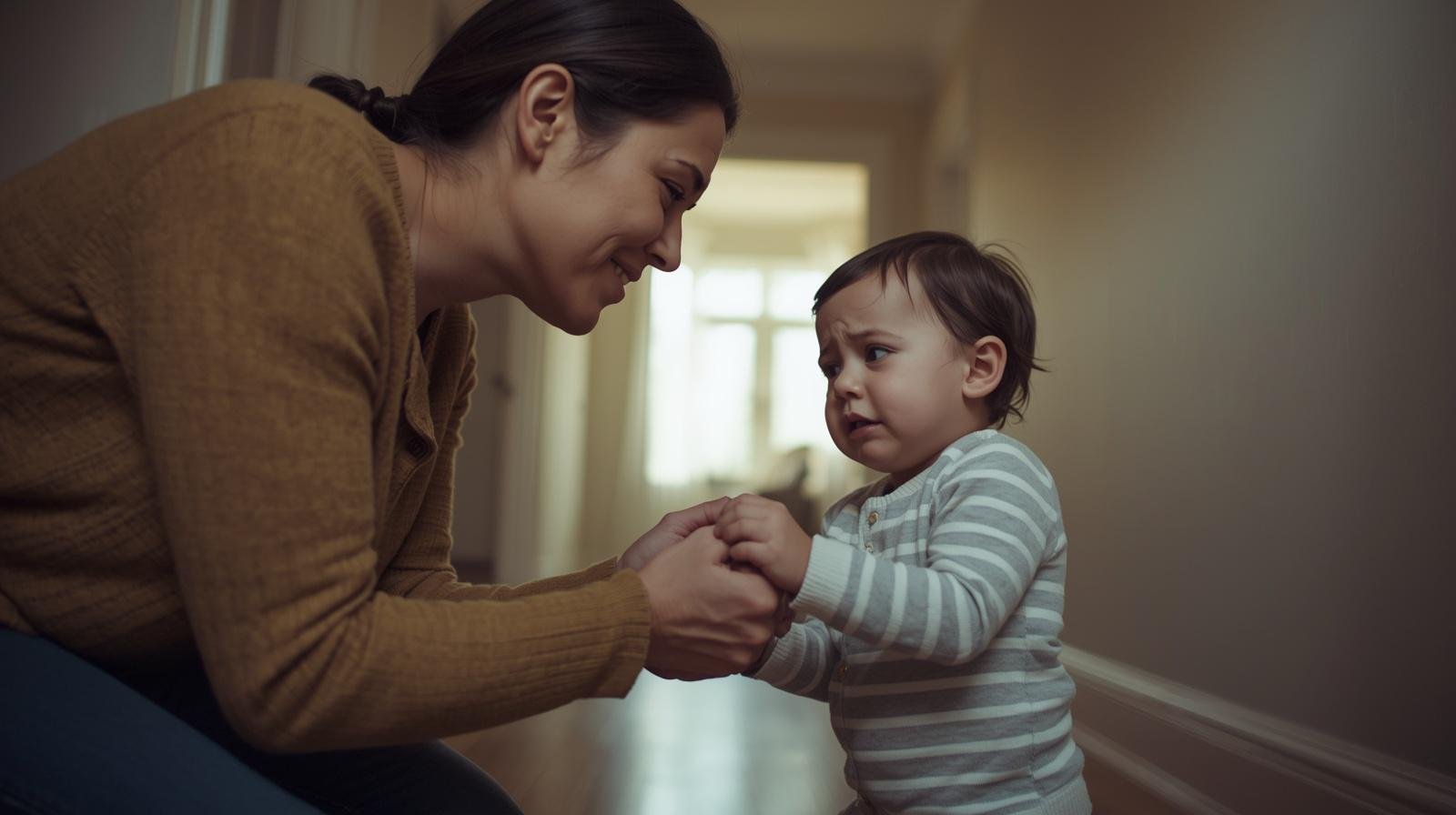
Many parents expect tantrums to decrease by age four, and while they often do become less frequent, they can become more intense and more sophisticated. Here’s what’s happening during a four-year-old’s meltdown and how to respond effectively:
Why Tantrums Still Happen at Four
At four, tantrums usually have identifiable triggers:
- Fatigue and hunger: These physical states significantly lower emotional resilience. A well-rested, well-fed child handles frustration much better than a tired, hungry one.
- Transitions: Shifting from one activity to another (leaving the playground, stopping screen time, getting ready for bed) is genuinely difficult because four-year-olds become deeply absorbed in what they’re doing.
- Feeling unheard or misunderstood: When children feel their perspective isn’t being acknowledged, frustration escalates rapidly.
- Overstimulation: Birthday parties, shopping malls, and family gatherings can overwhelm a developing nervous system.
- Desire for autonomy: Four-year-olds want to do things their way and on their timeline. When adults override this drive, conflict erupts.
How to Handle a Meltdown Effectively
The most effective approach to tantrums at four, supported by child psychology research, follows these principles:
- Stay calm yourself. Your nervous system regulates theirs. If you escalate, they escalate. Take a slow breath before responding.
- Validate the emotion, not the behavior. “I can see you’re really frustrated” acknowledges their feeling without condoning hitting, screaming, or throwing.
- Keep boundaries firm. Validation doesn’t mean giving in. “I understand you’re upset, and we still need to leave the playground.”
- Offer limited choices. “Do you want to walk to the car or hop like a bunny?” gives them a sense of control within your boundary.
- Wait it out if needed. Some tantrums need to run their course. Stay nearby, stay calm, and let the emotional wave pass.
- Reconnect after. Once the storm passes, offer comfort: “That was a big feeling. I’m here.” This teaches that emotions are temporary and the relationship is safe.
Teaching Emotional Regulation: Age-Appropriate Strategies
Emotional regulation — the ability to manage the intensity and duration of emotions — is one of the most important skills your child will develop. At four, they’re ready to start learning specific strategies, though they’ll still need your help to use them consistently. Here are evidence-informed approaches appropriate for this age:
Name It to Tame It
Neuroscience research suggests that simply labeling an emotion can reduce its intensity. Help your child build a rich emotional vocabulary beyond just “mad” and “sad.” Introduce words like frustrated, disappointed, embarrassed, nervous, jealous, proud, excited, and overwhelmed. Use everyday moments as teaching opportunities: “You look frustrated that the puzzle piece won’t fit. Frustration means you want something to work but it’s not working yet.”
The Calm-Down Corner
Create a dedicated space in your home where your child can go to manage big emotions. This should be presented as a positive, empowering choice — NOT a punishment. Stock it with comfort items: a soft cushion, a favorite stuffed animal, a feelings chart with faces showing different emotions, a glitter jar (a sealed bottle filled with water, glitter, and glue that they can shake and watch settle), and a few picture books about feelings.
Belly Breathing (The “Smell the Flower, Blow Out the Candle” Technique)
Four-year-olds can learn simple deep breathing when practiced during calm moments first. Make it concrete and visual: “Pretend to smell a beautiful flower (breathe in through the nose), now pretend to blow out a birthday candle (breathe out through the mouth).” Practice this daily when they’re happy so it becomes automatic when they’re upset. Three to five breaths is usually enough to activate the parasympathetic nervous system and reduce arousal.
The Feelings Thermometer
Draw a simple thermometer with colors ranging from blue (calm) at the bottom through yellow (starting to get upset) to red (very angry/upset) at the top. Help your child identify where they are on the thermometer throughout the day. This visual tool helps children recognize their emotional state before it reaches the “red zone” where regulation becomes much harder.
Storytelling and Books About Emotions
Reading stories about characters experiencing different child emotions is one of the most effective tools for emotional learning at this age. Books create safe distance for discussing difficult feelings. After reading, ask questions: “How do you think the character felt when that happened?” “Have you ever felt like that?” “What would you do?” This builds emotional literacy and empathy simultaneously.
Model Your Own Emotional Regulation
Perhaps the most powerful teaching tool is modeling. Let your child see you managing your own emotions: “I’m feeling frustrated that I burned dinner. I’m going to take three deep breaths to calm down, and then we’ll figure out what to eat instead.” This shows them that everyone has big feelings, that feelings are manageable, and that there are specific steps you can take to feel better.
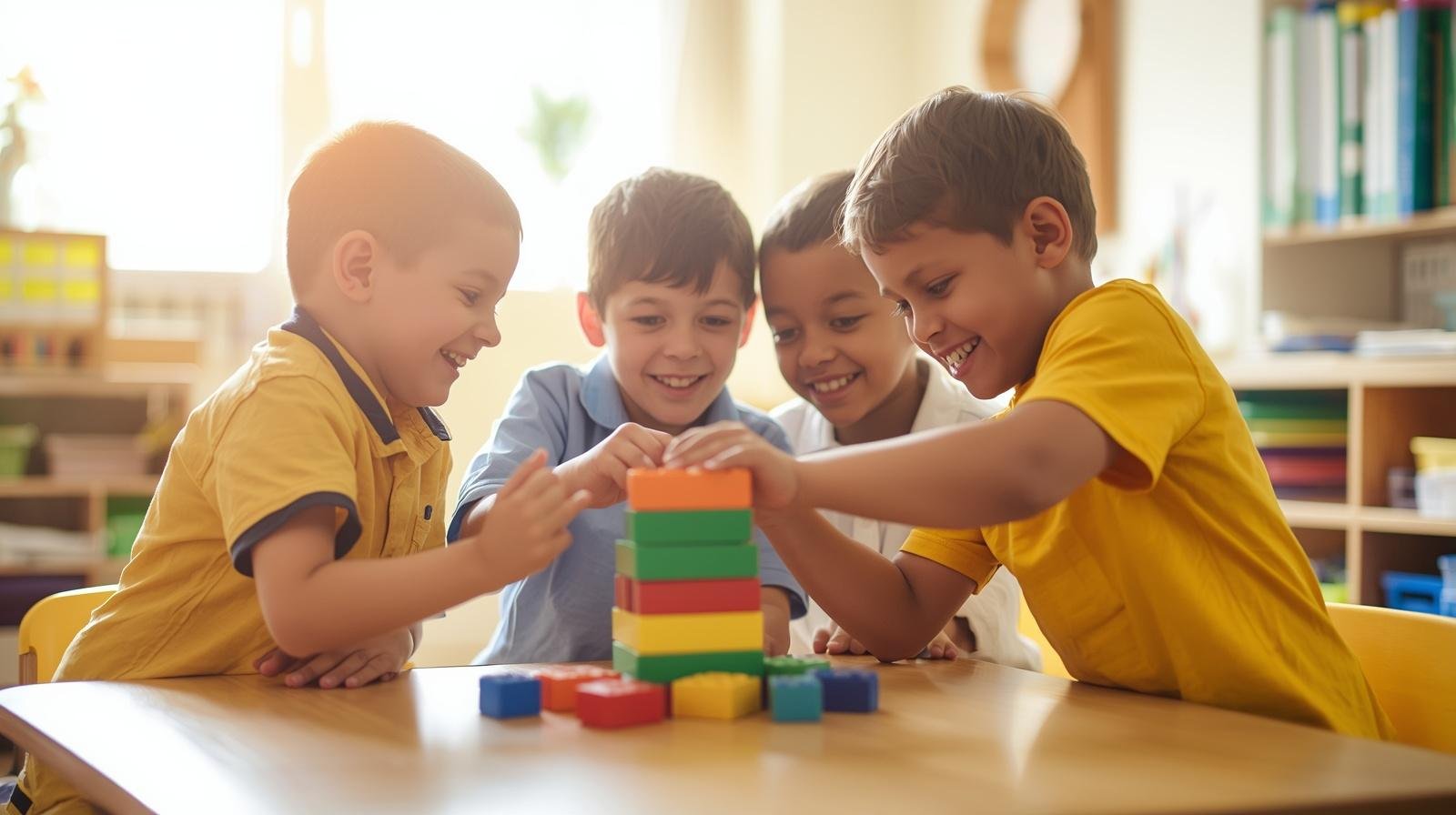
At four, your child’s social world expands dramatically. Friendships become more meaningful, social hierarchies emerge, and navigating group dynamics introduces a host of new child emotions. Here’s what’s happening socially and emotionally:
The Emergence of True Friendships
Unlike earlier “parallel play” (playing alongside but not with other children), four-year-olds form genuine friendships based on shared interests, mutual enjoyment, and emotional connection. They express preferences (“Sarah is my best friend”), experience loyalty, and feel genuine hurt when friendships are disrupted. These first friendships are incredibly important for social-emotional learning, even though they may seem fleeting to adults.
The Struggle with Sharing
Despite years of practice, sharing remains challenging for many four-year-olds. This isn’t selfishness — it reflects ongoing cognitive development. True sharing requires understanding another person’s perspective, delaying gratification, and trusting that your possession will be returned. All of these skills are still developing at four. Instead of forcing sharing, try teaching turn-taking with a timer: “You can play with it for three minutes, then it’s Maya’s turn for three minutes.”
Navigating Conflict with Peers
Four-year-olds are learning to resolve conflicts, but they still need significant adult guidance. They might hit, grab, or scream during disputes before trying words. Help by coaching in the moment: “Tell Marcus, ‘I was playing with that. Can I have it back, please?’” Over time, they’ll internalize these scripts and begin using words independently — though the process takes patience and many, many repetitions.
Common Fears and Anxiety at Age 4
Fear is a normal and healthy emotion that serves a protective function. However, the specific fears that emerge at four can seem irrational to adults because they’re driven by imagination rather than real-world experience. Understanding why these fears appear helps you respond with empathy rather than dismissal.
Common Fears at Four
The most typical fears at this age include:
- The dark and nighttime: A powerful imagination can populate shadows with frightening creatures. Night lights and bedtime routines are helpful.
- Monsters, ghosts, and imaginary creatures: These feel genuinely real to a child whose boundary between fantasy and reality is still blurry.
- Loud noises: Thunder, fireworks, vacuum cleaners, and hand dryers can be overwhelming for a developing sensory system.
- Animals: Even previously comfortable children may develop sudden fears of dogs, insects, or other animals.
- Being separated from parents: Separation anxiety can resurface or intensify around this age, particularly around transitions like starting preschool.
- Getting hurt: A growing awareness of their body’s vulnerability can make some children very cautious about physical activities.
How to Help Your Child with Fears
The most effective approach to childhood fears includes several key strategies:
- Take the fear seriously. Never mock, dismiss, or belittle a child’s fear. “Don’t be silly, there are no monsters” doesn’t help because the fear feels real to them.
- Validate and empathize. “I can see you’re scared. It’s okay to be scared sometimes. I’m here with you.”
- Provide gentle exposure. Gradual, supported exposure to feared objects or situations (from a safe distance, at the child’s pace) is more effective than avoidance or forced confrontation.
- Give them tools. A flashlight for dark rooms, a “monster spray” (water in a spray bottle) for bedtime, or a brave buddy (stuffed animal) can give children a sense of control over their fears.
- Monitor media exposure. Images and stories that seem mild to adults can be terrifying for four-year-olds. Be mindful of what your child watches, hears, and sees.
⚠️ When Fear Becomes a Concern: While most fears at four are developmentally normal, consult your child’s pediatrician if a fear is so intense that it significantly interferes with daily life (refusing to leave the house, persistent sleep disruption, inability to attend school or social activities), lasts for many months without improvement, or causes extreme physical symptoms like vomiting, headaches, or persistent stomach aches.
Red Flags: When to Seek Professional Help
While the wide range of normal preschooler behavior is broader than most parents expect, certain patterns may indicate that professional evaluation would be helpful. The following are signs that warrant discussion with your child’s pediatrician or a child psychologist:
Emotional and Behavioral Red Flags at Age 4
- Persistent aggression: Regularly hurting other children, adults, or animals beyond typical rough play, especially if it’s increasing in frequency or severity.
- Extreme withdrawal: Consistently avoiding all social interaction, showing no interest in peers, or appearing emotionally flat and unresponsive.
- Inability to separate from caregiver: Severe separation anxiety that hasn’t improved with gentle, consistent support over several weeks.
- Regression lasting more than a few weeks: Losing previously acquired skills (toileting, speech, social skills) for an extended period without an identifiable cause like a new sibling or family move.
- Self-harming behaviors: Repeatedly banging head, biting self, pulling hair, or other self-injurious actions.
- Extreme rigidity: Intense distress over minor changes in routine, insistence on sameness that significantly disrupts daily functioning.
- Persistent sleep problems: Ongoing nightmares most nights, extreme difficulty falling asleep, frequent night terrors, or significant sleep disruption lasting more than a few weeks.
- Loss of previously acquired language: Using fewer words than before, stopping communication attempts, or losing the ability to form sentences they previously used.
- No pretend play: A complete absence of imaginative play by age four, combined with limited social engagement, may warrant developmental screening.
- Extreme fearfulness: Anxiety so pervasive that it prevents normal daily activities like attending preschool, playing with other children, or sleeping.
Important clarification: Seeing one or two of these behaviors occasionally does not necessarily indicate a problem. Child development professionals look at patterns — the frequency, intensity, duration, and impact of behaviors on daily functioning. A child who sometimes hits when frustrated is different from a child who hits others multiple times daily without provocation. Context matters enormously.
If you do have concerns, your child’s pediatrician is the best starting point. They can conduct a developmental screening and, if needed, refer you to a child psychologist, developmental pediatrician, or other specialist. Early intervention, when needed, is highly effective and can make a significant positive difference in a child’s trajectory.

10 Daily Practices to Support Your 4-Year-Old’s Emotional Development
Supporting 4 year old emotional development doesn’t require expensive programs or perfect parenting. These ten daily practices, grounded in developmental psychology research, can make a meaningful difference:
1. Spend 15 Minutes of Undivided, Child-Led Play Daily
Set aside just 15 minutes each day where you follow your child’s lead in play without directing, correcting, or checking your phone. This “special time” fills your child’s emotional tank and strengthens your bond. Let them choose the activity, make the rules, and lead the narrative. The consistent, predictable nature of this daily connection provides deep emotional security.
2. Narrate Emotions Throughout the Day
Weave emotional vocabulary into everyday conversation: “You seem really proud of that drawing.” “I think you might be feeling disappointed that we can’t go to the park today.” “Look, that little girl seems excited about her ice cream.” This ongoing narration builds emotional literacy naturally and effortlessly.
3. Read Together Every Day
Reading together provides natural opportunities to discuss child emotions, practice perspective-taking, and process difficult topics through the safe lens of fictional characters. Choose books that feature characters experiencing a range of emotions and ask open-ended questions about how characters feel and why.
4. Establish Predictable Routines
Predictability reduces anxiety and gives children a sense of control. Consistent morning routines, mealtime rituals, and bedtime sequences provide the emotional scaffolding that helps four-year-olds manage their days. When the framework of the day is predictable, children can handle unexpected events more effectively.
5. Give Warnings Before Transitions
Abrupt transitions are a top trigger for meltdowns. Give your child a five-minute warning, then a two-minute warning before changing activities. For some children, a visual timer works even better than verbal warnings because they can see time passing. “When the sand runs out, it’s time to clean up for dinner.”
6. Offer Genuine, Specific Praise
Rather than generic “good job,” offer specific observations: “You waited so patiently for your turn. That took a lot of self-control.” “I noticed you shared your blocks with your sister even though you wanted them. That was very kind.” Specific praise reinforces the exact behaviors and emotional skills you want to encourage.
7. Allow Unstructured Free Play
Over-scheduled children miss out on crucial emotional development that happens during unstructured play. Free play teaches self-direction, creativity, problem-solving, and emotional regulation. Ensure your child has daily time to play freely without adult-directed activities, screens, or structured lessons.
8. Practice Repair After Conflict
No parent handles every situation perfectly. When you lose your temper, overreact, or make a mistake, model repair: “I’m sorry I yelled earlier. I was frustrated, but yelling wasn’t the right way to handle it. I love you.” This teaches your child that relationships can survive conflict, that mistakes are fixable, and that taking accountability is a sign of strength.
9. Limit and Monitor Screen Time
While moderate, high-quality screen time can be appropriate, excessive screen use is associated with increased emotional dysregulation in young children. Follow established guidelines recommending no more than one hour of high-quality programming per day for children ages 2–5, and co-view when possible so you can discuss content and emotions together.
10. Take Care of Your Own Emotional Health
Your emotional state directly affects your child’s emotional development. Research consistently shows that a parent’s ability to manage their own stress, anxiety, and frustration is one of the strongest predictors of a child’s emotional outcomes. This isn’t about being perfect — it’s about being aware of your own emotional patterns and seeking support when you need it.
Frequently Asked Questions
Is it normal for a 4-year-old to cry every day?
Yes, daily crying is within the normal range for four-year-olds. They experience emotions intensely and don’t yet have the regulation skills to manage every frustration without tears. What matters more than the frequency of crying is whether your child can be comforted, recovers within a reasonable time, and has periods of happiness and engagement throughout the day. If crying is near-constant, inconsolable, or accompanied by other concerning behaviors, discuss this with your pediatrician.
When should a 4-year-old be able to control their temper?
Full emotional regulation develops gradually over many years. At four, children are just beginning to learn basic strategies. You should see gradual improvement — slightly fewer tantrums, somewhat faster recovery, growing ability to use words instead of physical reactions — but don’t expect consistent self-control. Significant improvements in emotional regulation typically occur between ages 5 and 7, with continued development throughout childhood and adolescence.
My 4-year-old hits when angry. Is this normal?
Occasional hitting when overwhelmed by anger is common at four. Children this age may resort to physical responses because their verbal and emotional regulation skills aren’t yet strong enough to manage intense feelings. However, if hitting is frequent (multiple times daily), escalating in severity, or occurring without identifiable triggers, it’s worth discussing with your child’s pediatrician. Consistent, calm limit-setting (“I won’t let you hit. Hitting hurts. You can stomp your feet or squeeze this pillow instead”) helps children learn alternative responses over time.
Should I be worried if my 4-year-old doesn’t have friends?
Social development varies significantly among four-year-olds. Some children form strong friendships early, while others are more reserved or prefer adult company. If your child is interested in other children, can engage socially when opportunities arise, and shows appropriate social awareness (responding to their name, making eye contact, understanding basic social cues), slower friendship development isn’t usually a concern. If your child consistently avoids all peer interaction, seems unaware of other children, or is unable to engage even when interested, discuss this with your pediatrician.
How do I handle my 4-year-old’s tantrums in public?
Public tantrums are embarrassing, but handling them well is more important than what onlookers think. Stay calm, speak quietly, and focus entirely on your child. If possible, move to a quieter area. Use the same strategies you use at home: validate the emotion, hold the boundary, offer comfort. Avoid giving in to demands just because you’re in public, as this teaches that public tantrums are effective. Remember that most parents who witness your child’s meltdown have been there themselves and feel empathy, not judgment.
Is my 4-year-old’s emotional intensity a sign of a disorder?
Intense emotions alone are not a sign of a disorder. Some children are temperamentally more emotionally intense, sensitive, or reactive than others — this is a personality trait, not a pathology. Research on temperament, including the work of developmental psychologists Alexander Thomas and Stella Chess, has identified emotional intensity as a normal dimension of individual variation. Concerns arise only when intensity is so extreme that it significantly and persistently impairs daily functioning, social relationships, or the child’s overall wellbeing.
Final Thoughts: The Beautiful Chaos of Being Four
Understanding 4 year old emotional development transforms parenting from a constant guessing game into a more confident, compassionate practice. When you know that mood swings, dramatic declarations, imaginary friends, and fierce independence are all signs of a healthy, developing brain, you can respond with patience instead of panic.
Your four-year-old isn’t trying to manipulate you, push your buttons, or make your life difficult. They’re navigating an enormous emotional landscape with a brain that’s still under construction. They need your guidance, your patience, your calm presence — and your reassurance that all of their child emotions, even the messy, loud, inconvenient ones, are welcome and manageable.
The days can be long and the meltdowns can be exhausting, but this stage of preschooler behavior is also filled with extraordinary beauty: the first genuine empathy toward a friend, the pride of mastering a new skill, the uninhibited joy of discovering something wonderful, and the deep, fierce love of a child who is learning what it means to be human.
You’re doing more right than you realize. And four, with all its chaos, is a year you’ll one day look back on with deep tenderness.

About the Author
Prasad Fernando is a parenting writer and father of two young children. He created ParentalRing to share evidence-based, practical parenting strategies that help families navigate every stage of childhood with confidence and warmth. His work draws from developmental psychology research and the real-life experiences of raising preschoolers.
Important Disclaimer: This article is for general informational and educational purposes only. It is not intended as a substitute for professional medical advice, diagnosis, or treatment. The information presented does not replace consultation with a qualified pediatrician, child psychologist, or other licensed healthcare professional. If you have specific concerns about your child’s emotional or behavioral development, please consult your child’s healthcare provider. Every child develops differently, and professional evaluation considers the full context of an individual child’s history, temperament, and environment.
Sources and Further Reading
This article draws from established developmental psychology research and frameworks including Erik Erikson’s stages of psychosocial development, Jean Piaget’s theory of cognitive development, the American Academy of Pediatrics developmental milestone guidelines, and research on temperament by Alexander Thomas and Stella Chess. Parents seeking further information are encouraged to consult the CDC’s developmental milestone resources, the American Academy of Pediatrics (HealthyChildren.org), and their child’s pediatrician.
Social Emotions: Friends, Sharing, and Empathy