
Family Life & Relationships
Blended Family Challenges: How to Help Step-Siblings Bond
By Prasad Fernando | Family Life & Relationships | Updated May 2026 | 18 min read

Professional Disclaimer: The information in this article is intended for general educational purposes only. It does not constitute professional psychological, counselling, or legal advice. Every blended family is unique. If your family is experiencing significant conflict or emotional distress, please consult a licensed family therapist or mental health professional.
📋 Table of Contents
- What Is a Blended Family? Understanding the Modern Stepfamily
- Why Step-Sibling Bonding Is So Important — and So Hard
- Common Stepfamily Challenges Parents Face
- The 5 Stages of Blended Family Adjustment
- 10 Practical Strategies to Help Step-Siblings Bond
- Age-by-Age Bonding Guide for Step-Siblings
- The Role of Parents and Stepparents in Building Connection
- When to Seek Professional Help
- Frequently Asked Questions
- Sources & References
Imagine two families, each carrying their own memories, routines, and emotional wounds, suddenly sharing a refrigerator, a bathroom schedule, and a last name. For millions of children around the world, this is not a hypothetical scenario — it is Tuesday morning.
According to the Pew Research Center, more than 40% of American adults have at least one step-relative, and stepfamilies now make up a significant portion of family units across the developed world. Yet despite how common the blended family has become, the emotional and relational challenges that come with one are rarely straightforward.
For many parents who re-partner, one of the most pressing concerns is not the legal paperwork or the logistical juggling — it is watching their children struggle to connect with their new step-siblings. The hope that the children will simply “get along” is understandable, but research in family psychology consistently shows that meaningful step-sibling bonding rarely happens by accident.
In this comprehensive guide, we explore the emotional landscape of the modern blended family, the most common stepfamily challenges parents encounter, and — most importantly — ten evidence-informed strategies to help foster genuine step-siblings bonding over time.
What Is a Blended Family? Understanding the Modern Stepfamily
A blended family — sometimes called a stepfamily or reconstituted family — is a household in which one or both partners brings children from a previous relationship into a new family unit. This broad definition encompasses a wide range of living arrangements: full-time and part-time step-siblings, families where one partner has biological children and the other does not, same-sex blended families, and multigenerational blended households.
What all of these configurations share is a fundamental truth identified by family therapist Dr. Patricia Papernow in her decades of research: “Blended families require a different set of tools than nuclear families, and the adults who lead them must learn to lead with empathy before authority.”
The Demographics Behind Blended Families
The scale of blended family life globally is difficult to overstate. In the United States, estimates suggest that approximately 1 in 6 children live with a step-sibling at some point in their childhood. In the United Kingdom, the Office for National Statistics reports that around 11% of all dependent children live in stepfamilies. Similar trends are observed across Australia, Canada, and much of Western Europe.
These numbers matter because they tell us that step-sibling relationships are not a rare edge case in child development — they are a mainstream childhood experience that deserves the same depth of guidance and research as any other formative relationship.
What Step-Siblings Are — and Are Not
It is important to approach step-sibling relationships without assuming they will naturally mirror the closeness of biological sibling bonds. Step-siblings may live together full-time, part-time, or only during school holidays. They may have vastly different backgrounds, parenting styles embedded in their habits, and emotional histories shaped by loss, divorce, or family change.
Expecting them to feel like “real” siblings immediately can create pressure that backfires. Instead, thinking of step-sibling relationships as emerging friendships with shared family membership is often more realistic and more fruitful as a starting point.
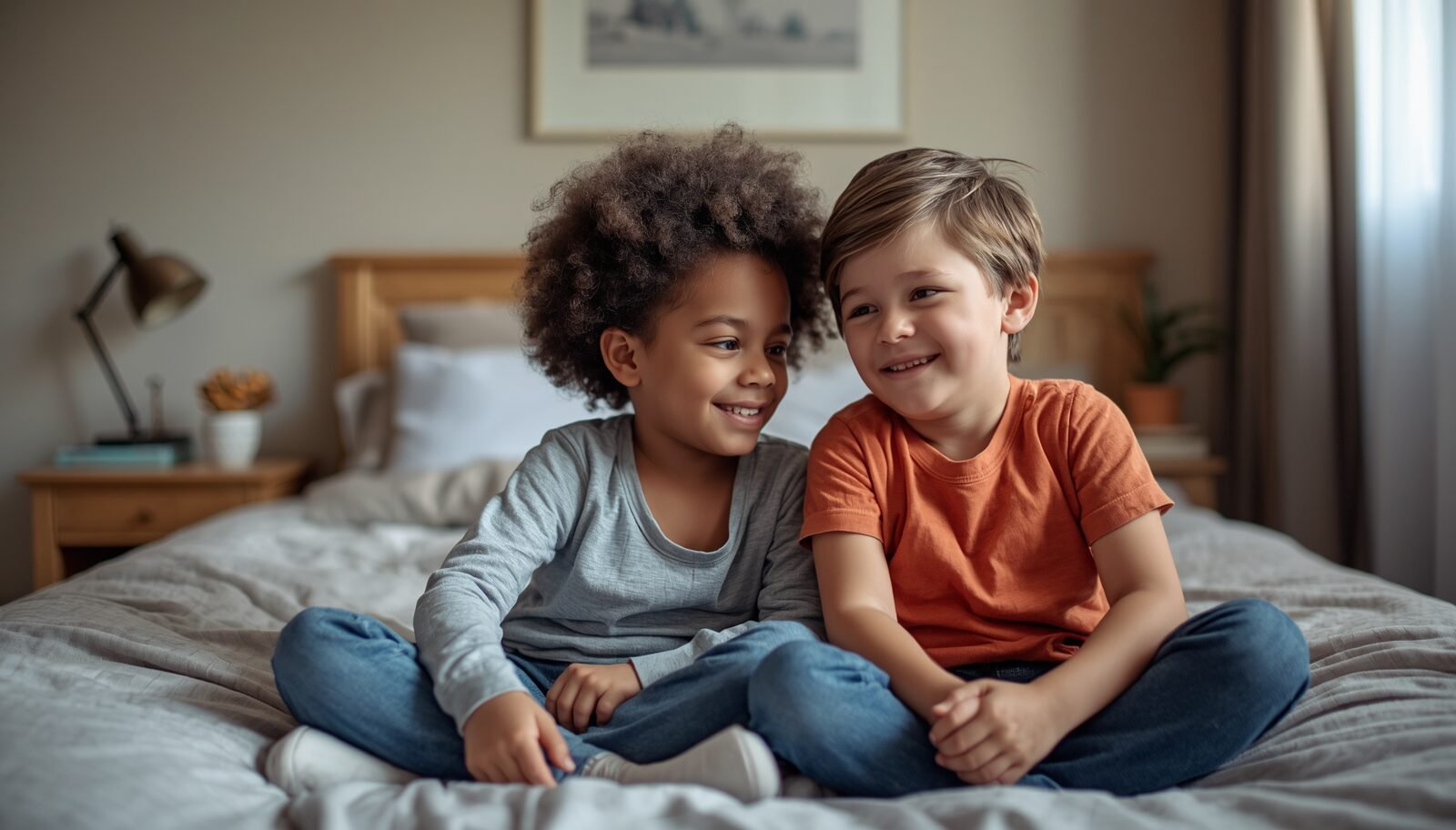
Why Step-Sibling Bonding Is So Important — and So Hard
Research in developmental psychology consistently shows that sibling relationships — including step-sibling relationships — are among the longest-lasting and most formative relationships a person will experience. Unlike friendships, which can fade, and unlike parent-child relationships, which are inherently hierarchical, sibling relationships offer something uniquely valuable: a peer relationship within a family context.
When step-siblings develop a genuine bond, studies suggest they experience:
- Greater sense of security and belonging in the new family
- Improved emotional regulation and conflict resolution skills
- Reduced anxiety and depression symptoms associated with family transitions
- A social buffer that helps them adapt to new school, home, and community environments
The Real Reason Bonding Is Difficult
The difficulty of step-siblings bonding is rarely about personalities clashing — though that certainly happens. More often, the barriers are structural and emotional:
- Loyalty binds: Children may feel that liking a step-sibling is a betrayal of their non-resident parent or absent sibling.
- Grief and loss: The new family arrangement is often born from loss — of the original family, of familiar routines, sometimes of a parent through death or estrangement.
- Identity threats: Birth order, bedroom space, parental attention, and family roles may all be disrupted when a new sibling enters the picture.
- Different household cultures: Children raised in different homes bring different habits around mealtimes, bedtimes, chores, communication styles, and even humour.
Understanding these barriers does not mean accepting conflict as inevitable. It means approaching the challenge with the compassion and strategic thinking it deserves.
Common Stepfamily Challenges Parents Face
Parents entering blended family life often report feeling caught between multiple competing demands simultaneously — navigating their own romantic relationship, co-parenting with an ex, parenting their biological children, and trying to build an authentic connection with their stepchildren, all at the same time. The stepfamily challenges that arise most commonly include the following:
1. Favouritism — Real or Perceived
Even when parents genuinely try to treat all children equally, children are extraordinarily perceptive about differences in tone, time, and attention. A parent who laughs more readily with their biological child, who is quicker to defend them in an argument, or who gives them more leeway around rules will — consciously or not — send signals that drive a wedge between step-siblings.
2. Inconsistent Discipline and House Rules
When step-siblings perceive that different rules apply to them versus their new siblings, resentment builds quickly. This is especially true when one set of rules is more lenient (often with biological children) and the other is stricter. Family therapists frequently note this as one of the most common — and most addressable — sources of stepfamily challenges.
3. The Battle for Space and Resources
Sharing a bedroom, a bathroom, or even a television remote is a genuine source of friction, particularly during the first months of co-habitation. Space is not just physical — it is symbolic. Whose stuff gets to stay? Who has to make room? These questions carry emotional weight well beyond their practical significance.
4. Navigating Different Co-Parenting Households
Many step-siblings spend time in two households — their blended family home and a non-resident parent’s home. The norms, values, and parenting styles of these homes may differ dramatically, creating children who must code-switch between emotional worlds several times a week. This emotional labour is exhausting and can increase irritability and conflict with step-siblings.
5. Pushback from Extended Family
Grandparents, aunts, uncles, and cousins may overtly or subtly resist accepting the new family structure. When extended family members treat some children as “real” grandchildren and others as outsiders, the children absorb these distinctions and bring them home into their relationships with one another.
📖 Related Reading: Keep Your Marriage Strong After Kids | Proven Habits — Maintaining a strong partnership is one of the best things you can do for your blended family’s stability.
The 5 Stages of Blended Family Adjustment
Dr. Patricia Papernow’s research at the intersection of family therapy and stepfamily psychology identifies a progression of stages that most blended families move through. Understanding these stages can help parents resist the urge to force faster bonding and instead meet their family where it actually is.
Stage 1: Fantasy
The new family begins with hopes and expectations — often unrealistic ones. Adults may imagine the children will bond quickly; children may hope the new step-parent will be fun and permissive, or conversely, fear the worst. This stage is defined by wishful thinking more than reality.
Stage 2: Immersion
Reality sets in. Children may act out, resist the new sibling relationship, or withdraw. Adults often feel confused, hurt, or inadequate. This is the most common stage during which families seek outside help — or give up.
Stage 3: Awareness
The family begins to understand each person’s needs more clearly. Adults start to name the dynamics at play rather than reacting to them. Children may begin to test boundaries in more predictable ways, which paradoxically signals progress.
Stage 4: Mobilisation
The family begins to actively negotiate differences. Step-siblings may start to establish their own relationship norms, separate from what adults have set up for them. Conflict may actually increase during this stage — but it is productive conflict, not destructive.
Stage 5: Contact, Resolution, and Harmony
The family develops its own identity and rituals. Step-sibling bonds, while still different from biological sibling bonds, become genuine and meaningful. Most families reach some version of this stage — but research suggests it takes, on average, five to seven years of intentional effort.
Understanding this timeline is not discouraging — it is liberating. It tells parents that what they are experiencing in the first two years is normal, and that patience combined with strategy is the most powerful tool available to them.
10 Practical Strategies to Help Step-Siblings Bond
The following strategies are drawn from evidence-informed family therapy practice and the practical experience of family educators. They are presented not as a rigid checklist but as a toolbox — parents should select and adapt based on the ages, personalities, and specific circumstances of their family.
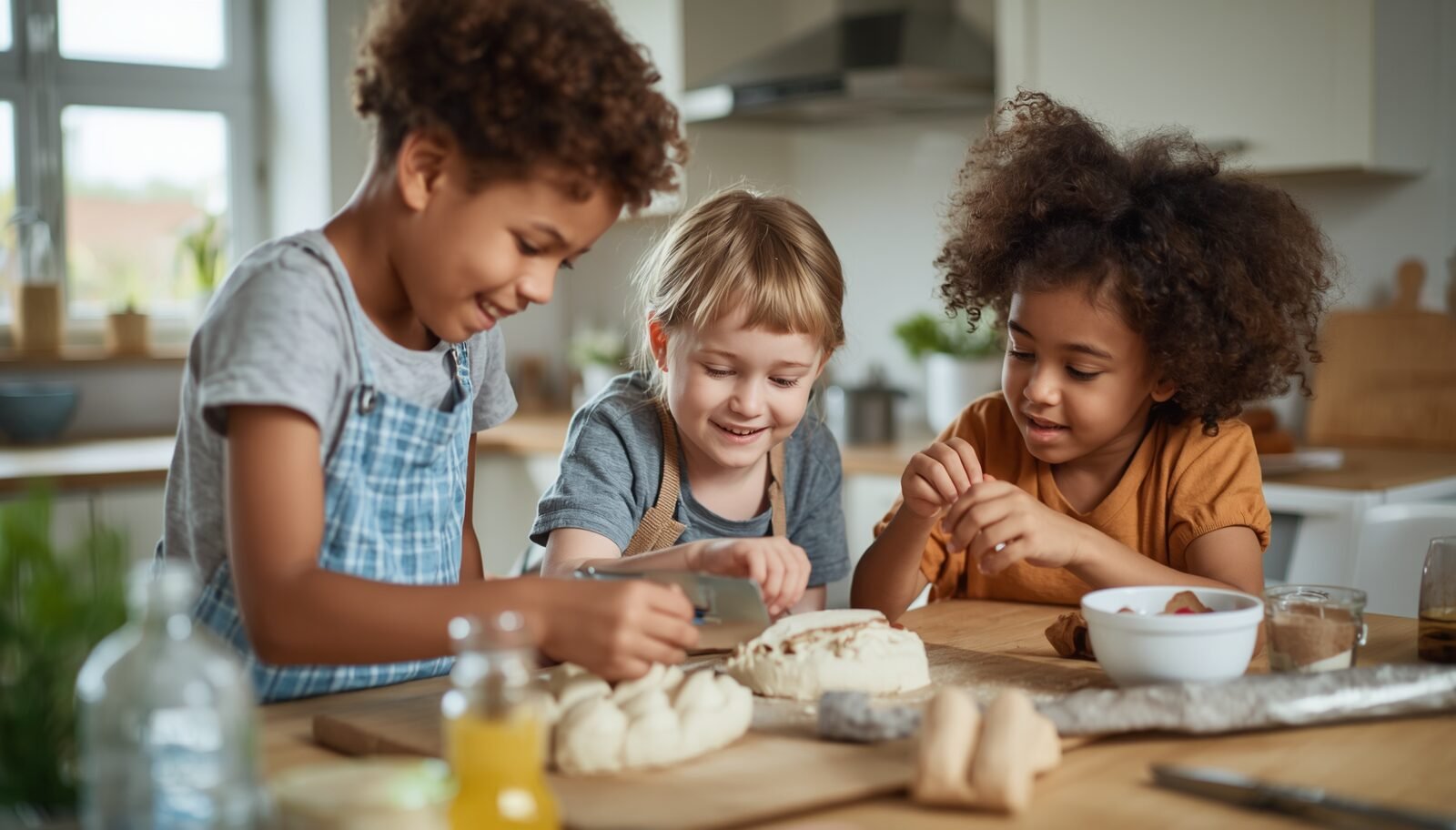
1. Start with Shared Experiences, Not Shared Feelings
Do not ask children to feel close to each other before they have had the time and experiences to develop that closeness naturally. Instead, create low-stakes, enjoyable shared experiences: cooking a meal together, building something, playing a video game, going on a hike. Shared activity creates shared memory, and shared memory becomes the foundation of genuine affection over time.
Family therapists recommend activities where there is no winner or loser — collaborative games, creative projects, or volunteer activities work particularly well for step-siblings in the early stages of their relationship.
2. Protect Each Child’s Individual Identity
One of the most counterintuitive insights from stepfamily research is that allowing children to be individuals is one of the most powerful drivers of sibling cohesion. When children feel their identity, preferences, and space are protected and respected, they are less threatened by the presence of a new step-sibling and more open to connection.
Concretely, this means ensuring each child has a space in the home that is unambiguously theirs, that their existing friendships and hobbies are preserved, and that their name for the step-parent is their own choice — not one imposed by adults.
3. Establish Fair and Consistent House Rules
Perceived fairness is more important to children than actual equality. Develop a clear, shared set of household expectations that apply to all children regardless of biological status. Where exceptions exist — and sometimes they must, due to age or developmental differences — explain them in terms children can understand.
Family meetings, held regularly and run with genuine respect for each child’s voice, can be a powerful way to co-create household norms that all children have some ownership over.
4. Create New Family Traditions Together
Rather than trying to transplant old traditions from each biological family unit into the new one, create new traditions that belong to this specific blended family. A monthly “family adventure day,” a weekend cooking challenge, a yearly camping trip, or a silly ritual around movie nights — these shared rituals build the family identity that step-siblings will carry with them into adulthood.
Research on family rituals consistently demonstrates that they serve as powerful identity anchors, particularly for children navigating complex family structures.
5. Validate Negative Feelings Without Fuelling Conflict
When a child says “I hate having a step-sibling” or “I wish it was just us,” the worst response is to dismiss or punish that feeling. The best response is to acknowledge it: “It sounds like you’re really missing how things used to be. That makes complete sense.”
Validating a negative emotion does not mean agreeing with it or allowing harmful behaviour that accompanies it. It means separating the feeling (legitimate) from the behaviour (which may need redirection). Children who feel emotionally seen are far less likely to act out their resentment towards a step-sibling.
6. Never Force Physical Affection or Verbal Declarations
Requiring children to hug step-siblings, call them “brother” or “sister,” or declare that they love the new family creates compliance without connection — and sometimes breeds the opposite of the desired outcome. Affection and relational language should be allowed to develop organically, at the child’s pace.
This principle aligns with broader guidance in child development about bodily autonomy and consent, and is particularly important for children who have experienced any form of relational trauma prior to the blended family’s formation.
7. Build the Couple Relationship First
Research by Dr. John Gottman and colleagues suggests that the quality of the adult romantic partnership is the single strongest predictor of blended family stability and child wellbeing. When parents are united, emotionally available, and modelling healthy communication, children — including step-siblings — feel safer and are more likely to extend trust to one another.
Investing in couples therapy, regular date nights, and intentional communication practice is not a luxury in blended family life — it is a structural necessity.
8. Manage Transitions with Care
Children who move between households often arrive home emotionally dysregulated after a transition — missing the other parent, confused about loyalty, or simply exhausted by the social and emotional labour of switching worlds. Friction between step-siblings frequently spikes in the hours after a household transition.
Building a brief “decompression ritual” into transition days — a quiet snack, a short walk, screen time, or one-on-one time with a biological parent before group family activities — can significantly reduce post-transition conflict.
9. Support Step-Sibling Conflict Without Taking Sides
Conflict between step-siblings will happen. The goal is not to eliminate it but to guide children through it in ways that build relational skill and mutual respect. Avoid taking sides based on biological relationship. Instead, use conflict as a coaching opportunity: help children name what they need, listen to the other’s perspective, and identify a solution that both can live with.
Children who learn to navigate conflict with a step-sibling are building skills they will use for the rest of their lives in friendships, romantic relationships, and professional settings.
10. Celebrate Incremental Progress
Step-siblings watching the same show together without arguing is progress. One offering the other the last piece of pizza without being asked is progress. A brief, unprompted conversation about something other than a conflict is progress. Naming and celebrating these small moments — privately with your partner, and occasionally in age-appropriate ways with the children themselves — keeps motivation alive through the long middle stages of blended family adjustment.
Age-by-Age Bonding Guide for Step-Siblings
The strategies most effective for supporting step-siblings bonding vary significantly based on developmental stage. What works for a six-year-old is unlikely to resonate with a fifteen-year-old — and applying age-inappropriate approaches often makes things worse rather than better.
Young Children (Ages 3–7)
Young children are naturally ego-centric in their development, and the arrival of a step-sibling is processed primarily through the lens of how it affects them personally. At this stage, the best approach is to create lots of parallel play — activities where children play side by side rather than necessarily together. Shared physical spaces, simple crafts, outdoor play, and story time are all effective. Avoid expecting complex emotional understanding and focus instead on creating warm, predictable shared moments.
Middle Childhood (Ages 8–12)
This is often the most malleable window for step-sibling bonding. Children in this age range are developing genuine peer relationships, have enough cognitive sophistication to understand fairness and perspective, and are not yet in the identity-intensive years of adolescence. Shared hobby exploration, team-based activities, and collaborative problem-solving work particularly well. This age group also responds well to being given a meaningful role in the blended family — a responsibility that signals they are valued and trusted.
Adolescents (Ages 13–17)
Teenagers are the most challenging age group in blended family formation, largely because identity development — Who am I? Where do I belong? — is the central task of adolescence, and a blended family complicates all of those questions simultaneously. Forcing togetherness typically backfires. Instead, focus on mutual respect, shared physical space agreements, and creating conditions for organic interaction rather than scheduled bonding. When teenagers feel their autonomy is respected, they are more — not less — likely to open up over time.
It is worth noting that adolescents who do form genuine bonds with step-siblings often describe those relationships as among the most important in their lives as adults. The investment is absolutely worthwhile — it simply requires a longer view and a lighter touch.

📖 Related Reading: Why Your 7-Year-Old Is Suddenly Anxious (and How to Help) — Understanding anxiety in middle childhood is essential for parents navigating blended family transitions.
The Role of Parents and Stepparents in Building Connection
Perhaps the most important insight from family psychology research on blended families is this: step-siblings do not build their relationship with each other — they build it through the environment their parents create.
Adults are the architects of the emotional climate in a blended family. The following behaviours in parents and stepparents have been consistently linked to better step-sibling outcomes:
The Biological Parent’s Role
- Refrain from putting children in the middle of adult tensions — they absorb this and redirect it sideways.
- Maintain individual connection with your biological children so they do not feel displaced by the new family structure.
- Actively support the stepparent’s authority in age-appropriate ways, and discuss differences in parenting approach privately.
- Model openness and warmth towards your partner’s children — children follow the emotional lead of their biological parent above all others.
The Stepparent’s Role
- Move slowly on the parenting authority continuum. Family therapists recommend that stepparents begin as a warm, friendly adult presence — closer to an interested family friend than a parent — and allow authority to develop gradually as genuine relationship forms.
- Do not try to replace the absent parent. Children need to know their original family is being honoured, not erased.
- Find genuine interests to share with each stepchild individually before trying to build group dynamics.
- Be patient with rejection. A stepchild’s rejection of a stepparent is almost always about their grief and loyalty binds — not a personal judgement.
Both Adults Together
United, communicative, and emotionally regulated adult partners form the backbone of a healthy blended family. When the adult relationship is strong, children — including step-siblings — inherit an emotional security that makes connection between them far more possible.

📖 Related Reading: Positive Reinforcement vs. Bribery: What’s the Difference in Parenting? — Understanding discipline principles that motivate through genuine connection is invaluable in blended family parenting.
When to Seek Professional Help
Even with the best intentions and the most thoughtful parenting, some blended family situations exceed what families can navigate independently. Recognising when professional support is needed — and being willing to seek it — is a sign of strength, not failure.
Consider reaching out to a licensed family therapist, stepfamily specialist, or counsellor if you observe any of the following:
- Physical aggression between step-siblings that is not decreasing over time
- Persistent symptoms of anxiety, depression, or social withdrawal in any child in the household
- A child refusing to attend school, eat regularly, or engage in activities they previously enjoyed
- Sexual behaviour between step-siblings of any kind (this requires immediate professional intervention)
- Step-sibling conflict that is creating significant strain on the adult relationship
- Any child expressing a persistent wish to harm themselves or others
Many blended families benefit from a few sessions of family therapy even when no acute crisis is present — the process of getting an outside perspective and learning communication tools proactively can prevent many of the more serious challenges from developing in the first place.
In many countries, stepfamily-specific support groups also offer a valuable complement to professional therapy — connecting with other adults who are navigating the same terrain can reduce the isolation that many blended family parents experience.
Frequently Asked Questions
How long does it typically take for step-siblings to bond?
Research in stepfamily psychology suggests that meaningful step-sibling bonding most often develops over a period of three to seven years, depending on the ages of the children, how frequently they share living space, and the quality of the family environment the adults create. Expecting closeness within the first year is generally unrealistic and can create pressure that backfires. Progress is usually measured in small moments rather than dramatic breakthroughs, so it helps to recognise and celebrate incremental improvements.
My step-siblings refuse to interact with each other at all. Is this normal?
Yes, active avoidance between step-siblings is quite common, particularly in the early stages of blended family formation and during adolescence. It does not necessarily signal that the relationship is permanently broken. The most effective response is to create low-pressure, parallel shared experiences rather than forcing interaction. Over time, shared space and shared activities tend to create opportunities for connection that forced togetherness does not. If total avoidance persists for more than a year and is causing significant household tension, a family therapist can help facilitate a more productive approach.
Should step-siblings share a bedroom?
Where possible, family therapists generally recommend that step-siblings have their own sleeping spaces, at least during the early adjustment period. Personal space is deeply tied to a sense of identity and security, and sharing a bedroom with someone who feels like a stranger can escalate rather than ease tension. If separate bedrooms are not possible due to housing constraints, clear agreements about personal space within the shared room — and private time for each child — become especially important. The decision should also take into account the age, gender, and comfort levels of all children involved.
What if my child says they hate their step-sibling?
It is important to acknowledge this feeling without dismissing it or immediately trying to fix it. Children often use strong language like “hate” to communicate a complex mix of emotions including grief, resentment, fear, or a sense of displacement. Validate the underlying feeling: “It sounds like you’re really struggling with having [name] here. Can you tell me more about what’s been hard?” From there, focus on identifying specific behaviours or situations that are causing the friction, rather than the global feeling. If the sentiment persists and is accompanied by behavioural changes, consider individual therapy for the child.
How do I handle it when my partner disciplines my biological child differently?
Inconsistent or perceived-unfair discipline is one of the most common sources of conflict in blended families. The most effective approach is to have detailed, private conversations with your partner about discipline philosophy and agreed-upon household rules before issues arise in the moment. During the early phases of blended family life, many therapists recommend that biological parents take primary responsibility for disciplining their own children, while the stepparent takes on more of a supportive, relationship-building role. Over time, as the stepparent-stepchild relationship develops, a more unified approach becomes more feasible and more effective.
Are there any books or resources specifically about helping step-siblings bond?
Several well-regarded books offer research-informed guidance on blended family dynamics and step-sibling bonding. ‘Surviving and Thriving in Stepfamily Relationships’ by Dr. Patricia Papernow is widely considered the most comprehensive clinical guide available. ‘The Smart Stepfamily’ by Ron L. Deal is also frequently recommended for its practical, accessible approach. For children, age-appropriate books about blended families — such as ‘Two Homes’ by Claire Masurel for young children — can help normalise their experience. The Stepfamily Foundation (stepfamily.org) and the National Stepfamily Resource Center also offer online resources, webinars, and therapist referrals.
The Long View: Patience, Consistency, and Hope
Building a blended family is one of the most emotionally ambitious undertakings a parent can attempt. It asks adults to hold space for grief and hope simultaneously, to parent children who did not choose them while protecting the children who did, and to sustain a romantic relationship through extraordinary complexity — all while navigating the competing timetables and emotional worlds of multiple children at once.
It is hard. And it is worth it.
The research on blended families that function well does not describe families where children bonded immediately or where conflict was absent. It describes families where the adults maintained their commitment to fairness, empathy, and individual connection through the years it took for genuine closeness to develop. It describes children who, as adults, credit their step-siblings with shaping who they became — not because a parent forced them into a relationship, but because a parent created the conditions in which a real relationship became possible.
The steps described in this article are not magic formulas. They are the building blocks of a climate — an emotional atmosphere in which step-siblings bonding can occur naturally, over time, with all the authenticity that the slow growth of genuine affection entails.
Start where you are. Adjust based on what you observe. Seek support when you need it. And trust that the investment you are making today in your children’s relationship with one another is an investment in bonds that may well outlast everything else in their lives.
About the Author
Prasad Fernando
Prasad Fernando is the founder and lead writer of ParentalRing, a resource dedicated to practical, research-informed parenting guidance. With a deep interest in family psychology, child development, and the evolving dynamics of modern family structures, Prasad draws on peer-reviewed research, clinical expertise from leading family therapists, and the lived experience of real families to create content that is both evidence-based and genuinely useful. He is committed to the belief that better-informed parents raise more resilient, emotionally healthy children — and that every family, regardless of its structure, deserves guidance that meets them where they are.
Sources & References
- Papernow, P. L. (2013). Surviving and Thriving in Stepfamily Relationships: What Works and What Doesn’t. Routledge.
- Pew Research Center. (2011). A Portrait of Stepfamilies. Pew Research Center Social & Demographic Trends. Retrieved from pewresearch.org.
- Gottman, J. M., & Silver, N. (2015). The Seven Principles for Making Marriage Work. Harmony Books.
- Deal, R. L. (2014). The Smart Stepfamily: Seven Steps to a Healthy Family. Bethany House Publishers.
- Ganong, L. H., & Coleman, M. (2017). Stepfamily relationships: Development, dynamics, and interventions (2nd ed.). Springer.
- Visher, E. B., & Visher, J. S. (1996). Therapy with Stepfamilies. Brunner/Mazel.
- Office for National Statistics UK. (2019). Families and Households in the UK. Statistical Bulletin.
- Hetherington, E. M., & Kelly, J. (2002). For Better or for Worse: Divorce Reconsidered. W. W. Norton & Company.
- Dunn, J. (2002). The adjustment of children in stepfamilies: Lessons from community studies. Child and Adolescent Mental Health, 7(4), 154–161.
- National Stepfamily Resource Center. (n.d.). Stepfamily Fact Sheet. Auburn University. Retrieved from stepfamilies.info.
This article was last reviewed and updated in May 2026. While every effort is made to use current, peer-reviewed sources, family research is ongoing. Readers are encouraged to consult a licensed family therapist for guidance specific to their situation.