
Parenting Psychology & Emotional Health • Big Kids
Why Your 7-Year-Old Is Suddenly Anxious (and How to Help)
By Prasad Fernando • Updated April 2026 • 15 min read
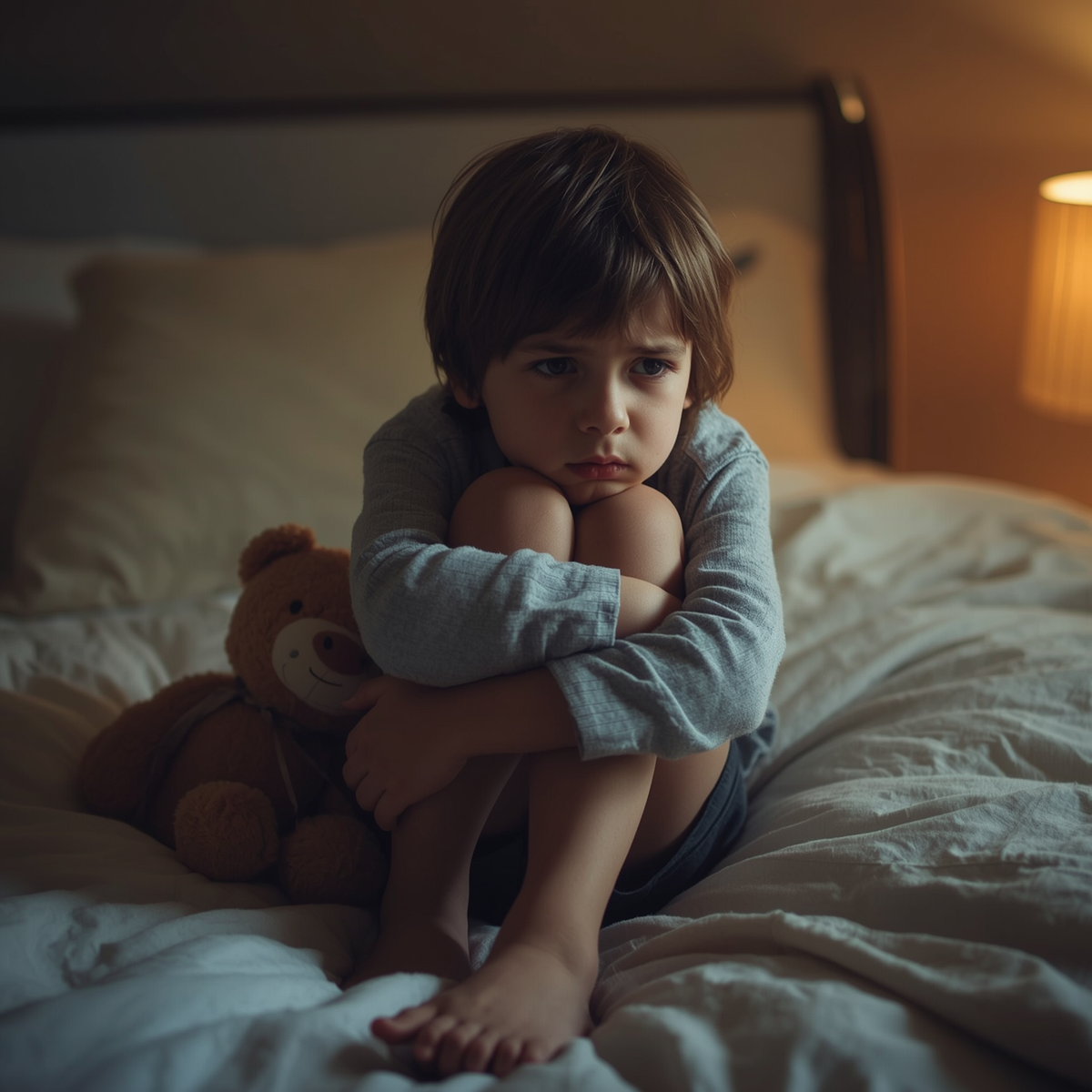
Your 7-year-old used to be carefree. They ran into school without looking back, slept soundly through the night, and tackled new experiences with enthusiasm. Then, seemingly overnight, everything changed. Now they’re clinging to you at drop-off, complaining of stomach aches before school, asking repetitive worried questions at bedtime, or refusing activities they once loved. If this sounds familiar, you’re witnessing something that affects far more families than you might think: 7 year old anxiety.
Anxiety disorders are the most common mental health condition in children, and the period between ages 6 and 8 represents a critical window when anxiety often first emerges or significantly intensifies. This isn’t coincidence — it’s developmental neuroscience. At seven, your child’s brain is undergoing profound changes that make them more aware of danger, more capable of imagining worst-case scenarios, and more sensitive to social evaluation, all while their coping strategies remain immature.
The good news? Childhood anxiety symptoms at this age are highly responsive to early intervention. When parents understand what’s happening in their child’s brain and learn specific strategies for helping anxious children, the trajectory can shift dramatically. This guide explains exactly why anxiety spikes at age seven, how to recognize it, what to do about it, and when professional help is needed — all grounded in current child psychology research.
📑 In This Article
- Why Anxiety Spikes at Age 7: The Brain Science
- The 8 Most Common Anxiety Triggers at This Age
- Recognizing Childhood Anxiety Symptoms (Beyond “Worrying”)
- Types of Anxiety Common in 7-Year-Olds
- What NOT to Do (Well-Meaning Mistakes That Backfire)
- 10 Evidence-Based Strategies for Helping an Anxious Child
- Handling School-Related Anxiety
- Conquering Bedtime and Nighttime Anxiety
- When to Seek Professional Help
- Frequently Asked Questions
Why Anxiety Spikes at Age 7: The Brain Science
The sudden onset of anxiety at age seven isn’t random — it’s rooted in predictable developmental changes. Understanding these changes helps parents respond with empathy instead of frustration:
Cognitive Leap: The Ability to Imagine the Future
Around age 7, children undergo what developmental psychologist Jean Piaget called the transition from preoperational to concrete operational thinking. For the first time, they can think logically, understand cause and effect across time, and — critically — imagine things that haven’t happened yet. This means they can now vividly picture a parent getting hurt, a house catching fire, or themselves failing a test. Their imagination, which previously fueled creative play, now also fuels worry.
Growing Awareness of Real-World Dangers
Seven-year-olds begin absorbing information about the wider world. They overhear news, notice adult conversations, and pick up on the anxieties of people around them. Unlike younger children who live primarily in the present moment, a 7-year-old can understand that bad things happen to real people — and that those bad things could happen to them or their family. This awareness is developmentally appropriate but emotionally overwhelming.
Social Comparison and Fear of Judgment
First and second grade brings increased social awareness. Children begin comparing themselves to peers: “Am I as smart? As fast? As popular?” They become aware of being evaluated — by teachers, classmates, and even themselves. This emerging self-consciousness can fuel performance anxiety, social anxiety, and fear of embarrassment.
The Developing Amygdala vs. the Immature Prefrontal Cortex
At seven, the amygdala (the brain’s threat-detection center) is fully active and highly sensitive. However, the prefrontal cortex (responsible for rational thinking, perspective-taking, and calming the amygdala) is still years from maturity. This creates a neurological imbalance: your child’s alarm system is fully operational, but their “braking system” is still under construction. They can perceive danger but struggle to put it in perspective or calm themselves down.
Loss of “Magical Thinking”
Younger children often feel protected by magical beliefs: “My blanket keeps me safe,” “Monsters can’t get me if the light is on.” At seven, children begin to understand that these protections aren’t real. This loss of magical thinking, while cognitively healthy, can temporarily increase vulnerability to anxiety because their old coping mechanisms no longer feel convincing.
The 8 Most Common Anxiety Triggers at This Age
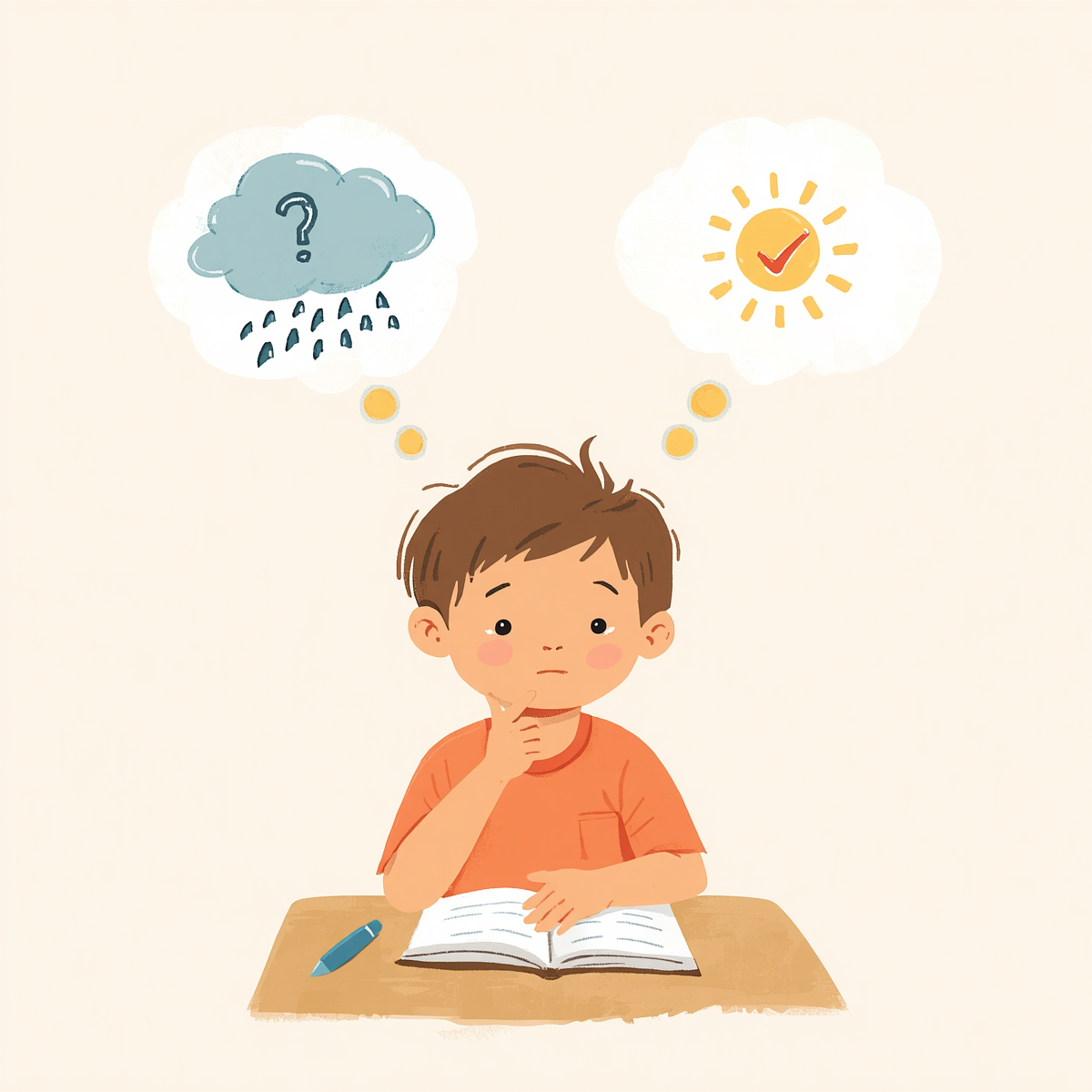
While 7 year old anxiety can seem to appear without a clear cause, most anxious children this age are responding to one or more identifiable triggers:
1. School Performance Pressure
Academic expectations increase significantly in first and second grade. Graded work, timed tests, reading level assessments, and homework create a structured environment where children feel evaluated regularly. Children who previously saw learning as play now experience it as performance — and the possibility of “not being good enough” becomes real.
2. Social Dynamics and Friendships
Friendships become more complex at seven. Children form cliques, experience exclusion, and navigate the complicated politics of the playground. Being left out, having a fight with a best friend, or worrying about whether anyone will play with them at recess can consume a child’s thoughts.
3. Separation from Parents
Separation anxiety can resurface or intensify at this age, often triggered by increased school hours, new after-school activities, or overnight events like sleepovers and camps. The child’s growing understanding that bad things can happen while they’re apart from their parents fuels this fear.
4. Health and Physical Safety
Seven-year-olds may develop intense fears about illness, injury, or death — for themselves or their parents. A classmate breaking an arm, a grandparent’s illness, or even a health lesson at school can trigger persistent worrying about physical safety.
5. Family Changes or Stress
Divorce, a new sibling, financial stress, a family move, parental conflict, or a parent’s job loss can all trigger anxiety in a child who is now old enough to sense tension but too young to understand or control it.
6. Overhearing News and Adult Conversations
Children at seven absorb far more from their environment than parents realize. Overhearing news about natural disasters, violence, or illness can lodge deeply in a child’s mind and fuel catastrophic thinking.
7. Transitions and New Experiences
Changing schools, joining a new sports team, starting music lessons, or encountering any unfamiliar situation can trigger anxiety. The child’s ability to imagine everything that could go wrong makes new experiences feel risky rather than exciting.
8. Perfectionism and Fear of Failure
Many 7-year-olds develop perfectionist tendencies. They may refuse to try new things for fear of not being good enough, erase and rewrite homework repeatedly, or become distressed over minor mistakes. This perfectionism often reflects an underlying anxiety about performance and worthiness.
Recognizing Childhood Anxiety Symptoms (Beyond “Worrying”)
Childhood anxiety symptoms at age seven often don’t look like what adults expect. Many children this age can’t articulate “I feel anxious” — instead, their anxiety shows up in behaviors, physical complaints, and emotional patterns that can be confusing for parents:
Physical Symptoms
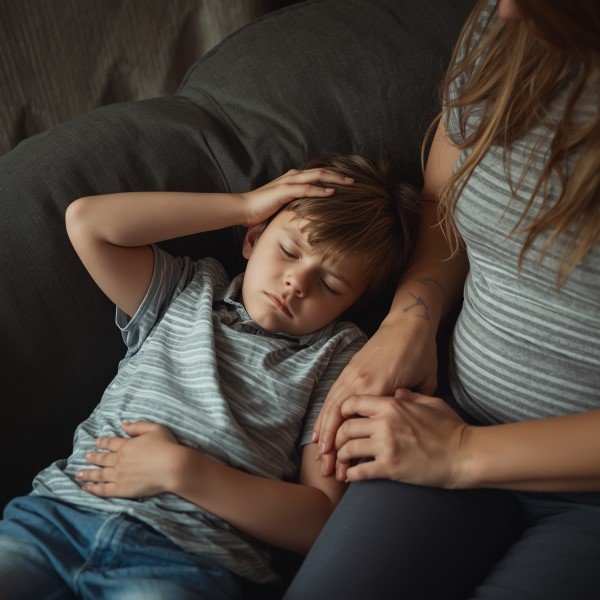
- Stomach aches and nausea — especially before school, social events, or new situations. These are real, not faked. Anxiety activates the gut-brain connection, causing genuine gastrointestinal distress.
- Headaches — tension headaches from chronic muscle tightness associated with anxiety.
- Difficulty falling asleep or staying asleep — racing thoughts, fear of the dark, nightmares, or needing a parent present to fall asleep.
- Appetite changes — eating significantly more or less than usual.
- Fatigue — anxiety is exhausting, and children may seem tired even after adequate sleep.
- Frequent bathroom visits — the “nervous bladder” is a real anxiety response.
Behavioral Symptoms
- Avoidance — refusing to attend school, avoiding social events, skipping activities they previously enjoyed. This is the hallmark behavioral sign of anxiety.
- Clinginess — suddenly needing a parent nearby at all times, difficulty separating.
- Reassurance-seeking — asking the same worried questions repeatedly: “Are you sure you’ll pick me up?” “What if the house catches fire?” “Will you be okay while I’m at school?”
- Meltdowns over minor issues — intense emotional reactions to small problems (a pencil breaks, plans change slightly) that seem disproportionate.
- Rigidity and need for control — insisting on specific routines, resisting changes in plans, needing to know exactly what will happen and when.
- Regression — baby talk, thumb-sucking, or wanting to sleep in parents’ bed after having been independent.
Emotional and Cognitive Symptoms
- Catastrophic thinking — jumping to the worst possible outcome: “If I get one question wrong, I’ll fail the whole test and have to repeat the grade.”
- Persistent worry — worrying about events days or weeks in advance.
- Difficulty concentrating — worry occupies mental bandwidth, making it hard to focus on schoolwork or play.
- Irritability — anxiety often surfaces as anger in children. A child snapping at siblings or parents may be anxious, not defiant.
- Negative self-talk — “I’m stupid,” “Nobody likes me,” “I can’t do anything right.”
Types of Anxiety Common in 7-Year-Olds
Understanding the type of anxiety your child is experiencing helps you respond more effectively. These are the most common forms of 7 year old anxiety:
Generalized Anxiety Disorder (GAD)
Children with GAD worry excessively about multiple topics — school, health, safety, friendships, family, world events — often shifting from one worry to another. The worrying feels uncontrollable and disproportionate to the actual situation. These children are often described as “little worriers” or “old souls” because their concerns seem beyond their years.
Separation Anxiety Disorder
While some degree of separation anxiety is normal in younger children, persistent, intense separation anxiety at age 7 can indicate a clinical level of difficulty. These children may refuse to go to school, resist sleepovers, fear that something terrible will happen to their parent while they’re apart, or follow a parent from room to room at home.
Social Anxiety
Social anxiety involves intense fear of being judged, embarrassed, or rejected by peers. A socially anxious 7-year-old may dread being called on in class, avoid group activities, struggle to make friends despite wanting connection, or become physically ill before social events. This is different from normal shyness — social anxiety causes significant distress and avoidance.
Specific Phobias
Intense, irrational fears of specific objects or situations are common at this age: dogs, insects, thunderstorms, the dark, vomiting, loud noises, or costumed characters. A phobia goes beyond normal childhood fear when it causes significant avoidance or distress that impacts daily life.
Performance Anxiety
Anxiety specifically related to being evaluated — during tests, sports competitions, musical performances, or class presentations. Children with performance anxiety may have the skills and knowledge but freeze, underperform, or refuse to participate due to fear of making mistakes in front of others.
⚠️ Important Note: These categories are described for educational purposes. Only a qualified mental health professional can diagnose an anxiety disorder. Many children show anxiety symptoms without meeting the criteria for a clinical diagnosis. Whether or not your child’s anxiety is “clinical,” the strategies in this article can help.
What NOT to Do (Well-Meaning Mistakes That Backfire)
Before discussing what works, it’s important to address common parental responses that, despite good intentions, can actually make childhood anxiety worse:
Don’t Dismiss or Minimize the Fear
“There’s nothing to be afraid of” or “Stop worrying — you’re fine” feels dismissive to an anxious child. Their fear is neurologically real, even if the danger isn’t. Dismissing it teaches them that their internal experience is wrong, which can increase shame and isolation without reducing the anxiety.
Don’t Accommodate Avoidance
When a child is anxious about school and the parent lets them stay home, the anxiety immediately decreases — which powerfully reinforces the avoidance behavior. The next day, the anxiety is even stronger because the child has learned that avoiding the feared situation “works.” This accommodation-avoidance cycle is the single most common way parents accidentally maintain their child’s anxiety. The goal is compassionate exposure, not avoidance.
Don’t Over-Reassure
When your child asks, “Will you be okay while I’m at school?” the instinct is to reassure: “Yes, I’ll be perfectly fine.” But excessive reassurance can become its own compulsive cycle. The child feels briefly better, but the relief doesn’t last, and they need to ask again — and again. Instead, help them develop their own ability to tolerate uncertainty.
Don’t Project Calm You Don’t Feel
Children are remarkably attuned to their parents’ emotional states. If you’re anxious about their anxiety, they’ll sense it. If you’re frustrated or panicked, that energy transfers directly to them. Work on managing your own emotional response first — genuine calm (not performed calm) is the most powerful anti-anxiety tool you have.
Don’t Punish Anxious Behavior
Punishing a child for clinging, crying, or refusing activities driven by anxiety doesn’t address the underlying cause and adds shame to an already painful experience. Anxious behavior isn’t defiance — it’s distress. The child needs support, not consequences.
10 Evidence-Based Strategies for Helping an Anxious Child
These strategies draw from cognitive-behavioral therapy (CBT) principles, the most well-researched and effective treatment for childhood anxiety. You can implement them at home alongside professional support if needed:
1. Validate First, Problem-Solve Second
Before offering solutions, acknowledge your child’s feelings: “I can see you’re really worried about the test tomorrow. That feeling is real and it makes sense.” Validation communicates that their emotions are acceptable and that you’re a safe person to share them with. Once they feel heard, they’re more receptive to coping strategies.
2. Teach the “Brain Alarm” Concept
Help your child understand anxiety in age-appropriate terms: “Your brain has an alarm system that’s meant to protect you from danger. Sometimes the alarm goes off even when there’s no real danger — like a smoke detector beeping when you’re just cooking toast. The alarm isn’t bad, it’s just a bit too sensitive right now. We’re going to learn how to turn down the volume.” This externalizing technique helps children see anxiety as something that happens to them, not something they are.
3. Practice Calm Breathing Together
Deep, slow breathing activates the parasympathetic nervous system and directly counteracts the fight-or-flight response. Make it child-friendly: “Smell the hot chocolate” (breathe in through nose for 4 counts), “Cool the hot chocolate” (breathe out through mouth for 6 counts). Practice during calm moments daily so it becomes automatic during anxious ones. Research shows that consistent breathing practice can measurably reduce anxiety symptoms in children.
4. Use Gradual Exposure (Face Fears in Small Steps)
Gradual exposure is the gold standard for treating anxiety. Instead of avoiding feared situations entirely or forcing full confrontation, break the challenge into small, manageable steps. For school anxiety, this might look like: Step 1 — drive past the school; Step 2 — walk into the building during off-hours; Step 3 — visit the classroom when it’s empty; Step 4 — stay for one hour; Step 5 — attend a full day. Each step is celebrated before moving to the next.
5. Create a “Worry Time”
Designate a specific 10-15 minute window each day as “worry time.” During this period, your child can voice all their worries, and you listen attentively. Outside of worry time, if a worry comes up, gently redirect: “That’s a worry thought. Let’s save it for worry time.” This strategy contains anxiety rather than letting it spread throughout the entire day. Many families find that by worry time, the child has already forgotten most of their concerns.
6. Teach “Thinking Traps”
Help your child recognize common anxious thinking patterns: catastrophizing (“the worst thing will definitely happen”), mind-reading (“everyone thinks I’m stupid”), and fortune-telling (“I just know it will go wrong”). Use simple language: “Is your brain doing the ‘what if’ thing again? Let’s check: what’s the most likely thing that will happen? What actually happened last time?” This introduces basic cognitive restructuring in child-friendly terms.
7. Build a “Brave Ladder”
Create a visual chart with your child listing feared situations from least scary at the bottom to most scary at the top. Work upward through the ladder, celebrating each step conquered. This gives children a sense of progress, agency, and accomplishment. The “Brave Ladder” is a simplified version of the exposure hierarchy used in professional CBT treatment.
8. Model Your Own Anxiety Management
Let your child see you handling worry constructively: “I’m a little nervous about my presentation tomorrow. I’m going to take three deep breaths and remind myself that I’ve prepared well.” This normalizes anxiety and demonstrates that coping is possible. Children learn far more from watching how you handle difficult emotions than from being told how to handle theirs.
9. Prioritize Sleep, Nutrition, and Physical Activity
These foundational factors have a powerful impact on anxiety. Sleep deprivation dramatically increases anxiety sensitivity. Regular physical activity is one of the most effective natural anxiety reducers, with research showing effects comparable to some medications. A balanced diet with regular meals prevents blood sugar crashes that can mimic or worsen anxiety symptoms. Protect your anxious child’s sleep, ensure daily physical play, and maintain regular mealtimes.
10. Celebrate Brave Behavior, Not Just Outcomes
When your child faces a fear — even imperfectly — acknowledge the courage it took: “I know that was really hard for you, and you did it anyway. That’s bravery.” Focus on the effort to face fear, not on whether the outcome was perfect. This builds an identity as someone who can handle hard things, which is the long-term antidote to anxiety.

Handling School-Related Anxiety
School is the most common anxiety trigger for seven-year-olds. Here are specific strategies for the school context:
Morning Routine Strategies
- Prepare the night before. Pack the bag, choose clothes, and review the next day’s schedule. Reducing morning decisions reduces morning anxiety.
- Build in buffer time. Rushing amplifies anxiety. Wake up 15 minutes earlier to create a calm, unhurried morning.
- Create a goodbye ritual. A special handshake, a heart drawn on their palm (“my love stays with you all day”), or a small object in their pocket that connects them to you.
- Keep drop-offs brief. Long, emotional goodbyes increase distress. Be warm but confident: “I love you, I’ll see you at 3, you’re going to have a great day.” Then go.
Collaborating with the Teacher
Share your concerns with your child’s teacher. Most teachers are experienced with anxious students and can offer accommodations: a calm greeting at the door, a special “job” that gives the child purpose upon arrival, a signal the child can use when feeling overwhelmed, or a brief check-in during the day. When home and school strategies are aligned, anxious children improve faster.
After-School Decompression
Anxious children often hold it together at school and then fall apart at home. This is actually a compliment — they feel safe enough with you to release the accumulated stress. Allow 20-30 minutes of unstructured decompression time after school before asking about their day, starting homework, or beginning activities. A snack, quiet play, or physical activity helps them transition.
Conquering Bedtime and Nighttime Anxiety
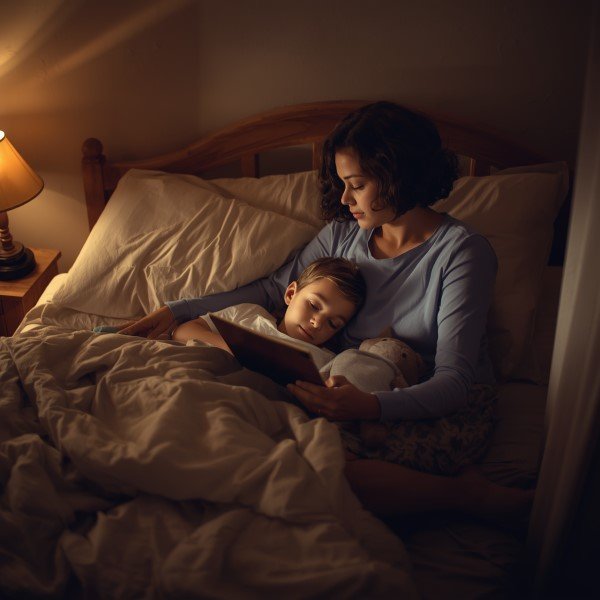
Bedtime is when anxiety often peaks because the distractions of the day disappear and worried thoughts rush in. Here’s how to help:
Create a Predictable Wind-Down Routine
A consistent 30-minute bedtime routine signals safety and predictability: bath, pajamas, brush teeth, two books, one song, lights out. Keep the sequence the same every night. Predictability is one of the most powerful anxiety reducers because it eliminates the unknown.
Address Worries Before Lights Out
Include a brief “worry dump” in the bedtime routine. Let your child name their worries, then together “put them away” — in a “worry box” (a small container by the bed where they can write or draw worries on paper and put them inside), or by imagining placing each worry on a cloud and watching it float away. This ritual externalizes the worry and creates a boundary between worry and sleep.
Use a Transitional Object
A special stuffed animal, blanket, or even a small framed family photo by the bed can serve as a source of comfort and security. There is no age at which a child is “too old” for a comfort object during a period of heightened anxiety.
Manage Your Own Bedtime Anxiety Response
If bedtime has become a battleground, you may be approaching it with your own dread and tension. Children sense this. Work on approaching bedtime with genuine calm confidence. If you expect a struggle, your body language and tone communicate that expectation, and it becomes a self-fulfilling prophecy.
When to Seek Professional Help
Many children work through anxiety successfully with parental support alone. However, professional help should be considered when:
Seek Professional Evaluation If:
- Anxiety has persisted for more than 4-6 weeks without improvement despite your support efforts.
- Your child is consistently missing school or refusing to attend due to anxiety.
- Anxiety is significantly impairing daily functioning — friendships, academics, family life, or activities they previously enjoyed.
- Physical symptoms (stomach aches, headaches) are frequent and medically unexplained after a pediatrician has ruled out physical causes.
- Your child expresses hopelessness or says things like “I wish I wasn’t here” or “I can’t take this anymore.”
- Anxiety is escalating in intensity or spreading to new areas of life despite your intervention.
- Anxious behaviors are accompanied by compulsive rituals (repeated handwashing, checking, counting, needing things “just right”).
- You as the parent are struggling to manage the situation and need guidance. Seeking help for yourself is also valid.
Where to start: Your child’s pediatrician is the best first point of contact. They can rule out medical causes for physical symptoms and refer you to a child psychologist or therapist who specializes in childhood anxiety. The most effective treatment for childhood anxiety is cognitive-behavioral therapy (CBT), which has strong research support for children ages 7 and up. Some children also benefit from medication, which should be discussed with a child psychiatrist when therapy alone isn’t sufficient.
Reassurance for parents: Seeking professional help is not a failure — it’s an act of love and good judgment. Early intervention for childhood anxiety is highly effective, and most children who receive appropriate treatment show significant improvement. The earlier you intervene, the better the outcome.
Frequently Asked Questions
Is it normal for a 7-year-old to worry a lot?
Yes, some degree of worry is developmentally normal at seven. Children this age are becoming more aware of the world’s complexity and their own vulnerability. Normal worry is occasional, proportionate, and doesn’t significantly impair daily functioning. When worry becomes persistent, intense, and interferes with school, friendships, sleep, or enjoyment of activities, it may have crossed into anxiety that would benefit from targeted support.
Can my child “grow out” of anxiety?
Some children do naturally become less anxious as their coping skills and prefrontal cortex develop. However, research shows that untreated childhood anxiety is the strongest predictor of anxiety disorders in adolescence and adulthood. Rather than hoping your child will grow out of it, equipping them with coping skills now gives them tools that protect their mental health for life. Think of it as an investment in their long-term emotional wellbeing.
Could my own anxiety be causing my child’s anxiety?
Anxiety does have a genetic component, and children of anxious parents are more likely to develop anxiety themselves. However, genes are not destiny. What matters more than whether you have anxiety is how you manage it in front of your child. If you model healthy coping, seek treatment for your own anxiety, and avoid passing anxious behaviors (over-protection, catastrophizing, avoidance) to your child, you can significantly reduce the impact of genetic vulnerability.
How do I know if it’s anxiety or ADHD?
Childhood anxiety symptoms and ADHD symptoms can overlap significantly: difficulty concentrating, restlessness, irritability, and trouble sleeping appear in both conditions. Some children have both. A qualified professional can distinguish between them through careful assessment. Key differences: anxious children typically want to comply but can’t because of worry, while ADHD-related behavior is more related to impulsivity and attention regulation. If you’re unsure, seek a comprehensive evaluation from a child psychologist.
Should I tell my child’s school about their anxiety?
Yes, in most cases. When teachers understand that a child is struggling with anxiety, they can offer support, make reasonable accommodations, and avoid inadvertently worsening the situation. You don’t need to share every detail — a brief conversation about what your child finds difficult and what strategies help can make a significant difference in their school experience.
Are there natural remedies for childhood anxiety?
Several lifestyle factors have research support for reducing childhood anxiety symptoms: regular physical exercise (one of the most effective natural anxiety reducers), adequate sleep, a balanced diet, limited caffeine and sugar, reduced screen time before bed, mindfulness practices, and time in nature. These should be considered foundational supports alongside, not replacements for, professional treatment when needed. Consult your child’s pediatrician before using any supplements or herbal remedies.
Final Thoughts: Your Child’s Anxiety Is Not Your Failure
If your 7-year-old is suddenly anxious, it’s not because you did something wrong. 7 year old anxiety emerges from the intersection of brain development, temperament, life experiences, and the increasing complexity of a child’s world. It’s one of the most common childhood mental health challenges — and one of the most treatable.
Your child doesn’t need you to eliminate all sources of stress from their life. They need you to stand beside them as they learn to face fear, tolerate uncertainty, and discover that they are braver than they think. Every time you validate their feelings without rescuing them from discomfort, you’re building a skill set that will protect their mental health for decades to come.
The fact that you’re reading this article means you’re already doing one of the most important things: paying attention, seeking understanding, and looking for ways to help. That awareness and effort, even when things feel hard, is exactly what your anxious child needs most.
You’re not alone in this. And neither is your child.

About the Author
Prasad Fernando is a parenting writer and father of two children. He created ParentalRing to share evidence-based strategies that help families navigate childhood challenges with confidence and compassion. His writing on childhood mental health draws from cognitive-behavioral therapy research, developmental psychology, and the real-life experiences of parenting.
Important Disclaimer: This article is for general informational and educational purposes only. It is not intended as a substitute for professional medical, psychological, or psychiatric advice, diagnosis, or treatment. Childhood anxiety can range from normal developmental worry to a clinical condition requiring professional intervention. If you have concerns about your child’s anxiety, please consult your child’s pediatrician or a licensed mental health professional who specializes in working with children. In a crisis, contact your local emergency services or a crisis helpline.
Sources and Further Reading
This article draws from established research in child psychology, including Jean Piaget’s cognitive development theory, cognitive-behavioral therapy (CBT) principles for childhood anxiety, the American Academy of Pediatrics guidelines on childhood mental health, and the Anxiety and Depression Association of America (ADAA) resources for parents. Parents seeking further information are encouraged to consult the ADAA website (adaa.org), the Child Mind Institute (childmind.org), and their child’s pediatrician or a licensed child psychologist.