Food, Nutrition & Healthy Habits
Healthy Lunch Box Ideas for Picky Eaters (School-Friendly Recipes)
By Prasad Fernando | Food, Nutrition & Healthy Habits | Updated May 2026 | 18 min read
Nutritional Disclaimer: The lunch box ideas and recipes in this article are intended for general educational and informational purposes only. They are not a substitute for professional dietary advice. Every child has unique nutritional needs, food allergies, and sensitivities. If your child has a diagnosed feeding disorder, food allergy, or specific dietary requirements, please consult a registered paediatric dietitian before making significant changes to their diet.
📋 Table of Contents
- Why the School Lunch Box Matters More Than You Think
- Understanding the Picky Eater: What Science Says
- How to Build a Balanced Lunch Box Every Time
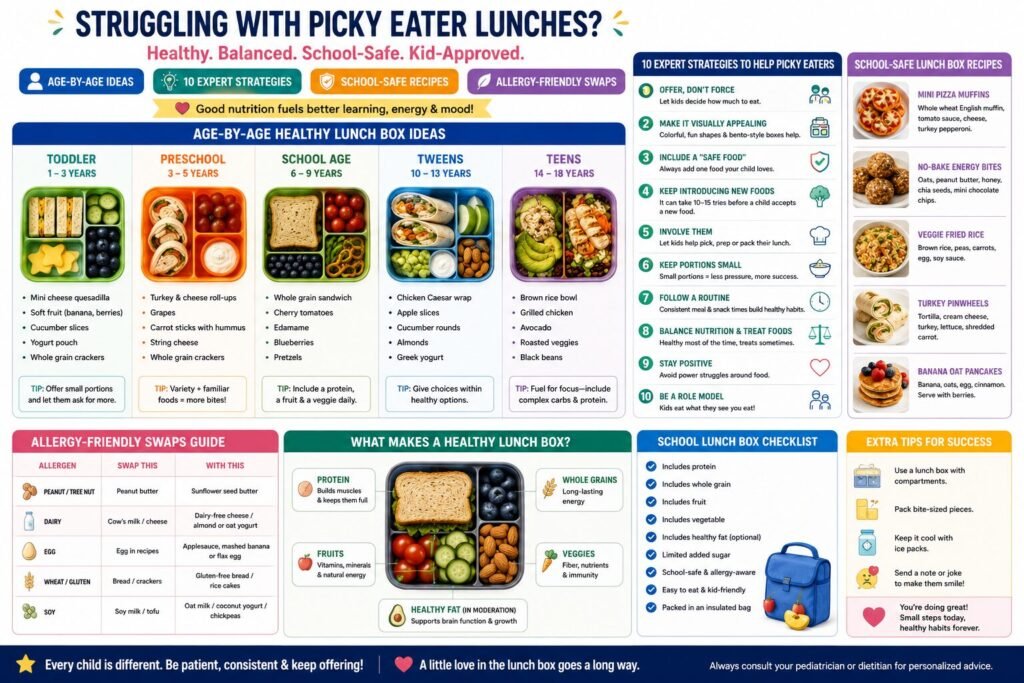
- Healthy Lunch Box Ideas for Ages 3–5
- Healthy Lunch Box Ideas for Ages 6–10
- Lunch Box Ideas for Tweens and Older Kids (Ages 11+)
- 10 Strategies to Make Picky Eater Lunches More Successful
- Meal Prep and Planning: Save Time Without Sacrificing Nutrition
- Allergy-Aware and School-Safe Substitutions
- Frequently Asked Questions
- Sources & References
It is 7:15 on a school morning. You have eleven minutes before the bus arrives. You are staring into an open refrigerator that contains leftover pasta, half a cucumber, some cheese, and a child who has already declared that they will not eat anything “green, wet, or mixed together.”
If this scene is familiar, you are in extremely good company. Research consistently shows that picky eating affects somewhere between 13% and 22% of young children, and that the challenge of packing a school lunch that a picky eater will actually consume — rather than trade, discard, or return home untouched — is one of the most persistent daily frustrations for parents of school-age children.
But here is the encouraging part: feeding research also shows that the principles behind a genuinely healthy, genuinely eaten school lunch are simpler than most parents realise — and that small, strategic changes to how food is presented, portioned, and prepared can make the difference between a lunch box that comes home full and one that comes home empty.
In this guide, we bring together the science of child nutrition, the psychology of picky eating, and a practical library of age-appropriate healthy lunch box ideas to help you pack lunches that are balanced, school-friendly, and — crucially — likely to actually be eaten. Whether you are navigating the very early years, the primary school stage, or the tween years when social dynamics around food become more complex, there are ideas and strategies here that can work for your child.
Why the School Lunch Box Matters More Than You Think
For children who attend school five days a week, the school lunch represents roughly 20 to 25% of their total weekly caloric intake. That is a significant nutritional window — one that, when used well, can make a meaningful contribution to a child’s energy, concentration, mood, and long-term dietary habits.
Research published in the British Journal of Nutrition found that children who ate nutritionally balanced lunches showed measurably better cognitive performance in afternoon lessons compared with children whose lunches were high in refined sugar and low in protein and micronutrients. The afternoon energy crash that follows a lunch heavy in ultra-processed foods is not merely a feeling — it corresponds to measurable dips in attention, working memory, and processing speed.
The Lunchtime Learning Window
Neurologically, the brain’s peak demand for glucose aligns closely with the mid-morning to early afternoon learning window. A lunch that combines complex carbohydrates, protein, and healthy fats provides a steadier, longer-lasting release of energy than one built primarily around refined carbohydrates — which produce a rapid glucose spike followed by a trough that can leave children distracted, irritable, and poorly equipped for afternoon learning.
Beyond academic performance, the school lunch also carries social significance. For many children, lunchtime is one of the few peer social periods in the school day — an opportunity to connect with friends, develop social identity, and navigate the complex social landscape of food preferences, dietary differences, and shared eating norms. A lunch box that a child feels confident and comfortable with supports social confidence as well as nutritional health.
The Packed Lunch Versus School Canteen Debate
Research comparing the nutritional quality of packed lunches with school canteen meals shows mixed results that vary considerably by country, school, and income bracket. A large UK study published in the Journal of Epidemiology & Community Health found that primary school packed lunches were, on average, higher in saturated fat and sugar and lower in fruits and vegetables than school meal programmes meeting government nutritional standards. However, school meals also vary enormously in quality, and the most nutritionally optimal lunch is one that is carefully constructed by an informed parent — precisely what this guide aims to support.
Understanding the Picky Eater: What Science Says
Before addressing picky eater lunches, it helps enormously to understand what is actually driving a child’s food selectivity. Picky eating is not, in most cases, wilful defiance or an attempt to frustrate parents — it is typically rooted in a combination of developmental, sensory, and psychological factors that respond very differently to pressure versus patience.
The Developmental Dimension
Food neophobia — the reluctance to try new foods — is a developmentally normal behaviour that typically peaks between ages two and six. From an evolutionary standpoint, it is a protective mechanism: young children who were cautious about unfamiliar foods were less likely to consume something toxic. Understanding that a young child’s rejection of a new food is, at some level, a hard-wired survival instinct helps parents approach the challenge with more patience and less personalisation of the refusal.
Food neophobia typically decreases through middle childhood as the child develops trust in their food environment and accumulates positive experiences with a wider variety of foods. Research by Lucy Cooke at University College London found that food neophobia is strongly influenced by genetics (it is heritable) but also highly responsive to early, repeated, low-pressure food exposure — a finding with important practical implications for the lunch box.
The Sensory Dimension
For a significant subset of children, food selectivity is driven by sensory sensitivity rather than simple preference. Texture aversions (reluctance to eat mixed or soft foods), strong reactions to smell or colour, and hypersensitivity to temperature or bitterness are all common sensory drivers of picky eating. Children with heightened oral sensory sensitivity may find certain foods genuinely overwhelming in ways that are difficult for adults with typical sensory thresholds to imagine.
For these children, the key principle is working with sensory preferences rather than against them: offering foods with preferred textures and flavour profiles, separating components so flavours do not mix, and introducing new sensory experiences gradually and without pressure.
The Control Dimension
Food is one of the primary domains in which young children can exercise genuine autonomy. When a child refuses a food, they are often asserting control over something they can control — which makes food battles counterproductive in a specific way: the more pressure is applied, the more the refusal becomes identity-linked. Research consistently shows that children who are pressured to eat particular foods eat less of them over time, not more.
The evidence-based framework developed by feeding therapist Ellyn Satter — the Division of Responsibility in Feeding — recommends that parents decide what foods are offered and when, while children decide whether and how much to eat. Applied to the lunch box, this means offering a variety of foods including some the child reliably accepts, without requiring them to eat specific items.
📖 Related Reading: Understanding Your 4-Year-Old’s Emotional Development: What’s Normal and What’s Not — Picky eating and emotional development are closely linked in the preschool years. Understanding the developmental context helps parents respond with patience rather than frustration.
How to Build a Balanced Lunch Box Every Time
Rather than thinking about the lunch box as a collection of specific recipes, think of it as a formula with four interchangeable components. Once this framework is internalised, building a balanced, varied lunch becomes a fast, low-stress process — even on a busy school morning.
1. 🌾 A Grain or Starch
The energy anchor of the lunch. Choose wholegrain options where accepted: wholegrain bread, wraps, rice cakes, pasta, corn thins, oatcakes, or pitta. Refined options (white bread, crackers) are fine as vehicles for a nutritious filling when wholegrains are refused.
2. 🥩 A Protein Source
Protein sustains energy and supports concentration through the afternoon. Options: chicken strips, hard-boiled egg, cheese cubes, hummus, tuna, edamame, yoghurt, beans, or nut butter (where schools allow).
3. 🥦 A Vegetable or Fruit
Aim for at least one, ideally two. Serve in child-friendly formats: cut into sticks, served with a dip, or in bite-sized pieces. Fruit often functions as the gateway produce for picky eaters — it is a reliable sweet component that most children accept.
4. 💧 A Hydration Element
Water is the recommended drink for school lunches — it is the most hydrating, least likely to displace nutrients or spike blood sugar, and increasingly required by school food policies. A reusable water bottle is the most important non-food item in the lunch kit.
Optional extras: a small treat or fun food item can be included to avoid the sense that the lunch box is purely medicinal — a few squares of dark chocolate, a small bag of pretzels, or a home-baked muffin provide satisfaction without crowding out nutritional components.
Healthy Lunch Box Ideas for Ages 3–5
Children aged three to five are at the peak of food neophobia and benefit most from familiarity, finger-food formats, and small portions. The goal at this stage is not nutritional perfection but positive food experiences and the gradual, unpressured expansion of accepted foods.
Key Principles for Ages 3–5
- Keep portions small — a few bites of each component is appropriate at this age
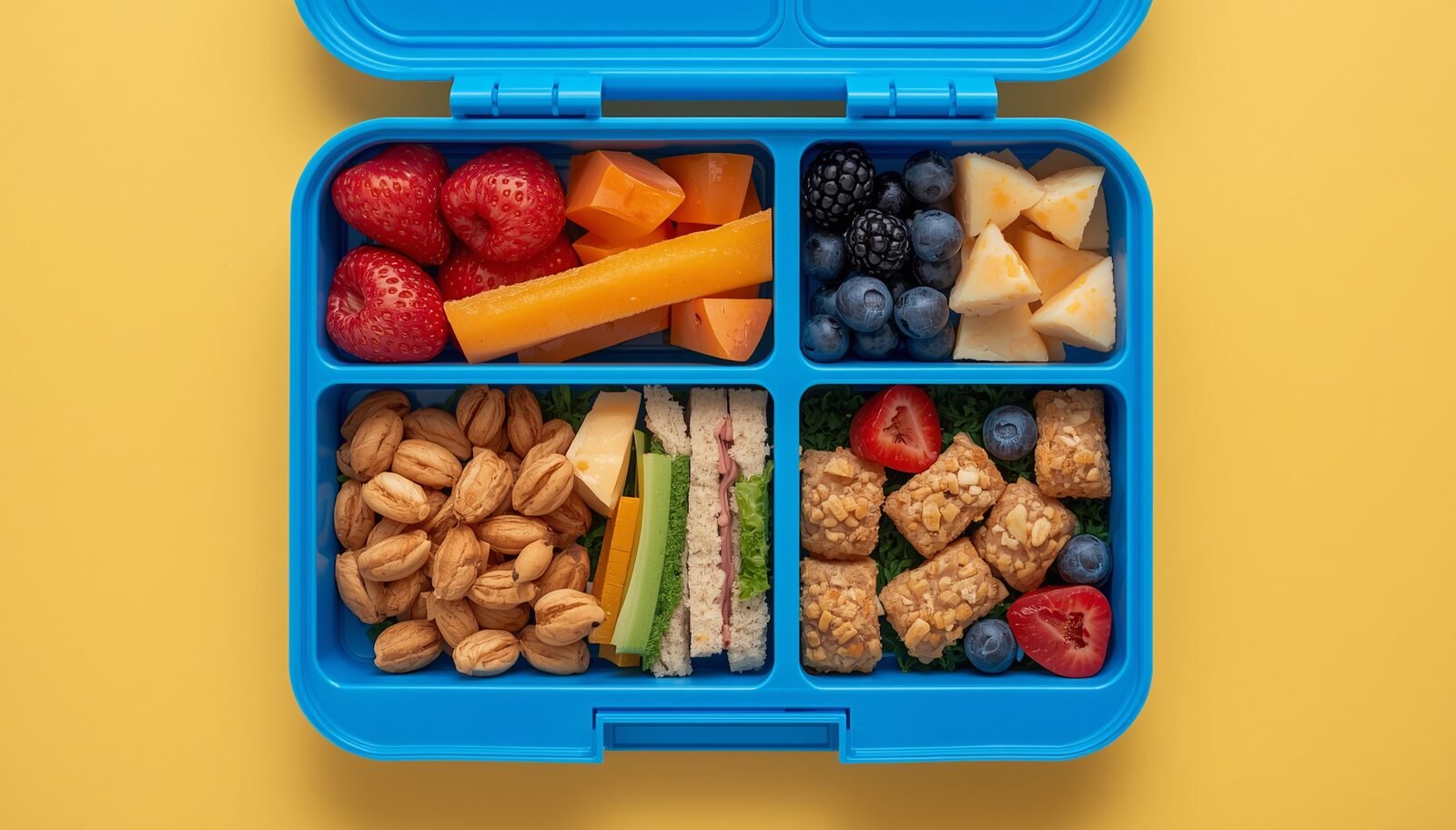
- Use compartmentalised lunch boxes so foods do not touch each other
- Include at least one “safe food” the child reliably enjoys in every box
- Cut foods into fun shapes using small cookie cutters — novelty increases acceptance
- Avoid introducing completely new foods in the lunch box; save introductions for home dinners where there is more support
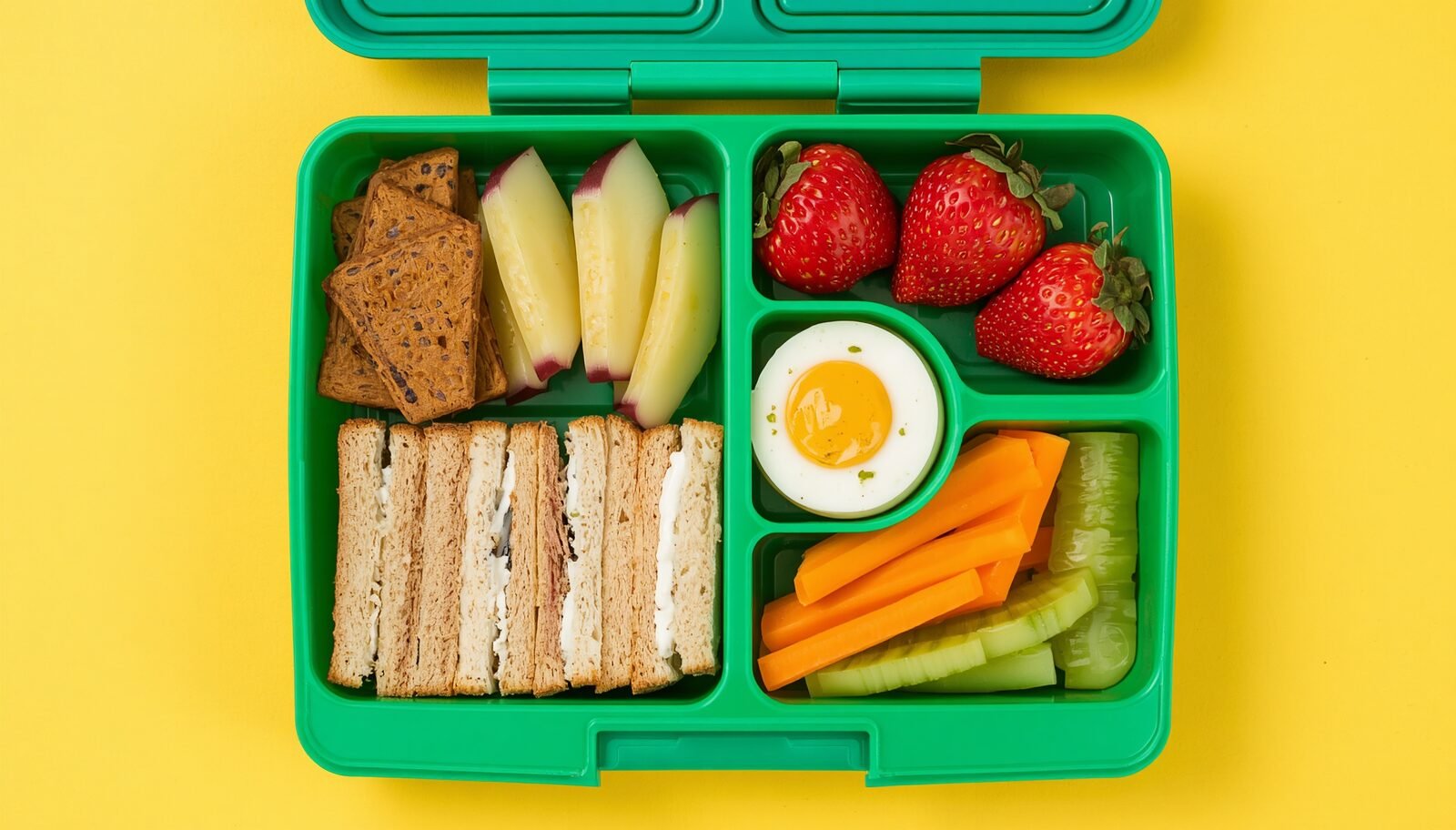
Lunch Box Ideas: Ages 3–5
🟠 Box 1 — The Classic Mini
- Mini sandwiches (white or wholegrain) with cream cheese and cucumber slices
- 5–6 baby carrots with a small pot of hummus
- Halved grapes (always halved for choking safety under age 5)
- 2–3 cheese cubes
- Water bottle
🔵 Box 2 — The Dip & Dunk
- Wholegrain pitta strips (cut into dippable fingers)
- Small pot of tomato sauce or mild salsa for dipping
- Cucumber sticks
- Small handful of blueberries
- Full-fat plain yoghurt with a drizzle of honey (for children over 12 months)
🟡 Box 3 — The Cheesy Build
- Cheese and crackers (4–5 whole grain crackers, sliced mild cheddar)
- Sliced strawberries
- Corn thins with butter
- Peeled and sliced kiwi fruit
- Water bottle
Healthy Lunch Box Ideas for Ages 6–10
Children aged six to ten are in a prime window for dietary expansion. Food neophobia typically begins to decrease in this period, social eating at school creates natural curiosity about what peers are eating, and children are increasingly capable of understanding simple explanations about why foods are included in their lunch.
This age group also has significantly more physical, cognitive, and social demands on their energy, making the nutritional quality of the school lunch particularly important for afternoon performance. More complex, more varied, and slightly larger portions are appropriate compared with the 3–5 age group.
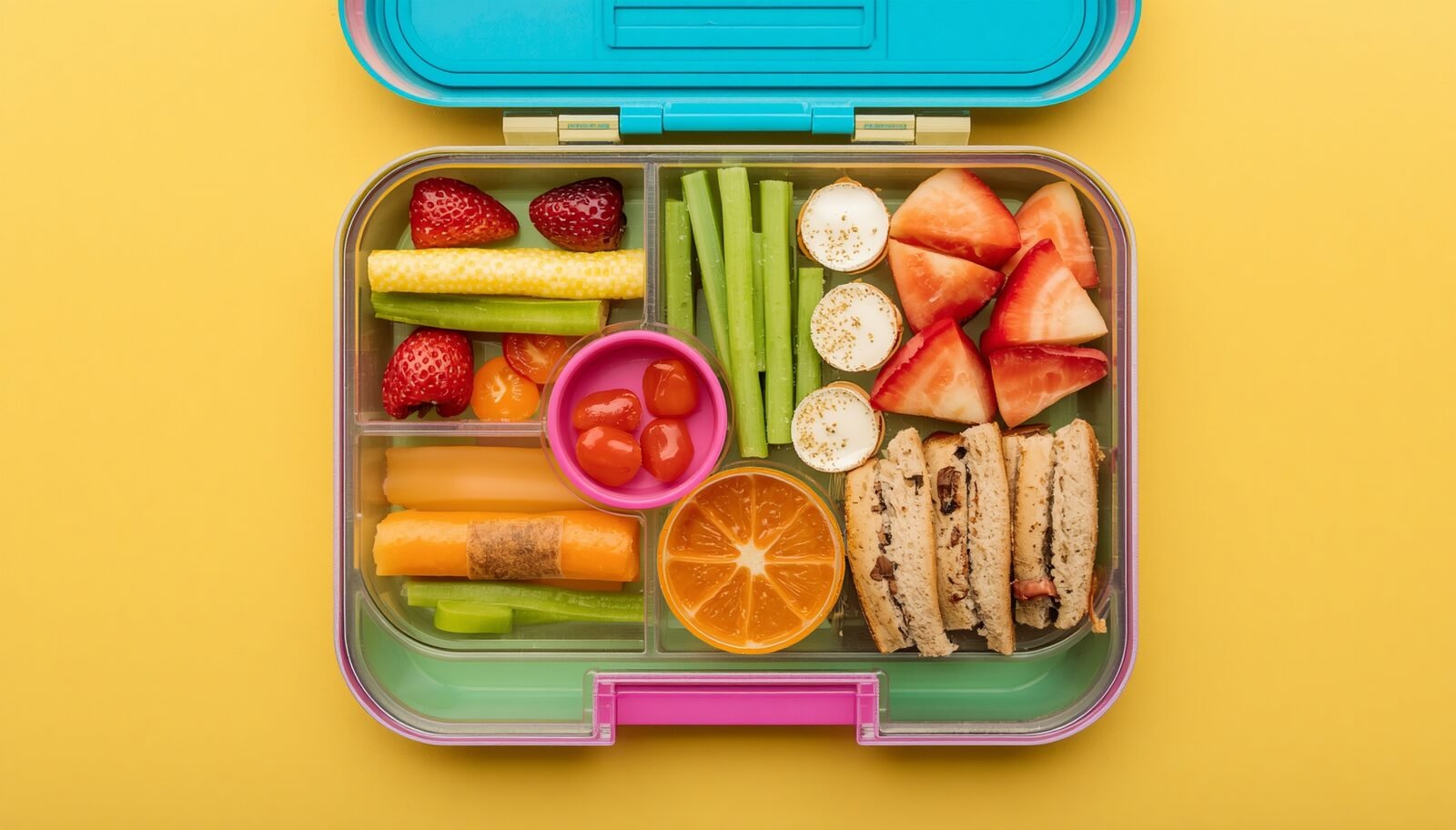
Lunch Box Ideas: Ages 6–10
🟠 Box 1 — The Protein Wrap
- Small wholegrain tortilla wrap with sliced chicken, mild cheese, and lettuce (or just chicken and cheese for texture-sensitive children)
- Sliced red pepper sticks
- Small apple, sliced into crescents
- Handful of pumpkin seeds or sunflower seeds
- Water bottle
🔵 Box 2 — The Pasta Pot
- Cooled pasta (fusilli or penne — shapes hold sauces better) with mild pesto or a little olive oil and grated parmesan
- Cherry tomatoes (halved) mixed in or served separately based on preference
- Cucumber rounds
- Mandarin orange segments
- Small dark chocolate square as a treat
🟡 Box 3 — The Builder Board
- Wholegrain crackers
- Cream cheese or avocado for spreading (in a small pot)
- Sliced turkey or ham
- Celery sticks
- Strawberries and blueberries
- Small full-fat yoghurt pouch
🟢 Box 4 — The Egg & Veg Box
- 2 hard-boiled eggs (peeled and halved, with a tiny pinch of salt)
- Corn on the cob mini rounds (pre-boiled, cooled)
- Snap peas or sugar snaps
- Wholegrain rice cakes
- Sliced mango or peach
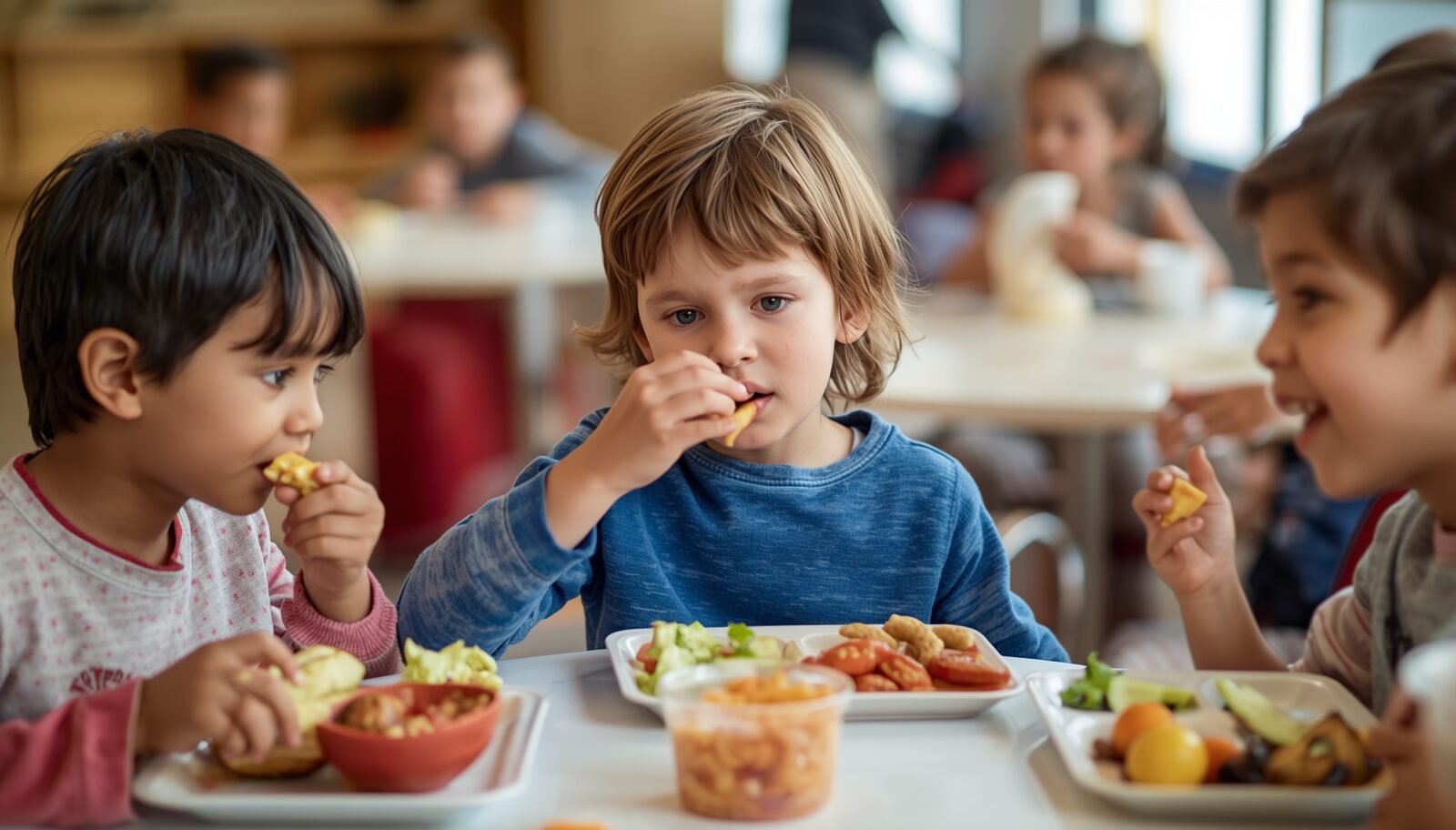
📖 Related Reading: Why Family Dinners Matter More Than You Think (and How to Make Them Happen) — The same food exposure principles that make family dinners effective for expanding dietary variety apply directly to building more adventurous school lunch boxes.
Lunch Box Ideas for Tweens and Older Kids (Ages 11+)
The tween years introduce a new dimension to lunch box dynamics. Social identity becomes increasingly tied to food choices — what a child eats at school communicates something about who they are to their peers. Tweens may resist foods that feel babyish, become interested in foods they see peers eating, or become more independently motivated about nutrition if sports performance, energy, or body image become relevant.
The most effective approach at this stage is to gradually involve the child in selecting and packing their own lunch — a strategy that consistently produces better consumption rates and is a meaningful step toward independent healthy eating habits.
Lunch Box Ideas: Ages 11+
🟠 Box 1 — The Grain Bowl (Cold)
- Cold brown rice or quinoa with a splash of soy sauce and sesame oil
- Edamame (shelled)
- Sliced avocado or guacamole pot
- Shredded chicken or a boiled egg
- Cherry tomatoes
- Small pot of mango for sweetness
🔵 Box 2 — The Athlete’s Box
- Turkey and avocado wholegrain wrap
- Banana (high-GI natural carbohydrate for post-sport energy)
- Greek yoghurt (high protein)
- Mixed nuts and dried cranberries (small portion)
- Hydration bottle with water or coconut water
🟡 Box 3 — The DIY Sushi-Style Box
- Cooked sushi rice (small portion, cooled) with rice vinegar
- Cucumber batons and avocado slices
- Smoked salmon or canned tuna in water
- Small soy sauce pot
- Clementine or orange
10 Strategies to Make Picky Eater Lunches More Successful
Beyond the specific ideas, these ten strategies — drawn from child nutrition research and feeding therapy practice — can significantly improve how much of the school lunch a picky eater actually consumes.
1. Always Include at Least One Safe Food
A “safe food” is a food the child reliably eats without resistance. Including one in every lunch box provides a fallback that ensures the child will eat something, even if they decline other components. This also reduces the anxiety some picky eaters feel about their lunch box — knowing there is definitely something they like creates emotional safety that paradoxically makes them more likely to try other items.
2. Use the Bridge Food Technique
A bridge food is a new or less-accepted food that shares a characteristic with an accepted food — similar colour, texture, flavour, or shape. If a child eats plain crackers, plain rice cakes are a bridge. If they eat apple slices, pear slices are a bridge. Nutritionists recommend introducing bridge foods alongside accepted foods rather than as replacements, creating a gradient from familiar to new.
3. Serve Dips Generously
Research on children’s vegetable consumption consistently finds that offering a dip significantly increases the amount consumed. Hummus, cream cheese, guacamole, yoghurt-based dips, mild salsa, and even tomato ketchup can function as bridges to vegetable acceptance. The dip itself often carries more nutritional value than parents realise — hummus, for example, provides protein, fibre, iron, and healthy fats.
4. Think Deconstructed, Not Composed
Many picky eaters resist mixed foods — dishes where different components touch, have the same texture, or are difficult to separate. Offering the components of a dish separately — bread, filling, and salad items in different compartments rather than assembled as a sandwich — often dramatically increases acceptance. Deconstructed does not mean less nutritious; it simply means respecting the sensory preferences that drive many picky eaters’ choices.
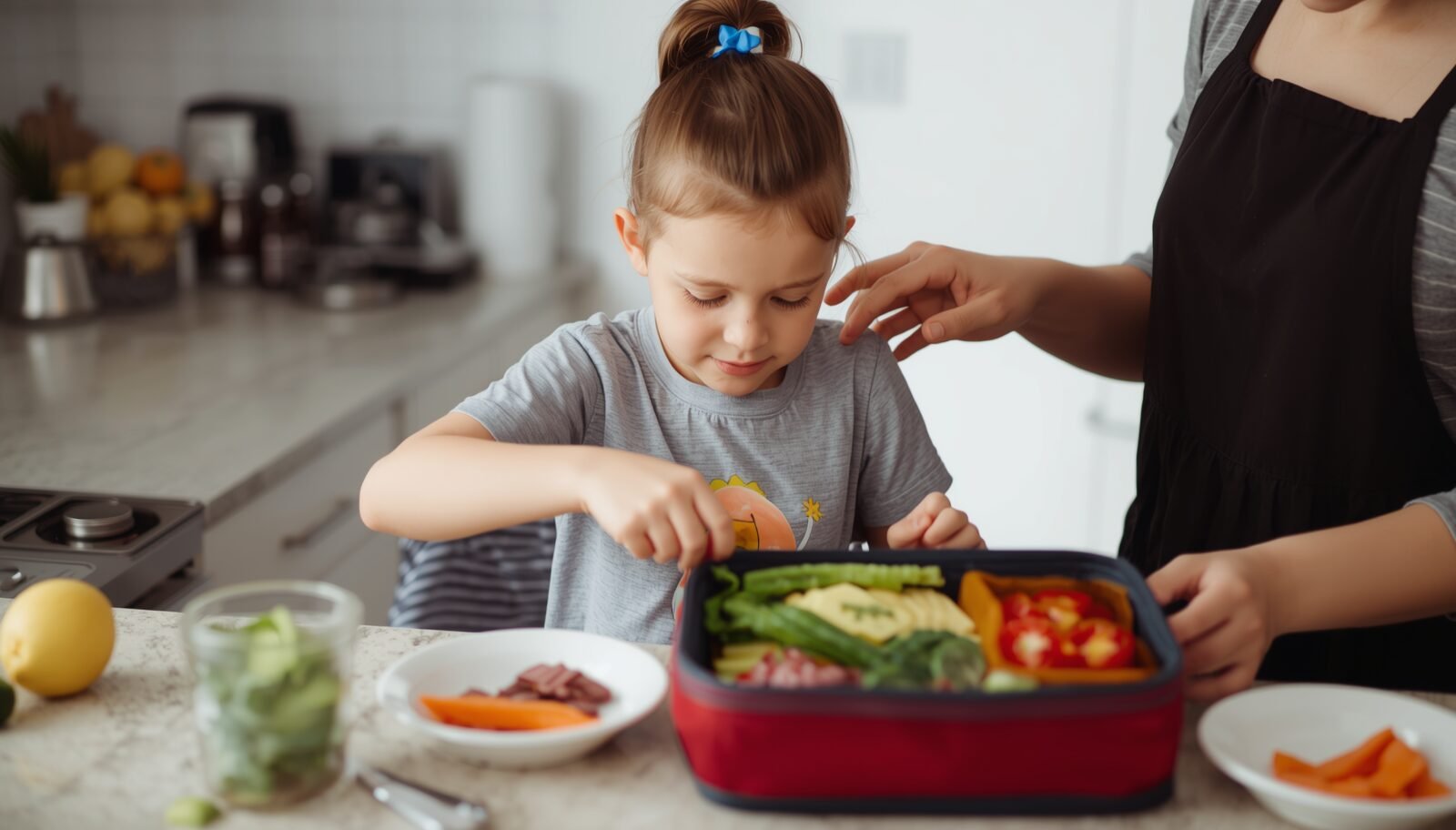
5. Involve Children in Packing Their Own Lunch
Children who participate in selecting and packing their lunch consistently eat more of it. Even young children can be given a limited choice — “Would you like cucumber or carrot sticks today?” — that creates ownership without being overwhelming. Older children can be given a broader role: selecting from a structured set of options for each component of the four-part framework.
6. Use Food Presentation to Increase Appeal
Research in paediatric nutrition shows that food presentation significantly affects children’s willingness to try and eat foods. Cookie-cutter sandwich shapes, colourful skewers, foods arranged in patterns or faces, and vibrant contrasting colours all increase consumption. This is not merely aesthetics — it leverages the developmental reality that young children are significantly influenced by the visual presentation of food.
7. Keep Portions Child-Sized
Adult portion sizes applied to children’s lunch boxes are visually overwhelming and can produce an anticipatory stress response in children who are already anxious about food. Small portions of each component — more bites than you might expect a child to eat — paradoxically result in better consumption because they feel achievable rather than daunting.
8. Avoid Packaging New Foods as “Trying Something New”
The announcement “I’ve put something new in your lunch box today, I want you to try it” dramatically reduces the likelihood that the child will engage with the new food. Introducing a new item quietly, alongside familiar foods, without comment or expectation, is significantly more effective. If the child notices and asks, a simple, positive description — “Those are sugar snaps, they taste a bit like sweet peas” — is more productive than pressure.
9. Do Not Use Food as Reward or Punishment
Research by Leann Birch and colleagues at Penn State University found that conditioning children to eat particular foods by rewarding consumption with treats (“eat your carrots and you can have a biscuit”) tends to decrease the child’s preference for the target food over time, while increasing preference for the reward food. Within the lunch box, this means not structuring access to a treat component on finishing other foods — simply including all components and allowing the child to eat in whatever order they choose.
10. Track What Comes Home
Spending one week noting which components of the lunch box return uneaten gives a highly accurate picture of what the child is and is not consuming at school — and in what quantities. This information is more reliable than asking, since children frequently underreport or misremember what they ate. Use this data to adjust the content of the lunch box and, over time, to identify patterns in what is accepted most readily.
Meal Prep and Planning: Save Time Without Sacrificing Nutrition
One of the most common reasons the school lunch box defaults to whatever is quick and familiar is the time pressure of school mornings. A small amount of weekly meal preparation can dramatically reduce morning stress while improving nutritional quality across the school week.
The Sunday Lunch Prep Routine
Spending 30 to 40 minutes on Sunday afternoon preparing the following items means that lunch box assembly on school mornings takes fewer than five minutes:
- Wash and cut vegetables — carrot sticks, cucumber rounds, pepper strips, and celery batons stored in water in the refrigerator last well for five days
- Hard-boil a batch of eggs — 4 to 6 eggs peeled and stored in a covered bowl stay fresh in the refrigerator for five days
- Cook a grain — a batch of cooled pasta, rice, or quinoa in a sealed container is ready for grain-based lunch boxes all week
- Prepare a protein — roast or poach chicken breast, cook and flake tuna, or prepare a bean-based dip that stores for four to five days
- Portion snack items — divide nuts, dried fruit, pretzels, or crackers into individual portions so each morning requires only reaching for a pre-portioned bag
The Lunch Box Rotation System
Creating a two-week rotation of lunch box combinations — even a loose one — removes the daily decision fatigue of “what to pack” while ensuring variety across the fortnight. A simple written or digital list of 10 combinations, each following the four-component framework, means that packing can become automatic rather than creative, freeing cognitive resources for the rest of the morning.
What to Avoid Packing
Equally important to knowing what to include is knowing what to limit or avoid: foods high in added sugar (sweet biscuits, cereal bars marketed as healthy, flavoured yoghurts with significant sugar content), ultra-processed snacks that crowd out nutritionally dense foods, and drinks other than water (fruit juice, while marketed as healthy, provides little fibre and significant sugar without the satiety that whole fruit provides).
📖 Related Reading: Why Your 7-Year-Old Is Suddenly Anxious (and How to Help) — Mealtime anxiety and food refusal can sometimes be connected to broader anxiety patterns in children. Understanding the anxiety dimension helps parents approach food challenges with more insight and less frustration.
Allergy-Aware and School-Safe Substitutions
Many schools operate strict nut-free policies to protect students with severe nut allergies. Beyond that, children in the class may have a variety of food allergies or intolerances that require the lunch box to be thoughtfully constructed. The following substitution guide covers the most common school lunch ingredients and their allergy-friendly alternatives.
Always check individual school policies and consult your child’s allergy management plan before including any food that may be a risk for your child or their classmates.
Frequently Asked Questions
My child returns their lunch box almost completely uneaten every day. What should I do?
A consistently uneaten lunch box is worth investigating from several angles. First, check whether the child is hungry at lunch — some children eat a large morning snack at school and genuinely are not hungry by lunchtime, while others eat breakfast very late and are similarly not ready for lunch when it arrives. Second, review the contents: is there at least one safe food the child reliably eats? Is the portion size appropriate (not overwhelming)? Are foods presented in a way the child finds acceptable (separated, no mixed textures)? Third, consider the social environment — some children are so focused on social interaction during lunchtime that eating takes a back seat. If the pattern persists despite adjustments, and you have concerns about the child’s overall nutritional intake or growth, a referral to a paediatric dietitian is appropriate. Occasional uneaten lunches are normal; consistently uneaten lunches warrant attention.
How do I keep hot food warm in a school lunch box?
A good quality insulated food thermos is the most reliable tool for keeping hot food warm for three to five hours. The key is to preheat the thermos: fill it with boiling water, let it sit for five minutes, empty the water, then add the hot food immediately before sealing. Food items that work well in a thermos include: pasta with sauce, rice dishes, soup, mini meatballs, cooked vegetables, and bean-based stews. The thermos approach is particularly useful for children who strongly prefer warm food and resist cold lunch items. Many picky eaters, particularly those with temperature sensitivity, eat considerably better when their food arrives warm.
Is it okay to include a treat in my child’s lunch box?
Yes, and nutrition researchers generally recommend it. Including a small, enjoyable treat — a few squares of chocolate, a small biscuit, a handful of pretzels, or a home-baked muffin — serves several important functions. It signals that food is not purely medicinal, which reduces the sense that the lunch box is something to endure rather than enjoy. It also prevents the perception that ‘treat’ foods are forbidden and therefore disproportionately desirable. The key is proportion: the treat should be a minor component of the overall lunch, not its centrepiece. What to avoid is making the treat conditional on eating other foods, which, as research by Leann Birch demonstrates, increases the perceived value of the treat while decreasing acceptance of the ‘required’ food.
How do I introduce vegetables into a lunch box for a child who refuses all vegetables?
Start with the least threatening presentation of the least threatening vegetables. For most picky eaters, this means: very mild-flavoured vegetables (cucumber, corn, sweet pepper), served raw and crunchy rather than cooked and soft, in a separate compartment so they do not affect other foods, accompanied by a dip they already enjoy. The goal is not to require eating — it is to create repeated, low-pressure exposure. Research suggests children may need between 10 and 20 exposures to a new food before accepting it, so consistency over weeks is more important than success in any single week. Over time, and without pressure, many children who initially refuse all vegetables will begin to engage with them, particularly when peer influence at school makes eating certain foods feel more normal.
What is the best type of lunch box for a picky eater?
Compartmentalised lunch boxes — often called bento boxes — are consistently more effective for picky eaters than traditional single-compartment boxes. The key reason is that they keep foods physically separate, which is important for children who are averse to foods touching, mixing, or transferring flavours. Look for a box with at least three to four compartments of varying sizes, a secure leak-proof lid (essential for dips and moist foods), BPA-free materials, and a size appropriate to the child’s age and appetite. Stainless steel bento boxes are durable and do not retain odours, but good quality BPA-free plastic options are effective and more affordable. Avoid boxes where the lid compresses the food when closed — this can cause components to mix in transit, which is a significant issue for sensory-sensitive picky eaters.
When should I be concerned that picky eating has become a feeding disorder?
Picky eating exists on a spectrum, and the vast majority of children who are selective about food are experiencing developmentally normal food neophobia that improves over time. However, some children’s food selectivity is severe enough to warrant professional evaluation. Consider seeking referral to a paediatric dietitian, feeding therapist, or occupational therapist if: the child’s diet is limited to fewer than 20 foods; the child is dropping foods from their accepted list over time rather than adding them; the child is showing significant weight loss, faltering growth, or nutritional deficiencies; mealtimes are causing severe distress in the child or significant family conflict; or the child’s food selectivity appears to be driven by sensory processing differences that affect other areas of their life as well. Avoidant/Restrictive Food Intake Disorder (ARFID) is a recognised clinical condition that is distinct from typical picky eating and responds to specialist intervention.
Progress Over Perfection — One Lunch Box at a Time
The school lunch box is not a test of your parenting. It is a daily small act — repeated hundreds of times across a child’s school years — that adds up to something meaningful: a nutritional foundation, a set of food experiences, and a slowly expanding dietary repertoire that your child will carry with them long after they are packing their own lunches.
The research on picky eater lunches and child nutrition is consistent on one encouraging point: children’s food preferences are not fixed. The six-year-old who refuses everything green may, given enough low-pressure exposure, gentle variety, and positive food experiences, become the fourteen-year-old who voluntarily puts avocado on everything. This transformation does not happen through pressure — it happens through patience, strategy, and the accumulated effect of hundreds of lunch boxes that included something safe, something slightly new, and something genuinely enjoyed.
Use this guide as a starting point, not a prescription. Begin with the school lunch ideas for kids that feel most achievable for your child right now. Introduce variety gradually. Apply the strategies that fit your family’s rhythm. And trust that the effort you are putting in — even on the Tuesday mornings when the best you can manage is crackers, cheese, and a banana — is building something that will last.
About the Author
Prasad Fernando
Prasad Fernando is the founder and lead writer of ParentalRing, a resource dedicated to practical, research-informed parenting guidance. With a strong interest in child nutrition, feeding psychology, and the everyday challenges of raising healthy eaters in the real world, Prasad draws on peer-reviewed research and the published work of leading paediatric dietitians and feeding specialists to create content that is both evidence-based and genuinely useful. He believes that informed, low-pressure approaches to children’s food consistently produce better outcomes than anxiety-driven perfectionism — and that the imperfect lunch box packed with good intentions is always a success.
Sources & References
- Cooke, L. J., Wardle, J., Gibson, E. L., Sapochnik, M., Sheiham, A., & Lawson, M. (2004). Demographic, familial and trait predictors of fruit and vegetable consumption by pre-school children. Public Health Nutrition, 7(2), 295–302.
- Birch, L. L., & Fisher, J. O. (1998). Development of eating behaviors among children and adolescents. Pediatrics, 101(3 Pt 2), 539–549.
- Satter, E. (2007). Eating competence: Definition and evidence for the Satter Eating Competence Model. Journal of Nutrition Education and Behavior, 39(5 Suppl), S142–S153.
- Dovey, T. M., Staples, P. A., Gibson, E. L., & Halford, J. C. G. (2008). Food neophobia and ‘picky/fussy’ eating in children: A review. Appetite, 50(2–3), 181–193.
- Liem, D. G., & de Graaf, C. (2004). Sweet and sour preferences in young children and adults: Role of repeated exposure. Physiology & Behavior, 83(3), 421–429.
- Schwartz, C., Scholtens, P. A., Lalanne, A., Weenen, H., & Nicklaus, S. (2011). Development of healthy eating habits early in life. Appetite, 57(3), 796–807.
- Golley, R. K., Hendrie, G. A., & McNaughton, S. A. (2011). Scores on the dietary guideline index for children and adolescents are associated with nutrient intake and socio-economic position but not adiposity. Journal of Nutrition, 141(7), 1340–1347.
- Woodruff, S. J., & Hanning, R. M. (2008). A review of family meal influence on adolescents’ dietary intake. Canadian Journal of Dietetic Practice and Research, 69(1), 14–22.
- National Health Service (NHS) UK. (2023). School lunches: What to put in your child’s packed lunch. Retrieved from nhs.uk.
- American Academy of Pediatrics Committee on Nutrition. (2014). Pediatric Nutrition (7th ed.). American Academy of Pediatrics.
This article was last reviewed and updated in May 2026. Nutritional guidance and feeding research continues to evolve. Parents with concerns about their child’s eating or nutritional intake should consult a qualified paediatric dietitian or healthcare professional.