
Baby & Infant Development
The Science of Attachment: How Bonding in the First Year Shapes Your Child's Future
By Prasad Fernando | Baby & Infant Development | Updated May 2026 | 18 min read

Professional Disclaimer: This article is for general informational and educational purposes only. Attachment theory is a rich and complex field of research. The information provided here is not a substitute for professional advice from a qualified paediatrician, child psychologist, or infant mental health specialist. Every parent-child dyad is unique, and individual guidance should be sought for specific concerns about your child’s development.
📋 Table of Contents
- What Is Attachment Theory? Origins and Core Concepts
- The Four Attachment Styles: What They Look Like and What They Mean
- Why the First Year Is a Critical Window
- How Early Attachment Shapes Long-Term Development
- Building Secure Attachment: What Research Says Actually Works
- Common Parental Concerns About Attachment
- When Building Attachment Is Difficult
- Can Attachment Patterns Change? What the Research Shows
- Frequently Asked Questions
- Sources & References
In those first weeks of a baby’s life, parenting can feel like a combination of exhausted improvisation and genuine wonder. You are navigating sleep deprivation, physical recovery, and the enormous emotional weight of caring for a person who depends entirely on you — while simultaneously falling into a relationship that is unlike any you have had before.
What is happening in those early months, beneath the surface of feeds and nappy changes and night wakings, is something that developmental science has been studying for over seventy years: the formation of attachment — the emotional bond between infant and caregiver that research has found to be one of the most consequential relationships in a human life.
Attachment theory is not a parenting style or a set of techniques. It is a scientific framework, developed through decades of research, that explains how early relationships shape the architecture of the developing brain, the child’s emotional regulatory systems, their capacity for social connection, and their template for all significant relationships throughout life.
This article brings together the foundational science of attachment theory and its practical implications for bonding with baby — grounding the research in the reality of what responsive caregiving looks like in the ordinary, imperfect, often sleep-deprived context of a baby’s first year.
What Is Attachment Theory? Origins and Core Concepts
Attachment theory was developed by British psychiatrist John Bowlby in the 1950s and 1960s, drawing on observations of infants separated from their caregivers during wartime hospitalisation and on the ethological research on animal bonding. Bowlby proposed that the tendency to form strong emotional bonds with specific caregivers is a fundamental feature of human nature — not a learned behaviour or cultural construction, but a biological drive with evolutionary roots in the infant’s need for protection and survival.
Bowlby’s foundational contribution was the concept of the attachment behavioural system — an inborn set of behaviours (crying, reaching, clinging, smiling, following) that function to maintain proximity to a caregiver, particularly under conditions of threat, illness, or separation. These behaviours are not manipulative or demanding; they are the infant’s biological toolkit for ensuring that a protective adult remains nearby during the period when they are entirely unable to manage the world independently.
Ainsworth and the Strange Situation
The empirical scaffolding of attachment theory was built by developmental psychologist Mary Ainsworth, whose research in Uganda in the 1960s and subsequently in Baltimore produced one of the most important research tools in developmental science: the Strange Situation procedure. In this standardised research paradigm, infants (typically aged 12–18 months) are observed through a series of brief separations from and reunions with their primary caregiver, in the presence of an unfamiliar adult.
Ainsworth’s observations across thousands of infants revealed that the behaviours children showed at reunion — not during separation — were the most diagnostically meaningful. Some infants turned readily to their caregiver when distressed, were soothed, and returned confidently to exploration. Others showed persistent distress that was not resolved by the caregiver’s return. Others showed avoidance of the caregiver entirely. And a fourth group, identified by later researchers Mary Main and Judith Solomon, showed confused, disorganised responses that seemed to reflect a fundamental contradiction in their experience of the caregiver.
The Secure Base and the Safe Haven
Bowlby proposed that a sensitively responsive caregiver functions for the infant as both a secure base (a foundation from which to explore the world with confidence) and a safe haven (a refuge to return to when the world feels threatening). The infant who has a reliable safe haven and secure base does not cling to the caregiver out of dependency — they are freed to explore, to take risks, and to develop competence precisely because they are confident that the caregiver will be available when needed. Security is not the absence of need; it is the foundation from which need is confidently expressed and consistently met.
The Four Attachment Styles: What They Look Like and What They Mean
Ainsworth identified three primary attachment patterns in infancy; a fourth was subsequently identified by Main and Solomon. Understanding these patterns is essential for understanding what different early caregiving environments produce — and what they do not necessarily produce permanently.
✅ Secure Attachment (Type B)
Characteristic caregiving: Consistent, sensitive responsiveness to the infant’s signals; reliable availability for comfort when distressed; warmth and emotional attunement.
Infant behaviour: Explores confidently with the caregiver present; shows distress at separation; is quickly soothed at reunion; returns readily to exploration.
Long-term associations: Better emotional regulation, stronger peer relationships, higher academic resilience, lower anxiety, more positive internal working models of relationships.
⚠️ Anxious-Ambivalent Attachment (Type C)
Characteristic caregiving: Inconsistent or unpredictable responsiveness; caregiver available and warm at some times, unavailable or preoccupied at others.
Infant behaviour: Highly distressed at separation; difficult to soothe at reunion; alternates between seeking comfort and resisting it; reluctant to return to exploration.
Long-term associations: Heightened anxiety, difficulty with self-regulation, tendency toward preoccupied or clingy relationship patterns, lower frustration tolerance.
🔵 Avoidant Attachment (Type A)
Characteristic caregiving: Consistently rejecting of emotional needs; discouragement or non-response to distress; discomfort with emotional closeness.
Infant behaviour: Appears relatively unaffected by separation; avoids or ignores caregiver at reunion; minimises emotional expression (though physiological stress indicators remain elevated).
Long-term associations: Emotional suppression, difficulty with intimacy, tendency toward dismissing relational patterns, lower capacity for help-seeking.
🔴 Disorganised Attachment (Type D)
Characteristic caregiving: Caregiver is simultaneously a source of fear and the child’s only resource for comfort — associated with abuse, severe neglect, unresolved parental trauma, or frightening caregiver behaviour.
Infant behaviour: Contradictory, confused responses; freezing, stereotyped behaviours, approach-avoidance conflict at reunion.
Long-term associations: Highest risk group; associated with dissociation, significant relational difficulties, and elevated risk for psychopathology without intervention.
Research estimates: approximately 55–65% of children develop secure attachment; 15–20% anxious-ambivalent; 20–25% avoidant; 15–20% disorganised (with overlap possible). Figures vary by population and methodology.
Why the First Year Is a Critical Window
Describing the first year of life as a “critical window” for attachment is not hyperbole — it reflects the convergence of developmental neuroscience with decades of attachment research, and the finding that the caregiving environment of the first twelve to eighteen months has a disproportionate effect on the architecture of the developing brain compared with later periods.
The Rapid Brain Development of Infancy
At birth, the human brain is approximately 25% of its adult volume. By the end of the first year, it has grown to approximately 72% — a rate of development that will never be equalled again. During this period, synaptic connections are being formed at an extraordinary rate — estimates suggest up to one million new neural connections per second in the first years of life — and the caregiving environment plays a primary role in determining which of these connections are strengthened through use and which are pruned through disuse.
Research by Jack Shonkoff and colleagues at Harvard’s Center on the Developing Child describes this process as experience-dependent development: the architecture of the brain is shaped by the experiences the infant has, and the primary experience of infancy is the caregiving relationship. A caregiving environment that is consistently responsive, emotionally attuned, and safe produces different neurological architecture than one that is unpredictable, neglectful, or frightening.
The Serve and Return Interaction
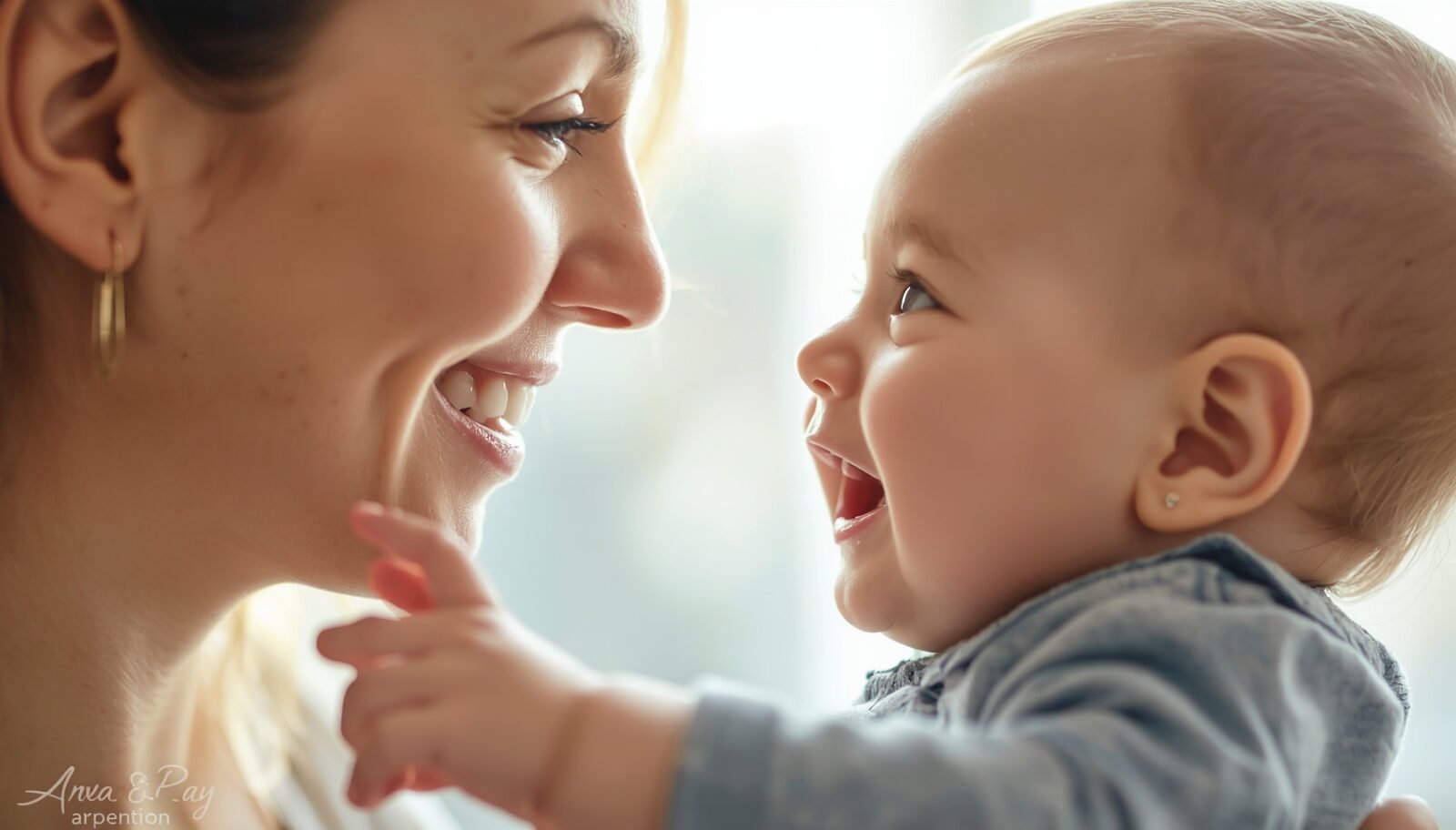
One of the most important concepts in infant attachment science is what Shonkoff’s group calls the “serve and return” interaction — the responsive exchange between infant and caregiver that builds neural connections for learning, communication, and social development. The infant “serves” — vocalises, gazes, reaches, smiles, cries — and the caregiver “returns” — responds to the specific signal with an appropriate, attuned response. These micro-exchanges, occurring hundreds of times per day, are the building blocks of the attachment relationship and the neural pathways for emotional regulation, language, and social cognition.
Research on serve-and-return interaction demonstrates that infants whose caregivers are consistently responsive to their signals show measurably different patterns of brain development — more developed prefrontal cortex connections, better stress response regulation, and more sophisticated social cognitive processing — than infants whose signals are frequently missed, misread, or not responded to.
The Stress Regulatory System
The first year of life is also the period during which the stress regulatory system — the hypothalamic-pituitary-adrenal (HPA) axis — is being calibrated. Research by Megan Gunnar and colleagues at the University of Minnesota demonstrates that sensitive, responsive caregiving in the first year significantly reduces the infant’s cortisol response to stress — the caregiver’s regulated presence literally regulates the infant’s stress biology. Infants who have consistently responsive caregiving develop lower baseline cortisol and more adaptive stress responses than those who do not — a biological advantage that persists well into childhood and adolescence.
📖 Related Reading: How Much Sleep Does Your Child Really Need? A Complete Sleep Guide by Age — The relationship between sleep and attachment security is bidirectional: securely attached babies tend to sleep better, and consistent nighttime responsiveness supports attachment formation in infancy.
How Early Attachment Shapes Long-Term Development
The Minnesota Longitudinal Study of Risk and Adaptation, led by Alan Sroufe, L. Alan Englund, and Byron Egeland, is the most extensive long-term study of attachment outcomes available. Beginning in 1975 and following participants from infancy through adulthood, it provides the most rigorous evidence of the long-range consequences of early attachment patterns.
The study’s key findings across multiple follow-up assessments include:
Emotional Regulation and Mental Health
Children who were securely attached in infancy showed consistently better emotional regulation at every subsequent assessment — at age 3, age 6, middle childhood, adolescence, and adulthood. They demonstrated lower rates of anxiety disorders, depression, and behavioural problems across the lifespan, and showed more adaptive coping strategies when faced with stressful life events.
Social Competence and Peer Relationships
Securely attached children were more socially competent, more popular with peers, and showed more sophisticated and reciprocal friendships than insecurely attached children — effects that were detectable from preschool through adolescence. The internal working model of relationships formed in the first year — the unconscious template for expecting relationships to be responsive and trustworthy — translated directly into the quality of social relationships across development.
Academic and Cognitive Outcomes
The Minnesota study and subsequent research found that secure attachment predicted better school engagement, greater intellectual curiosity, higher academic achievement, and stronger executive function skills even after controlling for IQ and socioeconomic status. The security provided by a responsive early relationship appears to free the child’s cognitive resources for exploration and learning in ways that have lasting academic consequences.
Adult Relationships and Parenting
Participants who were securely attached in infancy showed more positive romantic relationship quality as adults — greater trust, lower conflict, more effective communication — and, when they became parents themselves, were significantly more likely to raise securely attached children. The internal working model travels the full arc of human development, from the early caregiver relationship to the relationships formed decades later.
Building Secure Attachment: What Research Says Actually Works
The research on what actually produces secure attachment in babies is both reassuring and practical. The primary variable is not elaborate or costly — it is the quality of sensitive responsiveness that a caregiver provides to their infant’s signals. Understanding what this means in practice clarifies what bonding with baby actually requires.
Sensitivity: The Core Variable
Ainsworth’s research identified parental sensitivity as the primary predictor of infant attachment security. Sensitivity, as defined in attachment research, involves four components:
- Awareness: Noticing and attending to the infant’s signals
- Accurate interpretation: Reading the signal correctly — understanding what the infant is communicating
- Appropriateness: Responding in a way that matches the signal — comfort when comfort is needed, stimulation when stimulation is appropriate
- Promptness: Responding within a window of time that allows the infant to connect the response to their signal
Crucially, sensitivity does not require perfection. Research by Ed Tronick using the Still Face paradigm demonstrated that normal caregiver-infant interaction involves mismatches approximately 70% of the time — and that what matters is not the frequency of perfect attunement, but the pattern of mismatch-repair. The caregiver who notices a mismatch and repairs it is building a different kind of neural pathway than one who rarely mismatches but also rarely repairs — the child whose experience is “when things go wrong, they get fixed” develops a fundamentally different relationship with distress, relationship repair, and trust.
What Secure Attachment Does Not Require
To address parental anxiety directly: secure attachment does not require constant physical contact, breastfeeding, co-sleeping, or any specific parenting practice. Research is clear that secure attachment is produced by sensitive responsiveness to the infant’s signals — and that this responsiveness can be provided regardless of feeding method, sleeping arrangements, or childcare context. Babies cared for in high-quality childcare settings can develop secure attachment with their parents. Bottle-feeding parents can develop secure attachment with their babies. The variable that matters is the quality of attunement in the interactions that do occur, not the form they take.
Practical Behaviours That Build Secure Attachment
- Following the baby’s lead: Responding to the infant’s initiations and signals rather than imposing interactions at times of the parent’s choosing
- Matching affect: Reflecting the baby’s emotional state in facial expression and tone — meeting a happy baby with warmth, meeting a distressed baby with soothing calm
- Narrating experience: Talking to the baby about what is happening — “I can see you’re hungry, let me get your milk” — builds both language development and the experience of being understood
- Maintaining eye contact during interactions: Face-to-face engagement activates the social brain and is a primary channel for emotional communication between infant and caregiver
- Responding to distress: Consistently responding to crying and distress does not spoil infants; research consistently confirms that responsive comforting in infancy produces more independent, less anxious children over time
- Physical holding and touch: Warm, responsive physical contact activates the oxytocin system in both infant and caregiver, supporting bonding and stress regulation

Common Parental Concerns About Attachment
Attachment theory is sometimes presented in ways that generate parental anxiety rather than confidence. The following addresses the most common concerns directly with what the research actually shows.
“Will I spoil my baby by responding to every cry?”
This concern has been comprehensively addressed by research. Studies consistently show that responsive comforting of infant distress — rather than leaving infants to cry — is associated with lower, not higher, levels of dependency and anxiety in older infants and toddlers. Ainsworth’s original research found that babies whose cries were responded to in the early months cried less at 12 months, not more. The infant brain is not yet capable of learning “manipulation” — what it is capable of is learning whether the world is responsive and trustworthy, and whether expressing need is safe.
“I went back to work — will my baby be insecurely attached?”
Research on maternal employment and infant attachment is clear: the quality of caregiving in the time parents and babies spend together matters far more than the quantity. Multiple studies, including the NICHD Study of Early Child Care, found that when childcare quality is adequate and parents remain sensitively responsive when present, parental employment does not produce insecure attachment. The key variable is what happens in interactions, not how many hours of daily contact occur.
“Can babies attach to more than one person?”
Yes. Research clearly demonstrates that infants form attachments to multiple caregivers — typically both parents, and frequently other consistent caregivers such as grandparents or childcare workers. The hierarchy of attachment figures (with one typically primary, usually but not always the mother) does not prevent the formation of additional meaningful attachment relationships. Multiple secure attachment relationships are, in fact, associated with better outcomes than a single one.
“I suffered from postnatal depression — have I damaged my baby’s attachment?”
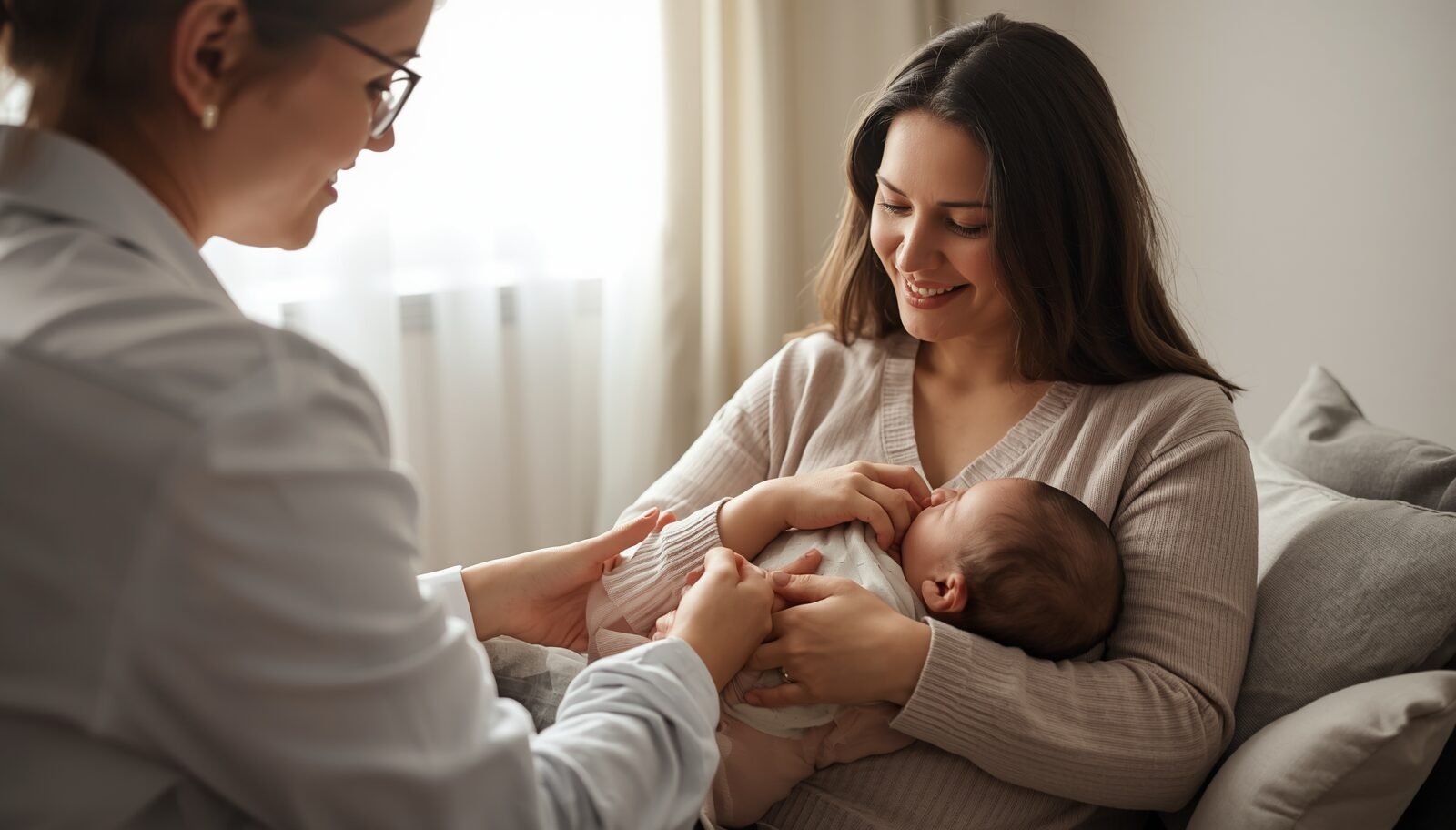
Postnatal depression is a significant risk factor for the quality of early interaction and therefore for attachment — but it is a risk factor, not a determinant. Research shows that effective treatment of postnatal depression improves caregiving quality and can restore the parent-infant relationship to a trajectory consistent with secure attachment. The period of responsive caregiving available after treatment is still neurologically formative, and attachment patterns are not set irreversibly in the first months. If you have experienced or are experiencing postnatal depression, seeking treatment promptly is one of the most protective things you can do for your baby’s development — and your own.
📖 Related Reading: Mom Burnout Is Real: 10 Signs You’re Running on Empty (and What to Do) — Parental depletion, exhaustion, and burnout directly affect the quality of attunement parents can provide. Understanding burnout helps parents protect the responsive caregiving that attachment depends on.
When Building Attachment Is Difficult
For some parents and babies, the process of building a secure attachment relationship is more difficult than the straightforward account suggests. Understanding the factors that can complicate attachment helps parents and their supporters recognise when additional support is needed.
Postnatal Depression and Parental Mental Health
Postnatal depression, anxiety, post-traumatic stress following a difficult birth, and other parental mental health challenges can significantly affect the quality of early interaction. Research by Lynne Murray and colleagues documents the specific ways in which maternal depression affects serve-and-return interaction — reduced responsiveness, flatter affect, more directive and less contingent responses — and the downstream effects on infant development. Early identification and treatment of parental mental health difficulties is both a personal health priority and an infant development priority.
Premature Birth and Medical Complexity
Premature birth or infant medical complexity can disrupt the early period of parent-infant interaction that is typical for full-term, healthy infants. Parents of premature babies may spend significant time separated from their infants in neonatal intensive care settings, and the baby’s early signals may be harder to read due to neurological immaturity. Research on kangaroo care — prolonged skin-to-skin contact between parent and premature infant — demonstrates significant benefits for both parental bonding and infant development, and is now standard care in most NICU settings.
Infant Temperament
Some infants have temperamental characteristics — high sensitivity, difficulty being soothed, intense reactivity — that make responsive caregiving more challenging and more emotionally demanding. Research on the concept of “differential susceptibility” suggests that some infants are more sensitive than others to the quality of caregiving — meaning that they show more negative outcomes from poor caregiving but also more positive outcomes from excellent caregiving. For parents of highly sensitive or high-need babies, the caregiving demands are genuine and often exhausting, and additional support — from partners, family, and professional sources — is particularly important.
Can Attachment Patterns Change? What the Research Shows
One of the most practically important questions for parents who have concerns about their early interactions with their baby — or who themselves carry insecure attachment histories — is whether attachment patterns can change. The research answer is nuanced but ultimately hopeful.
Early Patterns Are Influential, Not Fixed
The Minnesota study found that attachment classification in infancy predicted later outcomes with statistically significant probability — but not with certainty. Major changes in caregiving quality, significant life events (positive or negative), and the availability of corrective relational experiences all predicted changes in attachment classification across development. Research by Byron Egeland and colleagues found that children who moved from insecure to secure attachment classifications over time had typically experienced significant improvement in caregiving quality, an important supporting relationship outside the primary caregiver, or both.
Attachment Intervention Research
Research on attachment-based intervention programmes provides some of the strongest evidence that early patterns are modifiable. The Circle of Security programme, developed by Powell, Cooper, Hoffman, and Marvin, has been shown in multiple studies to move infants from insecure to secure attachment classifications when parents receive targeted support for their caregiving sensitivity. The Video-feedback Intervention to promote Positive Parenting (VIPP), developed by Dymphna van den Boom and colleagues, uses video feedback to improve parental sensitivity and has produced significant increases in infant security in randomised controlled trials.
The Adult Attachment Journey
For parents concerned about their own attachment histories — who worry that their insecure attachment in childhood will be transmitted to their children — research on “earned security” (described in detail in our companion article on childhood trauma and parenting) offers consistent evidence that adults can develop the functional equivalent of secure attachment through therapeutic work, reflective practices, and transformative relationships. The nervous system can learn security even when it was not developed in childhood — and that learned security has measurable benefits for the babies of those adults.

📖 Related Reading: How Your Childhood Trauma Affects Your Parenting (and How to Break the Cycle) — Understanding your own attachment history is one of the most important things a parent can do. This companion article explores how early experiences shape adult parenting and what breaking intergenerational patterns actually involves.
Frequently Asked Questions
The Most Important Relationship in the Room
The science of attachment theory is, at its core, not a theory about technique. It is a theory about relationship — about what happens when one person is reliably, warmly, attentively available to another, particularly during the periods when that other person cannot manage the world alone.
The findings of seven decades of research in this field converge on a remarkably accessible message: what babies need to develop the neural architecture, the emotional regulatory capacity, and the internal relational templates that will serve them for the rest of their lives is a caregiver who notices them, responds to them, and remains available to them — not perfectly and not without rest and support, but consistently and with genuine warmth.
The parent who looks into their newborn’s eyes and tries to understand what they are communicating. Who responds to the cry even at 3 am. Who repairs the difficult moment with a return to warmth. Who continues showing up — imperfectly, exhaustedly, lovingly — across the first year and the years that follow. That parent is doing the most neurologically consequential, developmentally significant, relationship-shaping work available to any human being.
It does not require perfection. It requires presence, responsiveness, and repair. And those — as the research has confirmed for decades — are enough.
About the Author
Prasad Fernando
Prasad Fernando is the founder and lead writer of ParentalRing, a resource dedicated to practical, research-informed parenting guidance. With a deep interest in developmental neuroscience, attachment theory, and the translation of complex research into accessible, useful guidance for real families, Prasad draws on peer-reviewed research and the published work of leading developmental scientists to create content that is both scientifically accurate and genuinely useful to parents navigating the early years.
Sources & References
- Bowlby, J. (1969). Attachment and Loss: Vol. 1. Attachment. Basic Books.
- Ainsworth, M. D. S., Blehar, M. C., Waters, E., & Wall, S. (1978). Patterns of Attachment: A Psychological Study of the Strange Situation. Lawrence Erlbaum Associates.
- Main, M., & Solomon, J. (1990). Procedures for identifying infants as disorganized/disoriented during the Ainsworth Strange Situation. In M. T. Greenberg, D. Cicchetti, & E. M. Cummings (Eds.), Attachment in the Preschool Years (pp. 121–160). University of Chicago Press.
- Sroufe, L. A., Egeland, B., Carlson, E. A., & Collins, W. A. (2005). The Development of the Person: The Minnesota Study of Risk and Adaptation from Birth to Adulthood. Guilford Press.
- Shonkoff, J. P., & Phillips, D. A. (Eds.). (2000). From Neurons to Neighborhoods: The Science of Early Childhood Development. National Academy Press.
- Tronick, E., Als, H., Adamson, L., Wise, S., & Brazelton, T. B. (1978). The infant’s response to entrapment between contradictory messages in face-to-face interaction. Journal of the American Academy of Child Psychiatry, 17(1), 1–13.
- Gunnar, M. R., & Quevedo, K. (2007). The neurobiology of stress and development. Annual Review of Psychology, 58, 145–173.
- NICHD Early Child Care Research Network. (1997). The effects of infant child care on infant-mother attachment security. Child Development, 68(5), 860–879.
- Powell, B., Cooper, G., Hoffman, K., & Marvin, R. (2014). The Circle of Security Intervention: Enhancing Attachment in Early Parent-Child Relationships. Guilford Press.
- Murray, L., & Cooper, P. J. (1997). Effects of postnatal depression on infant development. Archives of Disease in Childhood, 77(2), 99–101.
This article was last reviewed and updated in May 2026. Attachment research continues to evolve. If you have concerns about your baby’s development or your parent-infant relationship, please consult a qualified infant mental health specialist or paediatrician.