
Parenting Styles & Child Development
Why Helicopter Parenting Backfires: Teaching Kids to Handle Failure
By Prasad Fernando | Parenting Styles & Child Development | Updated May 2026 | 17 min read

Professional Disclaimer: This article is for general informational and educational purposes only. It does not constitute professional psychological or paediatric advice. Parenting approaches should always be adapted to your child’s individual temperament, developmental stage, and circumstances. If you have specific concerns about your child’s development or anxiety, please consult a qualified child psychologist or paediatrician.
📋 Table of Contents
- What Is Helicopter Parenting? A Research-Based Definition
- Where Helicopter Parenting Comes From: The Psychology Behind It
- The Research on Helicopter Parenting Effects on Children
- Why Children Need to Experience Failure to Grow
- Signs You May Be Overparenting
- What to Do Instead: The Scaffolding Approach
- Age-by-Age Guide: What Appropriate Autonomy Looks Like
- Talking to Your Child About Failure and Resilience
- Frequently Asked Questions
- Sources & References
Picture a parent who proofreads every piece of homework. Who calls the school whenever a grade disappoints them. Who intervenes the moment their child has a disagreement with a friend. Who scouts ahead at birthday parties to ensure the environment is safe enough before the child walks in. Who finishes the science project because the child was struggling and the deadline was close.
If any of that is recognisable — not as someone else’s behaviour, but as your own — you are not alone, and you are not a bad parent. Helicopter parenting emerges not from selfishness or malice but from love, from anxiety, from a cultural environment that has made parenting a performance of vigilance, and from the entirely natural human impulse to protect the people we love from pain.
But the research on helicopter parenting effects tells a consistent and sobering story: the very protective behaviours that feel most loving in the moment are, over time, among the most reliably harmful to children’s development. Children who are over-managed, over-protected, and over-supported develop less confidence, less resilience, more anxiety, and weaker problem-solving capacity than those who are given appropriate age-related autonomy — including the autonomy to fail, to struggle, and to figure things out.
This article examines the science of overparenting, explains why children need exposure to failure, and offers practical, evidence-informed strategies for recalibrating toward the kind of warm-but-backing-off parenting that research consistently identifies as optimal for children’s long-term development.
What Is Helicopter Parenting? A Research-Based Definition
The term “helicopter parent” was first used by child development researcher Haim Ginott in his 1969 book Between Parent and Teenager, and has since been adopted by developmental psychologists to describe a pattern of parenting characterised by excessive involvement, over-monitoring, and the habitual removal of obstacles from a child’s path. In the research literature, it sits at one extreme of the overprotection spectrum — closely related to but distinct from concepts such as “snowplough parenting” (clearing all difficulties before the child encounters them), “lawnmower parenting” (mowing down obstacles), and “concerted cultivation” (Annette Lareau’s term for intensive, resource-heavy parenting in middle-class families).
In academic psychology, the closest validated construct is parental overprotection or psychological control — both of which have been extensively studied. Research by psychologists Neil Montgomery at Keene State College, Wendy Grolnick and colleagues, and numerous others identifies helicopter parenting as a distinct pattern with several defining characteristics:
- Excessive monitoring of the child’s activities, social relationships, and academic performance
- Intervening in situations the child could reasonably manage independently for their age
- Resolving the child’s problems rather than supporting the child to resolve them
- Communicating — implicitly or explicitly — that the world is too dangerous or demanding for the child to navigate without parental assistance
- Difficulty tolerating the child’s distress or failure, leading to premature rescue
The Distinction from Appropriate Parental Involvement
An important clarification before proceeding: helicopter parenting is not the same as warm, involved, attentive parenting — and the research emphatically does not suggest that parents should be distant, uninvolved, or indifferent to their children’s struggles. The critical variable is not involvement per se but the degree to which that involvement is calibrated to the child’s actual developmental capacity and age-appropriate independence needs. A parent who helps a five-year-old navigate a difficult friendship conversation is providing appropriate support; a parent who calls another child’s parent to intervene in their 12-year-old’s playground disagreement is not.
The distinguishing question at every developmental stage is: Could my child handle this with age-appropriate support rather than parental intervention? If the honest answer is yes, providing the intervention instead of the support may be overparenting.
Where Helicopter Parenting Comes From: The Psychology Behind It
Understanding why helicopter parenting occurs is important both for fair engagement with the parents who do it and for identifying the interventions most likely to help. Overparenting is almost never a conscious choice — it is the outcome of several converging psychological and cultural forces.
Parental Anxiety
Research consistently identifies parental anxiety — particularly anxiety about the child’s safety, social success, and future prospects — as the primary psychological driver of helicopter parenting. A parent who is experiencing elevated anxiety is neurobiologically predisposed to perceive threats in the environment and to respond to them with protective action. This is the stress response system functioning as designed — but when applied to routine childhood challenges, it produces protective interventions where learning opportunities would serve the child better.
Cultural and Media Narratives
The cultural environment in which contemporary parenting takes place has become significantly more anxiogenic over the past three decades. Research by developmental psychologist Peter Gray and sociologist Jonathan Gershuny documents the dramatic reduction in children’s independent outdoor play and unsupervised activity since the 1970s — a reduction driven in part by increased media coverage of rare child safety incidents that has distorted parental risk perception. The parent who feels that supervising a 10-year-old’s walk to a friend’s house is necessary is not paranoid — they are responding to a cultural narrative that has systematically inflated the perceived risks of childhood independence.
The Competitiveness of Modern Childhood
In many educational and social contexts, childhood has become an increasingly competitive arena in which parental investment in children’s activities, academic preparation, and extracurricular achievement is both expected and rewarded. Research by sociologist Annette Lareau describes “concerted cultivation” — the intensive parenting approach of middle-class families in which children’s time is highly structured, adult-organised, and optimised for credential acquisition. In this context, stepping back and allowing a child to struggle or fail can feel like competitive disadvantage — a failure of parental duty to prepare the child for a demanding world.
A Parent’s Own Attachment History
Research in developmental psychology identifies a parent’s own childhood experiences — particularly experiences of insecurity, unpredictability, or insufficient support — as significant predictors of overprotective parenting. A parent who experienced uncertainty or felt unsupported as a child may be determined to ensure their child never experiences the same — a loving motivation that, when expressed through excessive protection, produces the opposite developmental outcome from the one intended.
The Research on Helicopter Parenting Effects on Children
The research evidence on the consequences of overparenting has accumulated substantially over the past two decades and paints a consistent picture across developmental domains. What follows is a summary of the most replicated and practically significant findings.
Reduced Self-Efficacy and Competence
Self-efficacy — the belief in one’s own capacity to accomplish goals and manage challenges — is built through the experience of successfully navigating difficulty. Research by Albert Bandura at Stanford University established that mastery experiences (successfully accomplishing difficult tasks through one’s own effort) are the most powerful source of self-efficacy beliefs. When parents habitually remove difficulty from a child’s path, they remove the raw material from which self-efficacy is built. Children of overprotective parents consistently show lower self-efficacy, less confidence in their own capacity to handle challenges, and greater reliance on external validation than children who have been allowed to struggle appropriately for their age.
Increased Anxiety and Depression
Research by Kristin Segrin and colleagues, published in the Journal of Child and Family Studies, found that helicopter parenting was associated with significantly elevated levels of anxiety and depression in college-age young adults — an association that persisted after controlling for family income, student academic performance, and parental education level. The mechanism proposed by researchers is direct: a child who has been systematically protected from difficulty has not developed the coping repertoire necessary for managing it. When that child enters an environment — such as university, employment, or adult relationships — where protection is no longer available, the challenges encountered feel disproportionately overwhelming.
Impaired Executive Function and Problem-Solving
Executive function — the set of cognitive skills that include planning, problem-solving, cognitive flexibility, and self-regulation — develops through practice in managing complexity independently. Research published in the Journal of Developmental and Behavioral Pediatrics found that children whose parents were highly controlling and directive showed slower development of executive function skills than those whose parents were more autonomy-supportive. The child who is routinely told what to do, how to do it, and had problems solved for them does not practice the cognitive processes that generate executive function competence.
Lower Academic Intrinsic Motivation
Research on self-determination theory by Edward Deci and Richard Ryan at the University of Rochester identifies parental psychological control as a significant underminer of children’s intrinsic motivation to learn. Children of highly controlling parents tend to become extrinsically motivated — performing for parental approval rather than out of genuine interest or intellectual curiosity. This shift from intrinsic to extrinsic motivation is associated with shallower learning, lower academic persistence, and reduced creativity.
Poorer Social Skills and Peer Relationships
Social competence — the capacity to navigate peer relationships, manage conflict, understand others’ perspectives, and cooperate — develops primarily through unstructured peer interaction. Research on children’s play by Peter Gray documents the critical role of self-directed, adult-free play in developing social problem-solving capacity, empathy, and the negotiation skills required for sustained peer relationships. Children who are over-supervised, whose play is primarily adult-organised and adult-mediated, and who have parents who intervene in their social conflicts have fewer opportunities to develop these skills and consistently demonstrate lower social competence than children with greater peer independence.
Difficulty with Autonomy in Adulthood
Research at the university level has documented a rise in what some researchers describe as “emerging adult” dependency — young people who struggle significantly with independent decision-making, conflict management, and self-advocacy when they first encounter environments where parental support is not available. Studies from multiple universities in the US and UK have found correlations between reported high parental involvement and lower scores on measures of psychological wellbeing and autonomous functioning in first-year university students.
Why Children Need to Experience Failure to Grow
The concept of letting kids fail is counter-intuitive enough to require direct explanation: not because failure is good in itself, but because of what happens in the child’s brain and coping system when failure occurs and is navigated without parental rescue.
The Growth Mindset Foundation
Psychologist Carol Dweck’s research at Stanford University on growth mindset — now one of the most widely replicated findings in educational psychology — demonstrated that children who understand failure as informative feedback rather than evidence of fixed inadequacy show dramatically different responses to challenge. Children with a growth mindset try harder after setbacks, choose more challenging tasks, and perform better over time than those with a fixed mindset, who interpret failure as proof of innate limitation and tend to avoid challenges that might expose that limitation.
Crucially, Dweck’s research shows that growth mindset is not merely an innate trait — it is significantly shaped by parental response to failure. Parents who respond to their child’s failure with rescue and reassurance (“let me help you, don’t worry about it”) inadvertently communicate that failure is a problem requiring adult intervention. Parents who respond with curiosity and support (“what did you try? what might you do differently?”) model the growth mindset interpretation of failure that their children then internalise.
Stress Inoculation: Building a Coping Repertoire
Research on stress inoculation — the process by which manageable exposure to stressors builds coping capacity — provides a second evidence base for why children need to experience appropriate difficulty. Research by Michael Davis and colleagues at Emory University on stress neuroscience demonstrates that age-appropriate exposure to manageable challenges, in the presence of a warm and supportive adult, activates stress response systems in ways that gradually build regulatory capacity. Children who never experience manageable stress do not build this capacity — and are therefore significantly less well-equipped to manage the unavoidable larger stressors of adult life.
The Problem-Solving Loop
Encountering a problem that is slightly beyond current capacity and attempting to solve it is the fundamental mechanism of cognitive development. Psychologist Lev Vygotsky’s concept of the “zone of proximal development” describes the productive space between what a child can do independently and what they can do with support — and it is the space where most genuine learning occurs. A child whose problems are consistently solved by a parent never inhabits this zone; they remain at the level of what they can already manage, while the capacity for greater independence is never developed.

📖 Related Reading: What Is Gentle Parenting? A Realistic Guide for Real-Life Families — Gentle parenting offers a research-backed alternative that avoids both the extremes of authoritarian control and helicopter over-protection, building secure boundaries alongside appropriate child autonomy.
Signs You May Be Overparenting
Helicopter parenting is rarely experienced as overparenting by the parent doing it — it is experienced as responsible, attentive parenting of a child whose needs genuinely require this level of involvement. The following indicators, drawn from clinical and research descriptions of overprotection, can serve as an honest self-assessment tool for parents who want to examine their own patterns.
| Pattern | What It Looks Like | Age-appropriate alternative |
|---|---|---|
| Homework management | Checking, correcting, or completing homework; contacting teachers about every grade | Available for questions; reviews finished work with the child; allows natural consequences of incomplete work |
| Social conflict management | Intervening in peer disputes; contacting other parents; selecting and monitoring friendships | Coaches conflict resolution skills; available to debrief; allows child to navigate age-appropriate peer issues |
| Physical risk tolerance | Preventing climbing, rough play, or outdoor activity due to anxiety about minor injury | Assesses genuine safety risks; allows age-appropriate physical challenge and risk-taking |
| Emotional rescue | Immediately fixing or minimising any distress the child expresses; inability to tolerate child’s disappointment | Acknowledges feelings; supports the child through distress without removing it; allows natural emotional recovery |
| Decision-making | Making most decisions for the child; selecting activities, clothes, and social engagements without child input | Offers genuine age-appropriate choices; gradually increases decision-making autonomy |
| Independence milestones | Resisting or postponing age-appropriate independence (walking to school, staying home alone, managing own schedule) | Calibrates independence to child’s demonstrated capacity; gradually extends autonomy as competence grows |
An honest reflection on these patterns is more useful than self-judgment. Most parents overprotect in some areas and not in others, and the goal is not the elimination of all parental support but the calibration of support to what the child actually needs at their current developmental stage.
What to Do Instead: The Scaffolding Approach
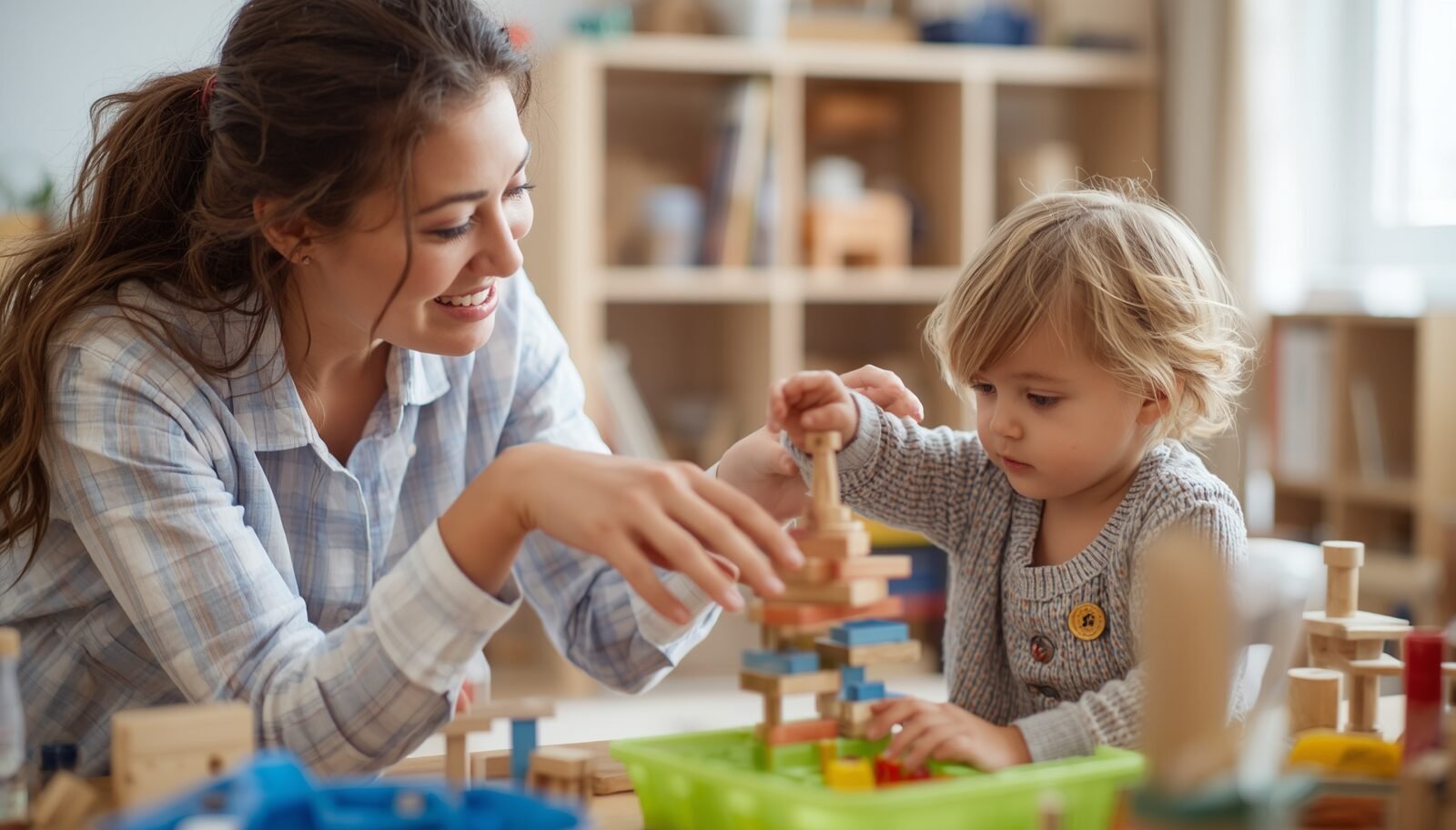
The research-supported alternative to helicopter parenting is not uninvolved or indifferent parenting. It is what developmental psychologists call scaffolding — a term borrowed from building construction that describes the process of providing temporary, targeted support that allows the child to achieve what they cannot yet manage independently, while gradually removing that support as competence grows.
The Scaffolding Principle in Practice
Vygotsky’s zone of proximal development provides the theoretical framework: effective parental support operates in the space between what the child can do alone and what they can do with guidance. Too little support leaves the child without necessary resources; too much removes the learning that comes from independent effort. The scaffold is appropriate when it is temporary, targeted to the specific difficulty rather than the whole task, and gradually withdrawn as the child’s capacity grows.
In practice, the scaffolding approach involves several specific shifts from helicopter behaviour:
From Rescue to Coaching
When a child encounters a problem, the helicopter response is to solve it; the scaffolding response is to ask questions that help the child solve it themselves. “What have you tried so far?” “What do you think might happen if you tried something different?” “Who else might be able to help you with this?” — these questions maintain parental support while keeping the problem-solving in the child’s hands where the learning happens.
From Rescuing Emotions to Supporting Through Them
The helicopter parenting response to a child’s distress is to remove the cause — to fix the problem, to argue with the teacher, to call the other parent. The scaffolding response is to acknowledge the feeling, remain calmly present, and support the child through their distress without removing it. “I can see you’re really disappointed. That’s really hard. What do you want to do next?” This response validates the feeling, communicates that the parent is present, and returns the agency — and the learning — to the child.
From Safety Theatre to Calibrated Risk
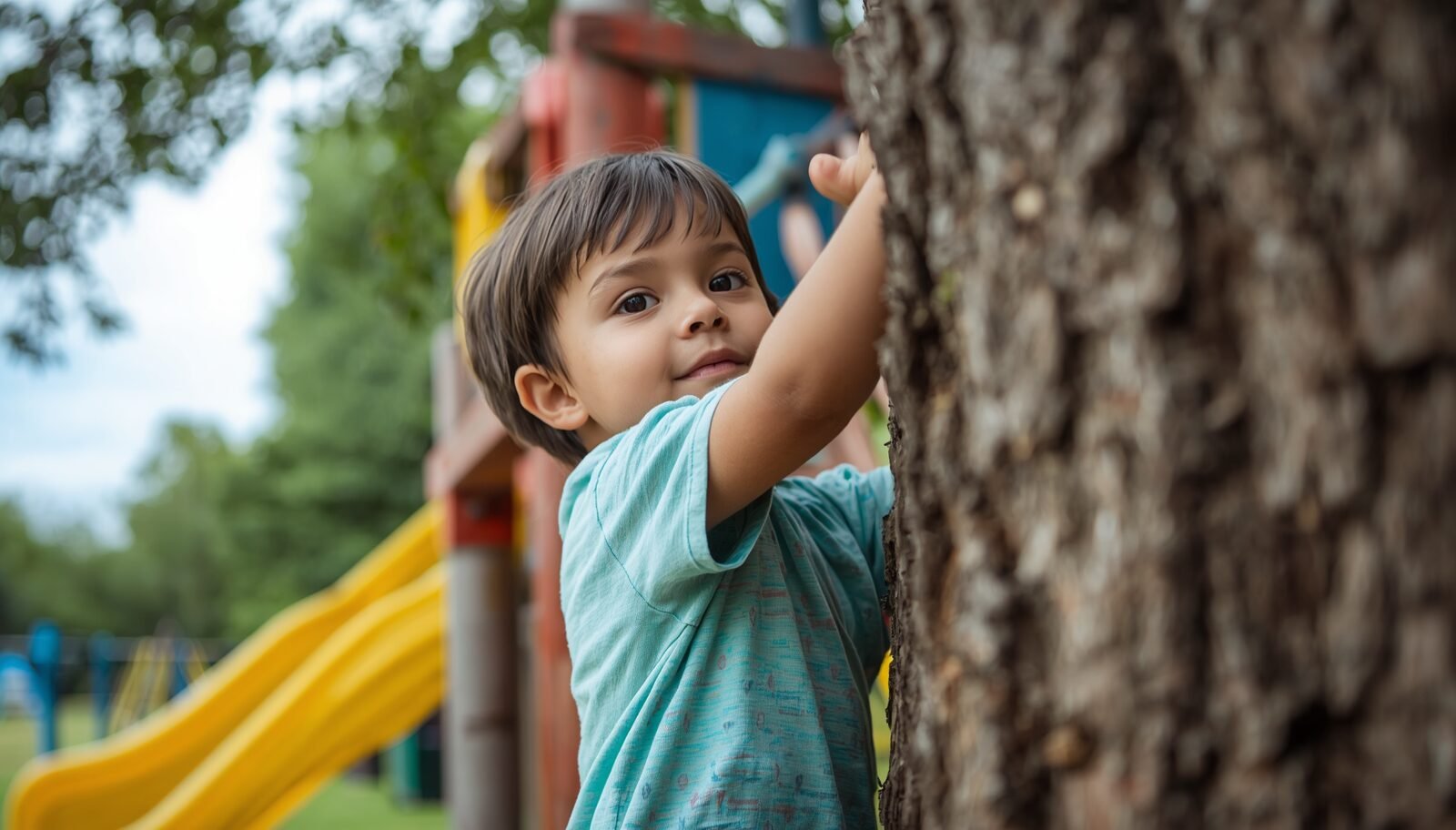
The parent who prevents a child from climbing a playground structure because of a small risk of falling is prioritising the elimination of one specific risk over the child’s need to develop physical confidence, risk assessment skills, and resilience to minor injury. Research on risky play by Ellen Beate Sandseter and colleagues at Norway’s Queen Maud University College demonstrates that children’s engagement in age-appropriate risky play is associated with positive outcomes including reduced anxiety, improved risk assessment skills, and greater physical confidence. The calibrated risk approach assesses actual safety risk rather than imagined worst-case scenarios, and allows age-appropriate physical challenge accordingly.
From Management to Connection
Much helicopter parenting is directed at outcomes — grades, safety, social success — rather than at relationship. Research on parenting quality consistently finds that the quality of the parent-child relationship is a stronger predictor of long-term child outcomes than any specific parenting behaviour. Investing time in unstructured connection — in activities the child chooses, in conversations that are genuinely curious about the child’s inner life rather than their performance, in being alongside without managing — builds the relationship foundation that makes the step-back approach possible without the child experiencing it as abandonment.
📖 Related Reading: Positive Reinforcement vs. Bribery: What’s the Difference in Parenting? — Understanding the difference between incentives that build intrinsic motivation and those that undermine it is directly relevant to navigating the shift away from outcome-focused overparenting.
Age-by-Age Guide: What Appropriate Autonomy Looks Like
One of the most practical tools for recalibrating away from overparenting is an accurate picture of what age-appropriate independence actually looks like at different developmental stages. The following is drawn from developmental psychology research and child development guidelines.
Toddlers and Preschoolers (Ages 2–5)
Children in this age range are appropriately developing autonomy in basic self-care tasks and in unstructured play. Age-appropriate independence at this stage includes: choosing between two offered options; dressing themselves with some assistance; feeding themselves; playing independently for brief periods (10–20 minutes); making simple decisions about their play activities; experiencing minor frustrations without immediate parental rescue. What they are not yet developmentally ready for: managing complex emotional conflict, navigating significant social challenges independently, or making decisions with significant consequences.
Early School Age (Ages 6–8)
Children at this stage are developing the capacity for genuine rule-governed peer interaction, basic academic self-management, and increasing physical independence. Age-appropriate autonomy includes: walking to a friend’s home in a safe neighbourhood; managing their own backpack and school materials; resolving minor peer conflicts with coaching support; completing homework with minimal parental involvement; choosing how to spend unstructured free time; experiencing the natural consequences of forgetting something at school.
Middle Childhood (Ages 9–12)
This is a critical period for autonomy development, and the research indicates that the children who thrive in adolescence are those who were given increasing independence in middle childhood. Age-appropriate autonomy at this stage includes: walking or cycling to school independently; spending time with friends without parental supervision in safe environments; managing their own homework schedule and academic organisation; navigating peer conflicts without parental intervention (except in cases of bullying or genuine safety concerns); earning and managing a small amount of money; staying home alone for short periods where appropriate to maturity.
Adolescence (Ages 13–18)
Adolescence is the developmental period when the cost of overparenting becomes most visible — and when the internal working model of competence or inadequacy built in earlier years has its most direct impact. Age-appropriate autonomy in adolescence includes: managing own academic schedule and relationships with teachers; choosing extracurricular activities; having a private social life with appropriate parental awareness but not surveillance; making increasing numbers of decisions about their own lives with parental guidance rather than parental direction; experiencing and recovering from significant failures in academic, social, and personal domains.
Talking to Your Child About Failure and Resilience
How parents talk to their children about failure, difficulty, and struggle is as important as whether they allow these experiences. The language of failure shapes the child’s interpretive framework for it — and that interpretive framework determines whether failure becomes a spur to growth or a wound to self-concept.
Process Praise vs. Outcome Praise
One of the most directly actionable findings from Dweck’s growth mindset research is the difference between process praise (“I can see how hard you worked on that”) and outcome praise (“You’re so smart/talented/gifted”). Research consistently demonstrates that outcome praise — however well-intentioned — primes children for fixed mindset responses: when they subsequently fail at something, the implied message is that the intelligence or talent has disappeared. Process praise, by contrast, locates the success in effort and strategy — both of which remain within the child’s control when things go wrong.
The After-Failure Conversation
How a parent responds to a child’s failure in the immediate aftermath is one of the most formative parenting moments available. Research on resilience building identifies several elements of a supportive after-failure conversation:
- Acknowledge the feeling first: “I know this is really disappointing” before anything else
- Normalise the failure: “Everyone has times when something doesn’t work out the way they hoped”
- Separate the failure from the person: “Not passing the test doesn’t mean you’re not capable — it means this topic needs more work”
- Focus on learning: “What do you think happened? What might you try differently next time?”
- Express confidence in their capacity: “I know you can figure this out”
Sharing Your Own Failures
Research on parental modelling of resilience identifies parental disclosure of their own failures and difficulties — and how they navigated them — as one of the most powerful tools for communicating that failure is survivable. A parent who shares appropriate stories of their own setbacks, mistakes, and recoveries normalises the experience of difficulty and models the growth mindset response to it. This does not require self-deprecation or performance; it requires the willingness to be human in front of the child.

📖 Related Reading: Why Your 7-Year-Old Is Suddenly Anxious (and How to Help) — Helicopter parenting and childhood anxiety have a bidirectional relationship: parental anxiety drives overprotection, which increases child anxiety, which appears to justify more overprotection. This article helps parents understand and break the cycle.
Frequently Asked Questions
The Hardest Parenting Move: Stepping Back
Stepping back — allowing a child to struggle, to fail, to navigate difficulty with support rather than rescue — is, for many parents, considerably harder than stepping in. Stepping in feels like love; stepping back can feel like withholding love. The discomfort of watching a child struggle, of not fixing what is broken, of tolerating the distress of someone you would do anything to protect, is real and significant.
The research does not diminish that discomfort. It provides a reason to sit with it — a framework for understanding that the struggle the child experiences when they figure something out for themselves is not harm but development; that the failure they recover from is not damage but evidence of growing resilience; that the confidence they build through their own effort is more durable and more genuinely theirs than anything a parent can hand them.
The most loving thing a parent can sometimes do is to stand slightly further back than feels comfortable — close enough to catch if the fall is genuinely dangerous, far enough to let the climbing be real. Not because distance is the point. Because the child who climbs is building something that the child who is lifted never gets to build: the knowledge, in their own body and brain and experience, that they can.
About the Author
Prasad Fernando
Prasad Fernando is the founder and lead writer of ParentalRing, a resource dedicated to practical, research-informed parenting guidance. With a strong commitment to evidence-based approaches and honest engagement with both the challenges and the science of modern parenting, Prasad draws on developmental psychology, educational neuroscience, and the published work of leading researchers to create content that is accurate, practical, and genuinely useful for the families who read it.
Sources & References
- Dweck, C. S. (2006). Mindset: The New Psychology of Success. Random House.
- Bandura, A. (1997). Self-Efficacy: The Exercise of Control. W. H. Freeman and Company.
- Grolnick, W. S., & Ryan, R. M. (1989). Parent styles associated with children’s self-regulation and competence in school. Journal of Educational Psychology, 81(2), 143–154.
- Deci, E. L., & Ryan, R. M. (2000). The ‘what’ and ‘why’ of goal pursuits: Human needs and the self-determination of behavior. Psychological Inquiry, 11(4), 227–268.
- Segrin, C., Woszidlo, A., Givertz, M., Bauer, A., & Murphy, M. T. (2012). The association between overparenting, parent-child communication, and entitlement and adaptive traits in adult children. Journal of Child and Family Studies, 21(4), 732–742.
- Vygotsky, L. S. (1978). Mind in Society: The Development of Higher Psychological Processes. Harvard University Press.
- Gray, P. (2013). Free to Learn: Why Unleashing the Instinct to Play Will Make Our Children Happier, More Self-Reliant, and Better Students for Life. Basic Books.
- Sandseter, E. B. H., & Kennair, L. E. O. (2011). Children’s risky play from an evolutionary perspective: The anti-phobic effects of thrilling experiences. Evolutionary Psychology, 9(2), 257–284.
- Lareau, A. (2003). Unequal Childhoods: Class, Race, and Family Life. University of California Press.
- Lythcott-Haims, J. (2015). How to Raise an Adult: Break Free of the Overparenting Trap and Prepare Your Kid for Success. Henry Holt and Co.
This article was last reviewed and updated in May 2026. Research on parenting and child development is ongoing. For specific concerns about your child’s development, anxiety, or wellbeing, please consult a qualified child psychologist or paediatrician.