
Health, Wellness & Safety
How to Build a First Aid Kit for Families with Young Children
By Prasad Fernando | Health, Wellness & Safety | Updated May 2026 | 17 min read
Medical Disclaimer: This article is for general informational and educational purposes only. It does not constitute medical advice and should not be used as a substitute for professional medical care. In any medical emergency, call your local emergency services immediately. Medication dosages and first aid protocols should always be confirmed with your child’s paediatrician or a qualified healthcare provider. First aid training through a certified course (such as those offered by the Red Cross or St John Ambulance) is strongly recommended for all parents and carers.
📋 Table of Contents
- Why Every Family with Young Children Needs a Dedicated First Aid Kit
- Choosing the Right Container and Storage Location
- Core First Aid Essentials Every Family Kit Needs
- Baby First Aid: Additional Supplies for Infants Under 12 Months
- Child-Specific Items for Toddlers and School-Age Children
- Medications: What to Include and What to Avoid
- The Outdoor and Travel First Aid Kit
- Maintaining and Checking Your Kit: A Seasonal Checklist
- Beyond the Kit: First Aid Skills Every Parent Should Have
- Frequently Asked Questions
- Sources & References
It is a Saturday morning. Your three-year-old has just launched herself off the edge of the sofa, landed on the hardwood floor, and is now sporting a rapidly developing bruise on her forehead and a small but enthusiastic cut on her knee. You need a thermometer, an antiseptic wipe, and an appropriately sized adhesive bandage. You need them in the next thirty seconds.
This is the reality of parenting young children — bumps, scrapes, fevers, splinters, and the occasional more serious incident are as much a feature of childhood as playgrounds and muddy shoes. Research from the American Academy of Pediatrics indicates that unintentional injuries are the leading cause of hospitalisation among children under fourteen in the United States, with the most common incidents involving falls, burns, poisoning, and foreign body ingestion. The vast majority of these involve injuries that begin as minor events — and that are managed most effectively when a parent has the right supplies, in the right place, ready to use.
A well-stocked family first aid kit is not a luxury or a sign of anxiety — it is a fundamental element of household preparedness, as basic as smoke detectors and emergency contact numbers. Yet research consistently shows that a significant proportion of family medicine cabinets are either incomplete, contain expired medications, or include adult preparations that are inappropriate or unsafe for young children.
This comprehensive guide covers everything a family with young children needs to know about building, stocking, and maintaining a first aid kit — from the core child first aid essentials that every home kit should contain, to the additional baby first aid supplies needed for infants, to the travel and outdoor kit additions that matter when your family is away from home. It also covers what to avoid, what requires professional input, and — most importantly — the first aid skills no kit can replace.
Why Every Family with Young Children Needs a Dedicated First Aid Kit
A generic household first aid kit — the kind often sold in pharmacies as a one-size-fits-all solution — is a starting point, but it is rarely optimised for the specific and distinct needs of families with young children. Infants, toddlers, and school-age children have different anatomical proportions, different medication thresholds, different injury patterns, and different psychological responses to medical interventions than adults.
A dedicated family first aid kit accounts for these differences. It ensures that the bandages are the right size for small fingers, that the thermometer is appropriate for the child’s age, that any medications included are age-appropriate and correctly dosed, and that there are no adult preparations that might be dangerous if accidentally accessed by a curious toddler.
The Most Common Childhood Injuries at Home
Understanding the most common types of childhood injury helps parents prioritise what their kit most urgently needs to contain. According to the World Health Organization and the Centers for Disease Control and Prevention, the most frequent home-based childhood injuries include:
- Falls: The most common cause of non-fatal injury in children of all ages — from tumbles off furniture in infants to falls from playground equipment in school-age children
- Burns and scalds: Particularly common in toddlers exploring the kitchen environment, frequently involving hot liquids
- Cuts and lacerations: Particularly prevalent in active older children
- Bruising and soft tissue injuries: Almost universal across all age groups
- Foreign body ingestion or insertion: Small objects, particularly hazardous in children under three
- Febrile illness: While not an injury, fever management is one of the most common reasons parents need to access their first aid supplies
Preparedness Reduces Panic
Beyond the practical value of having the right supplies available, there is a significant psychological benefit to preparedness. Research on parental stress responses in medical emergencies consistently shows that parents who feel prepared — who know where their kit is, know what is in it, and have some basic first aid knowledge — respond more calmly and effectively than those who do not. Calm, effective parental response is itself a meaningful protective factor for children in minor medical situations, reducing secondary distress and enabling faster, more accurate assessment of what has happened.
Choosing the Right Container and Storage Location
Before filling a first aid kit, parents need to choose a container and location that are both practical for adult access and safe in relation to young children.
Container Requirements
The ideal family first aid kit container has several key characteristics:
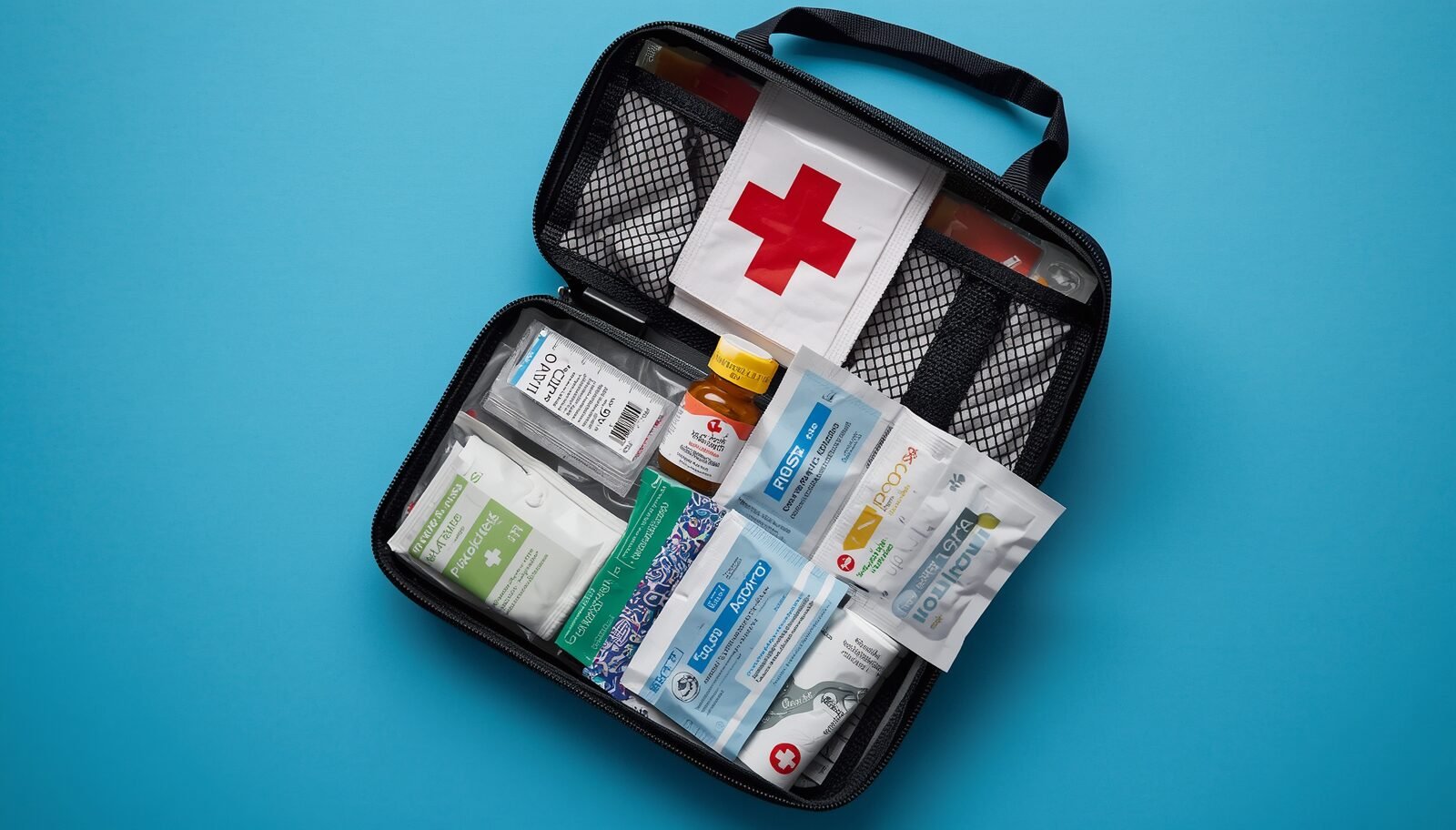
- Clearly labelled with a red cross or the words “First Aid” so that it can be identified immediately in any household situation, including by other adults or older children who may need to access it
- Latching or locking lid — not because the kit should be inaccessible to children, but to prevent accidental access by very young children to medications or sharp items
- Compartmentalised interior that allows items to be organised by category so that the correct supply can be found quickly under stress
- Portable — a handle or compact design allows the kit to be carried to wherever the child or injury is, rather than requiring the injured child to be moved to the kit
- Waterproof or water-resistant exterior for durability and to protect contents from humidity
Storage Location
The kit should be stored in a location that is:
- Known to all adults and older children in the household
- Accessible to adults quickly and without searching
- Out of the everyday reach of young children, but not locked away so securely that it becomes difficult to access under stress
- Away from extreme heat, moisture, or direct sunlight — all of which can degrade medications and adhesive products
Many families find that a high kitchen shelf, the top of a linen cupboard, or a dedicated bathroom shelf works well. The bathroom medicine cabinet — while traditional — is actually among the less optimal locations due to humidity from the shower and the irony that it is often the first place curious children explore.
Families with more than one level should consider keeping a smaller secondary kit upstairs, since the majority of childhood injuries at home happen quickly and near wherever the family is spending time.
Core First Aid Essentials Every Family Kit Needs
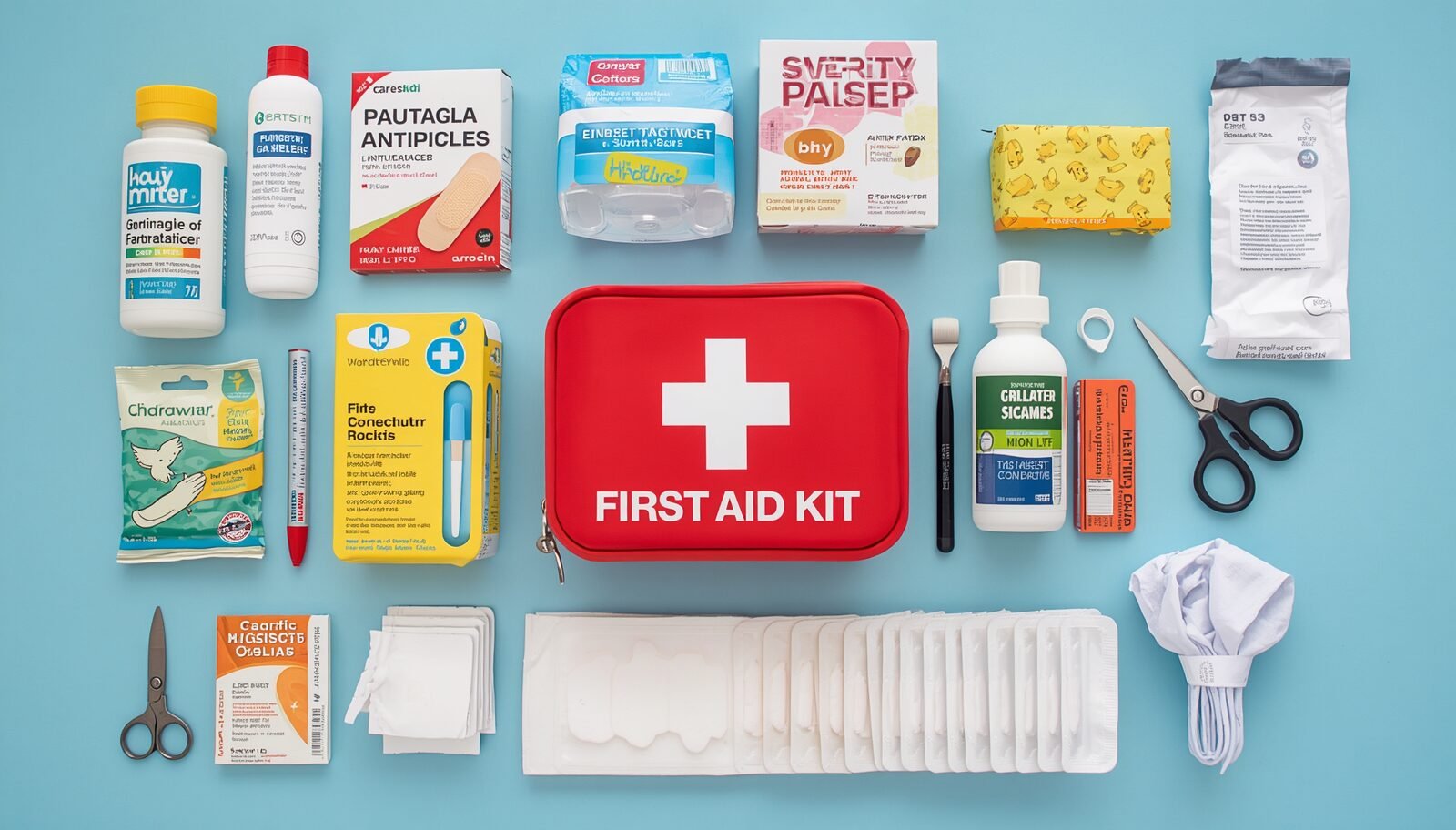
The following items represent the core of a well-stocked family first aid kit, based on recommendations from the American Red Cross, the British Red Cross, St John Ambulance, and the American Academy of Pediatrics. Items are grouped by function for ease of reference.
| Category | Item | Quantity / Notes |
|---|---|---|
| 🩹 Wound Care | Adhesive bandages (plasters) | Assorted sizes including small fingertip and knuckle; character designs help young children accept them |
| Sterile gauze pads | At least 6 × 5cm pads and 4 × 10cm pads | |
| Cohesive or self-adhesive bandage roll | 2 rolls — for securing gauze or supporting sprains | |
| Medical / surgical tape | 1 roll — hypoallergenic options preferred for sensitive skin | |
| 🧴 Antiseptic & Cleaning | Antiseptic wipes (individually wrapped) | At least 10 — for cleaning wounds before dressing |
| Saline wound wash or sterile saline pods | For flushing debris from wounds and eyes gently | |
| Antiseptic cream or gel | Confirm age-appropriateness with paediatrician for children under 2 | |
| 🌡️ Temperature & Assessment | Digital thermometer | Fast-read digital preferred; rectal thermometer most accurate for infants under 3 months |
| Instant cold pack (disposable) | At least 2 — for bumps, bruises, and sprains; wrap in cloth before applying to child’s skin | |
| Small torch / penlight | For examining mouth, throat, ears, and wounds in low-light conditions | |
| ✂️ Tools | Blunt-tipped scissors | For cutting tape, gauze, and clothing if needed |
| Fine-point tweezers | For splinter removal — clean before and after each use | |
| Disposable gloves (nitrile or latex-free) | At least 4 pairs — both for hygiene and to protect the adult treating the wound | |
| 📋 Reference & Admin | Emergency contact card | Local emergency number, paediatrician, Poison Control (US: 1-800-222-1222; UK: 111) |
| First aid quick-reference guide | Laminated card or small booklet for reference under stress |
Sources: American Red Cross, British Red Cross, St John Ambulance, American Academy of Pediatrics (2024).
Baby First Aid: Additional Supplies for Infants Under 12 Months
Families with infants have a distinct set of first aid needs that require additional or different supplies beyond the standard adult-oriented kit. Baby first aid is a specific sub-discipline that reflects the unique physiological and safety considerations of the first year of life.
Thermometer Considerations for Infants
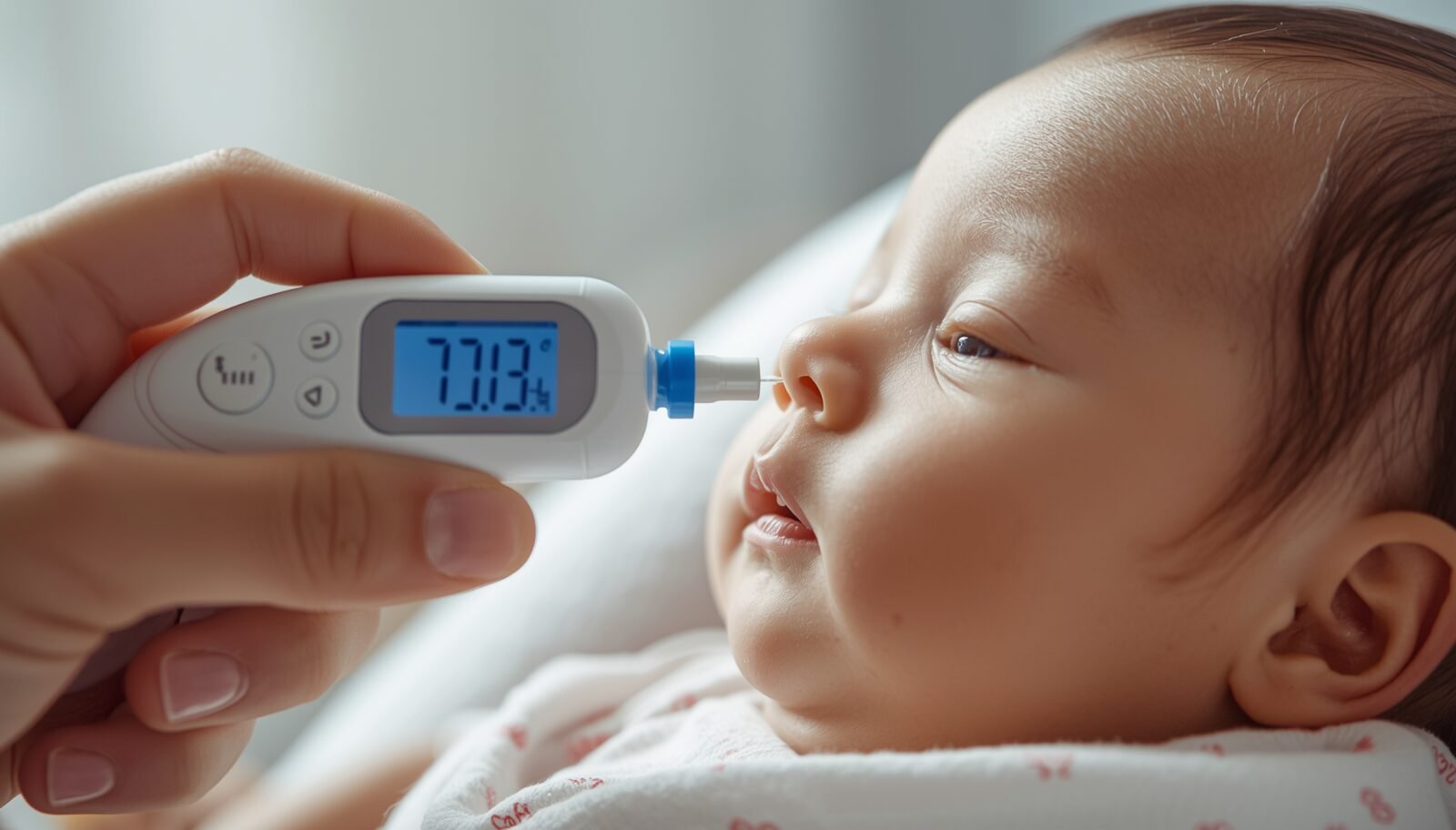
Temperature measurement accuracy is particularly critical for infants, as fever in a baby under three months is a medical emergency requiring immediate professional assessment. For infants under three months, the American Academy of Pediatrics recommends rectal thermometry as the most accurate method. For older infants, temporal artery (forehead) or axillary (underarm) digital thermometers are generally acceptable, though parents should confirm their thermometer’s accuracy rating with their paediatrician.
Additional Baby-Specific Supplies
- Rectal thermometer (clearly labelled, dedicated only to rectal use, and stored separately from oral thermometers)
- Petroleum jelly or thermometer lubricant for comfortable rectal temperature-taking
- Nasal aspirator or nasal saline drops — infants are obligate nasal breathers and cannot blow their own noses; a congested infant may have significant feeding and sleeping difficulties
- Infant nail scissors or file — infant nails grow rapidly and the most common infant self-injury is accidental facial scratching from long nails
- Small sterile eye wash pod or saline drops — for flushing irritants from eyes gently
- Extra-small adhesive bandages — standard adult bandages are too large for infant fingers and may pose a choking risk if removed
- Infant oral rehydration solution sachets — for use under paediatric guidance during episodes of diarrhoea or vomiting
Important: No medication — including over-the-counter pain relievers or fever reducers — should be given to an infant under three months without direct instruction from a doctor. For infants aged three to six months, always confirm appropriate dosing with your paediatrician before including any medication in the kit.
Baby First Aid Skills Are as Important as Supplies
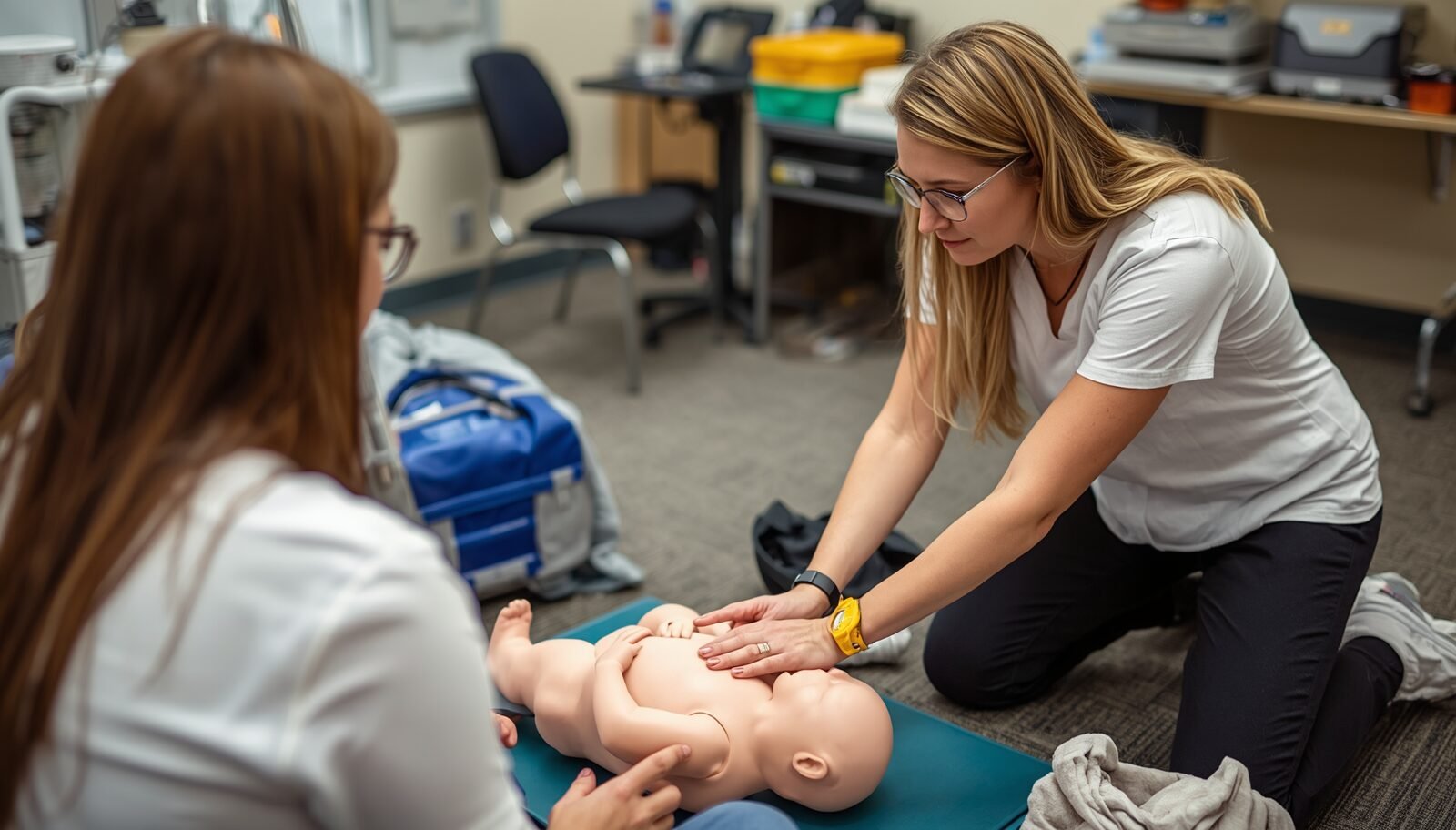
For parents of infants, knowledge is arguably more important than equipment. Knowing how to respond to choking in an infant, how to perform infant CPR, and how to recognise the signs of serious illness in a baby who cannot communicate verbally are skills that no kit can replace. Enrolling in an infant and child first aid course — many of which are available online as well as in person through organisations such as the Red Cross and St John Ambulance — is one of the highest-value preparedness investments a new parent can make.
📖 Related Reading: How Much Sleep Does Your Child Really Need? A Complete Sleep Guide by Age — A well-rested child who sleeps adequately is more resilient, and recognising when illness is disrupting sleep is one of the earliest signs parents notice. Understanding healthy sleep patterns helps distinguish routine illness from more concerning symptoms.
Child-Specific Items for Toddlers and School-Age Children
Beyond infancy, the injury profile of young children shifts to reflect their increasing mobility, exploration, and risk-taking. Toddlers and school-age children are active, curious, and frequently unaware of physical danger — which is exactly why their first aid kit needs to be specifically prepared for the kinds of incidents they actually experience.
Toddlers (Ages 1–3)
Toddlers are at peak risk for falls (from furniture, stairs, and outdoor play equipment), burns (from exploring the kitchen), and choking (from putting small objects in their mouths). Additional supplies particularly useful for this age group include:
- Blister or foam padding — for protecting friction injuries on sensitive toddler skin
- Steri-strips or wound closure strips — useful for small lacerations that benefit from support without requiring stitches; always confirm with a healthcare provider whether a wound needs professional closure
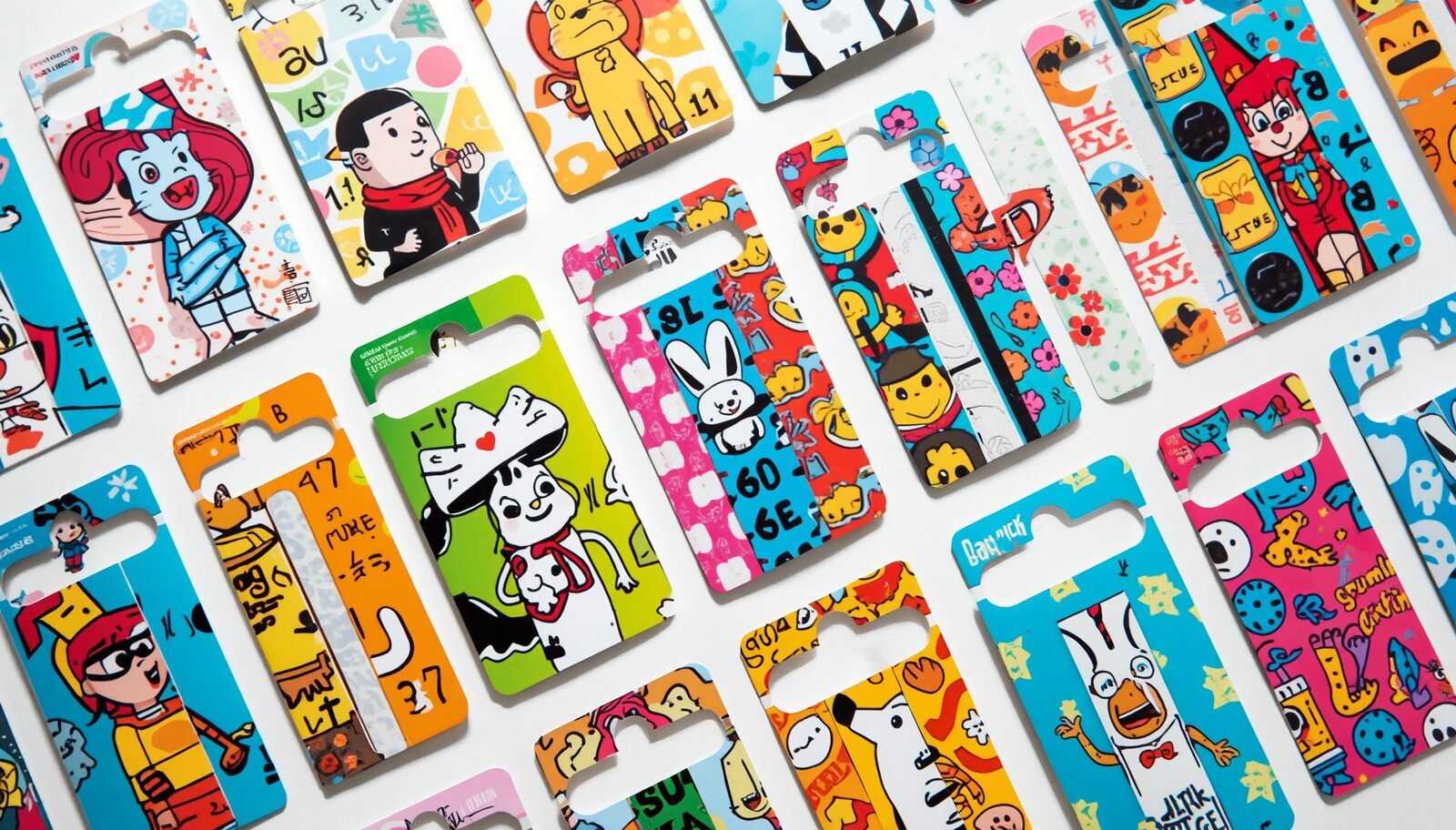
- Colourful or character-themed adhesive bandages — toddlers are significantly more compliant with wound dressing when the bandage features a favourite character. While this sounds trivial, reducing the distress associated with wound care is genuinely important for accurate assessment and effective treatment
- Distraction tools — a small toy, bubbles, or a dedicated “first aid book” that lives in the kit and is only brought out during treatment can dramatically reduce a toddler’s distress and cooperation challenges
School-Age Children (Ages 4–12)
School-age children encounter a broader range of injury contexts — sports, outdoor play, cycling, and playground activities generate the most common first aid needs. Specific additions for this age group include:
- Elastic support bandage — for supporting ankle and wrist sprains from sports and active play
- Blister prevention and treatment pads — particularly relevant for children who are active walkers or in new footwear
- After-bite or antihistamine cream — for insect stings and bites, which are extremely common in outdoor play contexts
- Tick removal tool — in regions where ticks are prevalent, a proper tick-removal device (not general tweezers, which can compress the tick and increase infection risk) is a specific need for active outdoor families
- Blunt splinter probe — children who play outdoors on wooden structures or in soil regularly encounter splinters; a dedicated probe alongside fine tweezers makes removal faster and less traumatic
Medications: What to Include and What to Avoid
The medication component of a family first aid kit is one of the most important — and most frequently mismanaged — elements of home health preparedness. Dosing errors with common over-the-counter medications are among the most frequent preventable medication incidents in children, and the medication section of any family kit requires careful, age-specific management.
⚠️ Critical Safety Note: All medications included in a family first aid kit must be stored in their original packaging with the label intact. Dosage for children must always be calculated by weight or age as directed by the packaging or your paediatrician — never by adult dose reduction alone. If in doubt, contact Poison Control (US: 1-800-222-1222) or NHS 111 (UK) before administering any medication.
Medications Appropriate to Include (Subject to Age and Medical Guidance)
- Children’s paracetamol (acetaminophen) — liquid formulation: For fever management and pain relief. Only appropriate from three months of age (or 2 months if birth weight above 4kg and prescribed by a doctor). Dose by weight — the packaging provides weight-based dosing tables. Never exceed recommended frequency or dose.
- Children’s ibuprofen — liquid formulation: For fever and pain relief in children over three months and over 5kg body weight. Do not use in children under three months, those with certain medical conditions, or those who are dehydrated. Confirm with paediatrician.
- Oral rehydration sachets: For managing mild to moderate dehydration associated with diarrhoea and vomiting. Appropriate from birth under medical guidance, and generally safe for home use in older children.
- Antihistamine liquid (non-drowsy formula where appropriate for the child’s age): For mild allergic reactions, insect stings, and urticaria (hives). Confirm age-appropriate formulation and dose with paediatrician, as antihistamine recommendations vary by age.
Medications to Avoid in Children’s Kits
- Aspirin: Never give aspirin to children or teenagers — it is associated with a serious condition called Reye’s syndrome
- Adult-strength formulations of any medication: Including adult paracetamol or ibuprofen tablets, which are not appropriate dose delivery for children
- Codeine or codeine-containing cough medicines: Not recommended for children due to variable metabolism and risk of serious respiratory side effects
- Cough and cold medications for children under four: The FDA, UK MHRA, and TGA Australia advise against OTC cough and cold preparations for children under four years of age due to limited evidence of benefit and risk of harm
Prescription Items and Allergy Kits
If your child has a known allergy requiring an epinephrine auto-injector (such as an EpiPen), the kit should contain at least two auto-injectors, stored at the recommended temperature, with both the child’s name and an expiry date clearly visible. All adults who care for the child should know where the injectors are kept and have been trained in their use. Speak to your child’s allergist about your home and travel preparedness plan.
📖 Related Reading: Healthy Lunch Box Ideas for Picky Eaters (School-Friendly Recipes) — A nutritionally strong diet supports immune resilience in children. Understanding the connection between daily nutrition and a child’s overall health helps parents take a holistic approach to family wellness.
The Outdoor and Travel First Aid Kit
The home first aid kit is the foundation, but families with young children spend significant time outdoors, on holidays, and in environments where access to a fully stocked home kit is not available. A portable travel kit — compact, lightweight, and packed for the specific contexts your family encounters — is a practical necessity.
Core Travel Kit Contents
A travel kit is a curated selection of the most frequently needed items from the home kit, packaged for portability:
- 10–15 adhesive bandages in assorted sizes
- 5 antiseptic wipes
- 2 sterile gauze pads
- 1 small roll of medical tape
- 1 pair nitrile gloves
- 1 instant cold pack
- 1 digital thermometer
- A small tube of antiseptic cream
- Children’s paracetamol sachets (appropriate dose for child’s current weight)
- Any required prescription medications (epinephrine auto-injectors, specific allergy preparations)
- Tweezers
- Emergency contact card with local emergency numbers for the destination
Additional Items for Outdoor and Active Families
Families who camp, hike, or spend significant time outdoors should also consider:
- Sunburn soothing gel (aloe vera-based): For mild sunburn treatment — a risk for children during extended outdoor time regardless of sunscreen application
- Moleskin or blister pads: For longer walks and hikes where footwear may cause friction injuries
- Tick removal tool: Essential for families in wooded or grassland areas
- Insect repellent wipes: For active prevention alongside treatment supplies
- Emergency whistle and small torch: While not strictly first aid items, these are essential emergency communication and search-and-rescue tools for families in remote outdoor environments
- Waterproof pouch or zip-lock bags: To keep contents dry during water-based activities or wet weather
International Travel Considerations
When travelling internationally with young children, research the healthcare system and medication availability at your destination before departure. Some medications commonly available over the counter in one country require a prescription in another. Research local emergency numbers for each country visited and add them to your emergency contact card before departure. For destinations where certain illnesses are prevalent, speak to a travel medicine specialist or your paediatrician about any recommended preventive measures specific to your child’s age.
Maintaining and Checking Your Kit: A Seasonal Checklist
A first aid kit that was complete twelve months ago may not be complete today. Adhesive bandages get used, medications expire, antiseptic wipes dry out, and as children grow, the age-appropriate medication doses in the kit may need updating. Regular maintenance is as important as initial stocking.
Quarterly Check (Every 3 Months)
- ☐ Check all medication expiry dates — discard safely and replace anything expired
- ☐ Restock adhesive bandages and antiseptic wipes that have been used
- ☐ Check that instant cold packs are intact and functional
- ☐ Confirm that glove supply is adequate and packaging is undamaged
- ☐ Update child’s weight on the medication dosing guide if it has changed significantly (relevant for paracetamol and ibuprofen dosing)
Annual Check (Every 12 Months)
- ☐ Complete review of all contents against the master supply list
- ☐ Replace thermometer batteries
- ☐ Update emergency contact card — check all numbers are current
- ☐ Reassess age-appropriateness of all contents as child grows
- ☐ Review prescription medications and confirm with prescribing doctor that they are current
- ☐ Update first aid reference guide if guidelines have changed
- ☐ Consider whether family’s activities or context have changed and whether additional supplies are needed (e.g. if the family has started camping, add outdoor-specific items)
After Every Use
- ☐ Immediately note what was used and replace before the next incident
- ☐ Clean and disinfect any reusable tools (tweezers, scissors)
- ☐ Check that the kit is closed and stored correctly
Setting a recurring calendar reminder for kit checks — perhaps linked to the start of each school term or at the change of seasons — ensures this does not become an item that is perpetually on the to-do list but never completed.
Beyond the Kit: First Aid Skills Every Parent Should Have
The most important first aid tool a parent can possess is knowledge — not equipment. A well-stocked kit without the skill to use it correctly is substantially less valuable than a basic kit in the hands of a parent who has received proper training. The following are the first aid competencies most strongly recommended for parents of young children, by organisations including the Red Cross, St John Ambulance, and the American Academy of Pediatrics.
CPR for Infants and Children
Cardiopulmonary resuscitation (CPR) technique differs significantly between adults, children, and infants — and using the wrong technique can cause harm. All parents and regular carers of young children should complete a certified paediatric CPR course that covers technique for both infant (under 12 months) and child (1–8 years) populations. CPR guidelines are updated periodically; parents should refresh their certification every two years or whenever guidelines change.
Choking Response for Infants and Children
Choking is a leading cause of injury death in children under five, with small objects and food being the most common causes. The response to choking differs between infants (back blows and chest thrusts) and children over one year (back blows and abdominal thrusts — the Heimlich manoeuvre). This distinction is life-critical and must be learned from a qualified instructor rather than from text alone. Many parents find that a one-day paediatric first aid course — covering both CPR and choking response — provides confidence that no quantity of equipment can replicate.
Burn and Scald Management
For minor burns (small area, superficial, no blistering or charring), the correct first response is to cool the burn under cool (not cold) running water for a minimum of ten minutes. Do not apply butter, oil, toothpaste, or any household product to a burn — these remedies, still circulating as folk wisdom, can worsen outcomes. After cooling, loosely cover with a clean non-fluffy dressing. Any burn larger than the child’s palm, any burn to the face, hands, feet, genitals, or joints, or any burn with blistering should be seen by a healthcare professional.
Recognising When to Call Emergency Services
Perhaps the most important skill of all is knowing when a situation exceeds home first aid and requires emergency services. Parents should call emergency services (999 in the UK, 000 in Australia, 911 in the US) or take the child to the emergency department for:
- Loss of consciousness or difficulty waking
- Difficulty breathing or breathing that sounds abnormal
- Suspected head injury with vomiting, altered behaviour, or loss of consciousness
- Severe allergic reaction (anaphylaxis) — any facial swelling, throat tightening, or difficulty breathing following an allergic trigger
- Deep or large lacerations, or wounds that will not stop bleeding after 10–15 minutes of direct pressure
- Suspected broken bone
- Seizure in a child with no previous seizure history
- Ingestion of a potentially toxic substance — also call Poison Control
- Any situation where the parent’s instinct says something is seriously wrong
📖 Related Reading: Why Family Dinners Matter More Than You Think (and How to Make Them Happen) — Regular family meals create daily opportunities to observe children’s health and wellbeing — including the early signs of illness, injury, or changes in a child’s physical condition that prompt first aid action.
Frequently Asked Questions
Prepared, Not Fearful — The Right Kind of Ready
Building a family first aid kit that is genuinely suited to the needs of young children is not a project that takes weeks or requires specialist expertise. It is an afternoon’s work, a modest investment, and a decision that most parents who do it describe as one of the most immediately reassuring things they have done for their family’s wellbeing.
The goal is not to be prepared for every possible scenario — it is to be prepared for the most common ones, to have the right tools available to manage them calmly and effectively, and to know clearly when a situation requires professional medical attention. The parent who reaches for their kit knowing exactly what is in it and where to find it is a fundamentally different kind of responder than the one who is searching through an unfamiliar cabinet while a child is waiting.
Stock the kit. Learn the skills. Maintain both. And then — as with most aspects of good parenting — do your best work and trust that preparation gives you the best possible chance of getting it right when it matters.
About the Author
Prasad Fernando
Prasad Fernando is the founder and lead writer of ParentalRing, a resource dedicated to practical, research-informed parenting guidance. With a strong commitment to evidence-based family health and safety, Prasad draws on clinical guidelines from leading paediatric organisations, peer-reviewed research, and the published recommendations of certified first aid training bodies. He believes that preparedness is one of the most practical expressions of parental care — and that accessible, accurate information about family health and safety should be available to every parent, regardless of medical background.
Sources & References
- American Academy of Pediatrics Committee on Injury, Violence, and Poison Prevention. (2018). Prevention of Choking Among Children. Pediatrics, 125(3), 601–607.
- American Red Cross. (2024). First Aid/CPR/AED Participant’s Manual. American Red Cross.
- British Red Cross. (2024). First Aid Manual (11th ed.). Dorling Kindersley.
- St John Ambulance, St Andrew’s First Aid, & British Red Cross. (2023). First Aid for Life. Dorling Kindersley.
- World Health Organization. (2008). World Report on Child Injury Prevention. WHO Press.
- Centers for Disease Control and Prevention (CDC). (2024). Childhood Injury Report: Patterns of Unintentional Injuries Among 0–19 Year Olds in the United States. Retrieved from cdc.gov.
- American Academy of Pediatrics. (2022). Pediatric First Aid for Caregivers and Teachers (PedFACTS). AAP.
- US Food and Drug Administration (FDA). (2022). FDA Recommendation: Do Not Use OTC Cough and Cold Products for Children Under 4 Years of Age. FDA Consumer Health Information.
- NHS UK. (2023). Giving medicines to children. National Health Service. Retrieved from nhs.uk.
- Resuscitation Council UK. (2021). Paediatric Basic Life Support Guidelines. Resuscitation Council UK.
This article was last reviewed and updated in May 2026. First aid guidelines and medication recommendations are subject to change. Always confirm current dosing and technique with a qualified healthcare professional or certified first aid instructor. In a medical emergency, call your local emergency services immediately.