Every parent of a two-year-old eventually wonders the same thing: is it time to ditch the diapers? Friends swear by a three-day method, grandparents insist you were trained at 18 months, and your toddler shows no interest at all. The truth is that there is no single “right” age for potty training. What matters most is whether your child is physically, mentally and emotionally ready.
This guide covers the readiness signs pediatricians look for, the typical age range, how to tell when to wait, and simple steps for getting started once your child is ready.
What Age Do Most Children Potty Train?
According to the American Academy of Pediatrics, children usually develop the bladder and bowel control needed for toilet training somewhere around 18 to 24 months. In the United States, the average age that toilet training begins is between 2 and 3 years, and most children are bowel and bladder trained by about age 4.
That is a wide range, and it is normal. Some children are ready before their second birthday. Others are not ready until well after their third. Starting before a child is ready usually makes training take longer, not shorter.
Signs Your Toddler Is Ready
The AAP lists several signs that suggest a child may be ready to start. Your child does not need to show every one, but most of them should be in place:
- Stays dry for at least 2 hours during the day, or wakes up dry after naps.
- Shows signs before peeing or pooping, such as grunting, squatting, going quiet or hiding behind furniture.
- Can follow simple instructions, like “Go get your shoes.”
- Can walk to and from the bathroom and help pull their pants up and down.
- Dislikes wet or dirty diapers and may ask to be changed.
- Asks to use the potty or shows interest in “big kid” underwear.
Other helpful signs include having fairly regular, predictable bowel movements, being curious about how other family members use the bathroom, and being able to sit still for a few minutes.
When It Is Better to Wait
Even if your child shows readiness signs, some times are better than others. The AAP suggests postponing training during major changes, such as:
- A new baby joining the family
- Moving house
- Starting a new daycare or preschool
- A serious illness or a family crisis
If a new sibling is on the way, many families find it easier to finish training a couple of months before the baby arrives, or wait until the baby has settled in at home. Expect some accidents either way.
Also consider waiting if your child is in a strong “no to everything” phase. Toileting is one area where a toddler has complete control, and turning it into a power struggle almost always backfires.
How to Get Started: Step by Step
1. Get the right equipment
Choose a small potty chair your child can sit on with their feet flat on the floor, or a child seat that fits on the regular toilet plus a sturdy step stool. Feet on a firm surface help children relax the muscles needed to pee and poop.
2. Introduce the potty without pressure
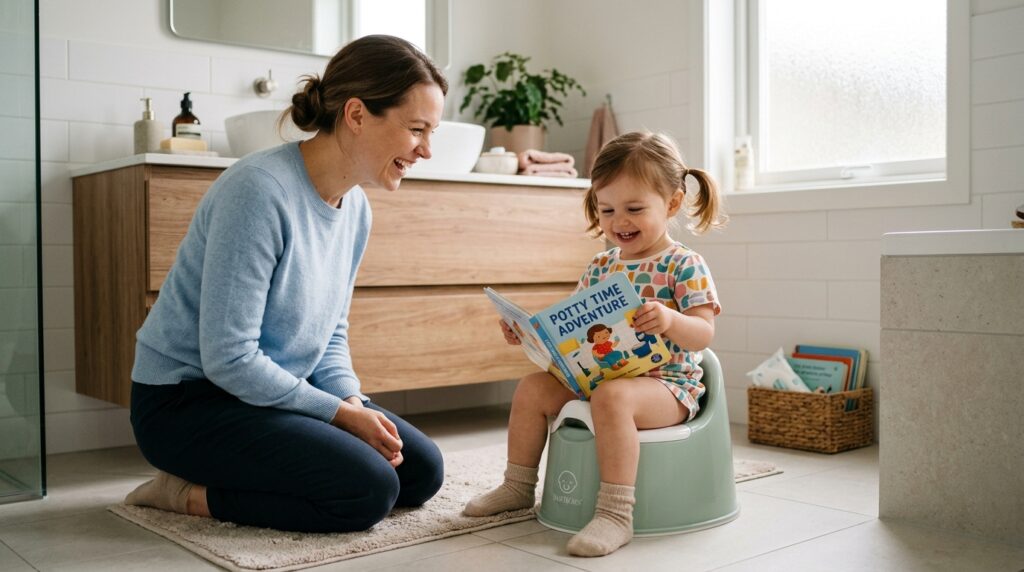
Let your child sit on the potty fully clothed at first, maybe while you read a book together. Talk about what the potty is for using simple, consistent words like “pee” and “poop.”
3. Build potty time into the routine
Offer the potty at natural times: after waking up, after meals, before bath and before bed. Keep sits short, just a few minutes, and keep the mood relaxed. Routines make training predictable, which helps toddlers cooperate. (See our guide to building a family routine that sticks.)
4. Watch for cues and respond quickly
When you see your child’s “I need to go” signs, calmly guide them to the potty. Toddlers have only a short window between feeling the urge and going.
5. Dress for success
Clothes with elastic waists that your child can pull down quickly make a big difference. Avoid overalls, belts and tricky buttons during training.
6. Praise effort, not just results
Notice and praise trying: “You sat on the potty and listened to your body.” Small rewards such as a sticker chart can motivate some children, but keep them simple and phase them out once the habit is established.
7. Handle accidents calmly
Accidents are part of learning. Avoid punishing, shaming or showing frustration. Say something neutral like, “Oops, the pee came out. Pee goes in the potty. Let’s get changed,” and involve your child in cleaning up in an age-appropriate way.
What About Nighttime?
Staying dry at night usually comes later than daytime control and depends largely on physical development, not effort. Many children who are fully trained during the day still need a diaper or training pants at night for months or even years. Bedwetting is common in young children and is not a sign of laziness or a behavior problem. Talk to your pediatrician if you have concerns, particularly if a child who was dry at night for months starts wetting again.
Common Potty Training Problems
“My child refuses to sit on the potty”
Take a break for a few weeks and try again. Pushing a reluctant child often leads to longer delays. Offering choices (“Do you want the frog potty or the big toilet?”) can help.
“They pee in the potty but won’t poop there”
This is very common. Some children feel uncomfortable letting go of a bowel movement in a new place. Stay patient and avoid pressure, and talk to your pediatrician if your child starts holding stool, since this can lead to constipation.
“We were doing well and now there are accidents again”
Regression often happens during stress or change, such as a new sibling or starting school. Respond calmly, go back to more frequent reminders, and give it time.
When to Talk to Your Pediatrician
Contact your child’s doctor if your child is older than 4 and not yet trained during the day, has pain when peeing or pooping, has hard or infrequent stools, has blood in their stool or urine, or suddenly has accidents after being trained for a long time. These can be signs of constipation, a urinary infection or another issue that is easy to treat.
Frequently Asked Questions
Do three-day potty training methods work?
Some families have success with short, intensive methods, especially with children who are clearly ready. They are not right for every child. If your child is not showing readiness signs, an intensive method is likely to lead to frustration.
Should I use pull-ups or underwear?
Both can work. Some families find that underwear helps children notice when they are wet, while pull-ups are convenient for outings and nighttime. Choose what fits your family and stay consistent.
Are boys harder to train than girls?
On average, some studies have found that girls complete training slightly earlier, but individual differences are much bigger than any difference between boys and girls. Follow your own child’s signs.
The Bottom Line
Most children are ready to start potty training somewhere between 18 months and 3 years, and most are trained by about age 4. Look for readiness signs, avoid starting during big life changes, build potty time into a predictable routine, praise effort and handle accidents calmly. For calm ways to handle resistance at this age, see our guide on disciplining a toddler without yelling.
Sources
- American Academy of Pediatrics. The Right Age to Toilet Train. HealthyChildren.org.
- Baird, D. C., Bybel, M., & Kowalski, A. W. (2019). Toilet training: common questions and answers. American Family Physician, 100(8), 468–474.
This article is for general information only and is not a substitute for advice from your pediatrician.