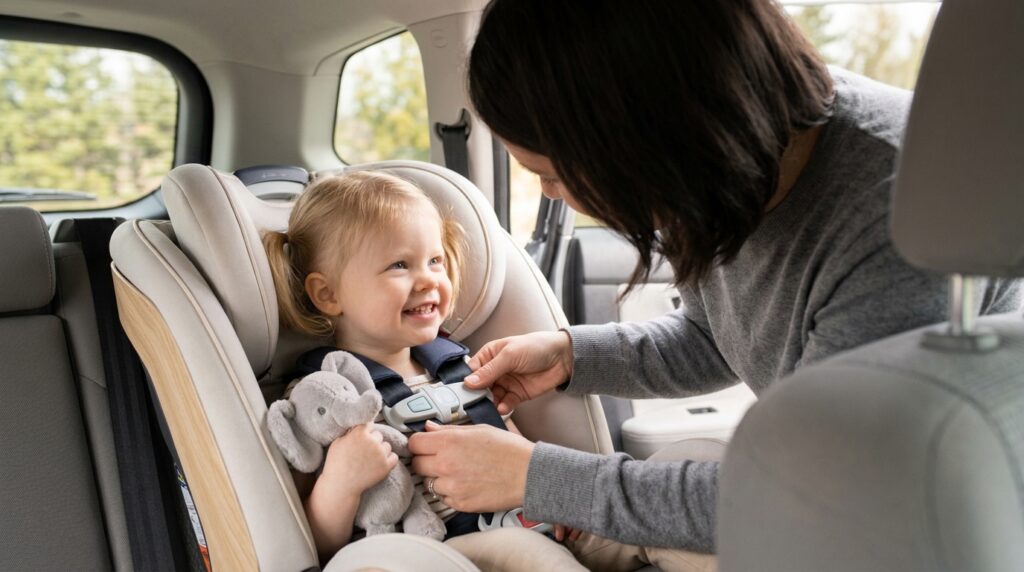
Arching their back, going stiff as a board, screaming the moment they see the car: if getting your toddler into a car seat has become a daily wrestling match, you are in very good company. Car seat battles are one of the most common toddler struggles, and they tend to peak between about 18 months and 3 years, right when the drive for independence is strongest.
The car seat is also the one place where you cannot compromise. Every trip, every time, your child needs to be buckled correctly. This guide covers why toddlers resist, practical fixes that work for many families, and the safety checks that matter most.
Why Toddlers Fight the Car Seat
- Loss of control. Being strapped in is the opposite of what a toddler wants: freedom to move and make choices.
- Interrupted play. Car trips often mean stopping something fun with little warning.
- Physical discomfort. Straps that are twisted, a seat that is hot from the sun, a bulky coat, or a seat that is too small can all make the seat genuinely uncomfortable.
- Boredom. A rear-facing toddler sees the back of a seat. Long trips with nothing to do can make every future trip feel worse.
- Testing limits. If resisting has sometimes led to skipping the trip or a long negotiation, a toddler learns that resisting might work.
Safety First: The Non-Negotiables
Before trying any of the fixes below, make sure the seat itself is set up correctly. Discomfort from a poorly fitted seat is a common hidden cause of resistance. The American Academy of Pediatrics and the U.S. National Highway Traffic Safety Administration (NHTSA) recommend:
- Keep your child rear-facing as long as possible, until they reach the highest weight or height allowed by their seat’s manufacturer. Most convertible seats allow rear-facing well past age 2.
- Harness straps snug. After buckling, try the “pinch test”: if you can pinch a fold of the strap webbing at your child’s collarbone, it is too loose.
- Chest clip at armpit level. Not down on the belly, not up at the neck.
- No bulky coats under the harness. Puffy coats compress in a crash and leave the straps too loose. Buckle your child in regular clothes, then put the coat on backwards over the straps or tuck a blanket on top.
- Never skip the seat, even for a short trip.
If you are not sure your seat is installed correctly, many areas offer free checks by certified child passenger safety technicians. NHTSA’s website has a car seat inspection locator for the United States.
9 Practical Fixes for Car Seat Battles
1. Give a warning before it is time to go
Toddlers handle transitions better with notice. “Five more minutes of blocks, then shoes and car.” A timer can help, so the timer is the one saying it is time.
2. Offer two real choices
The seat is not optional, but lots of things around it can be. “Do you want to climb in by yourself or should I lift you?” “Do you want the blue cup or the green cup in the car?” Choices give back a little of the control the seat takes away.
3. Let them climb in
Many toddlers resist being lifted and placed but will happily climb up themselves, especially if you make it a “big kid” job. It takes an extra minute, so build that minute into your schedule.
4. Keep car-only toys
Keep a small bag of toys, board books or a soft puzzle that only appear in the car. Rotating them every week or two keeps them interesting. (Our guide to toy rotation for toddlers explains why novelty helps.) Choose soft, light items that will not become dangerous if they fly around during sudden braking.
5. Check comfort every time
Straighten twisted straps, check that the buckle is not hot, shade the seat in summer, and make sure your child is not sitting on a toy. A quick 10-second check removes many reasons to protest.
6. Stay calm, brief and consistent
Use the same short phrase every time: “Car seat keeps you safe. We buckle every time.” Then buckle. Long explanations or bargaining in the middle of a meltdown usually make it longer. This is the same calm, consistent approach covered in our guide to disciplining a toddler without yelling.
7. Use a song or a “buckle routine”
A short song that only happens while buckling, or a routine like “one strap, two straps, click, pull,” turns a power struggle into a familiar sequence. Toddlers love predictable patterns.
8. Practice when you are not in a rush
Spend a few minutes in a parked car on a calm day. Let your toddler explore the seat, buckle a stuffed animal into it, and practice climbing in. Low-pressure practice makes the real thing feel less threatening.
9. Notice and praise cooperation
When your child gets in with less fuss, say exactly what they did: “You climbed in and sat down so quickly. Thank you.” Specific praise is more effective than a general “good job.”
What to Do During a Full Meltdown
Sometimes none of this works and your child is screaming and rigid. Safety comes first: buckle them as calmly and gently as you can, without rushing straps over a twisting body. If your child goes stiff, a gentle tickle at the waist or pressing lightly on their hips can help them bend into the seat. Then give them a moment. Acknowledge the feeling (“You’re really mad. You wanted to stay at the park.”) without reopening the decision. Most car seat meltdowns end within a few minutes once the car is moving.
When It Might Be Something Else
Talk to your pediatrician if your child seems to be in pain in the seat, often vomits on car trips, or if the resistance appeared suddenly along with other changes. Motion sickness, reflux or an ear infection can all make car rides miserable. And if your child has outgrown the seat’s height or weight limits, a properly fitting new seat may solve the problem.
Frequently Asked Questions
Should I turn my toddler forward-facing to stop the crying?
Not just to stop the crying. The AAP recommends keeping children rear-facing for as long as their seat allows, because it gives the best protection for the head, neck and spine in a crash. Many toddlers who fight the seat also fight it forward-facing.
Is it okay to give a snack in the car seat?
Many families do, but choking is a real risk when you are driving and cannot watch closely. If you offer snacks, choose soft foods that dissolve easily, avoid hard round foods such as whole grapes, nuts and popcorn, and only offer them when another adult can supervise.
How long does the car seat phase last?
For most children, resistance fades over a few months as language improves and the routine becomes familiar, especially when caregivers respond the same way every time.
The Bottom Line
Car seat battles are common, exhausting and almost always temporary. Start by making sure the seat fits well and is installed correctly, then reduce the power struggle with warnings, real choices, car-only toys and a predictable buckle routine. Stay calm and consistent, keep safety non-negotiable, and give it time.
Sources
- American Academy of Pediatrics. Car Seats: Information for Families. HealthyChildren.org.
- National Highway Traffic Safety Administration. Car Seats and Booster Seats.
This article is for general information only. Always follow your car seat manufacturer’s instructions and consult a certified child passenger safety technician if you have questions about installation.