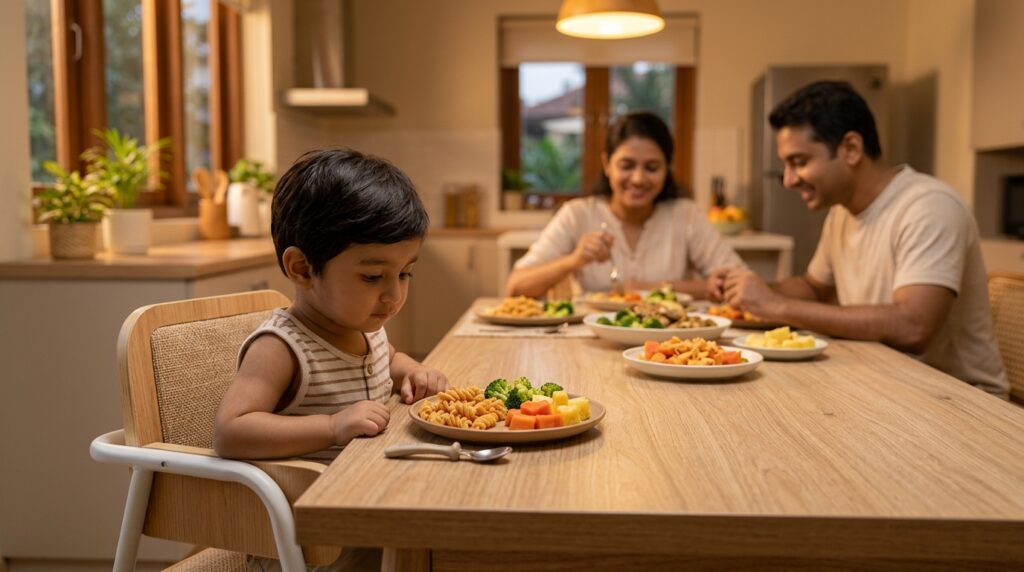
You cooked a decent meal, set it down, and your toddler pushed the plate away, said “No!” and asked for crackers. If this happens most nights, you are not alone. Food refusal is one of the most common feeding complaints parents bring to pediatricians, and in most cases it is a normal part of toddler development rather than a sign that something is wrong.
This guide explains why toddlers refuse dinner, how much they really need to eat, and what to do instead of pleading, bargaining or offering dessert as a reward.
Why Toddlers Refuse Dinner
- Growth slows down. Babies grow extremely fast in their first year. After that, growth slows, and appetite often drops with it. Many parents are surprised by how little a healthy toddler eats on some days.
- Appetite varies from day to day. Toddlers may eat a lot at breakfast and almost nothing at dinner, or eat well one day and pick the next. Across a week, intake usually balances out.
- Fear of new foods. Wariness of unfamiliar foods, sometimes called food neophobia, tends to rise in the toddler years. It is a normal stage, not stubbornness.
- Too many snacks or drinks. Milk, juice and snacks in the late afternoon can leave little room for dinner.
- Tiredness. By early evening, many toddlers are simply too tired to eat well.
- Independence. Saying no to food is one of the few areas where a toddler has real control. Pressure tends to make refusal stronger.
The Approach Most Feeding Experts Recommend
Many pediatricians and dietitians recommend a framework developed by dietitian and family therapist Ellyn Satter, called the division of responsibility in feeding. It splits the job clearly:
- The parent decides what food is served, when it is served and where it is eaten.
- The child decides whether to eat and how much to eat from what is offered.
This sounds simple, but it changes the whole dynamic. Your job is not to get a certain number of bites into your child. Your job is to offer good food at predictable times in a pleasant setting. Your child’s job is to listen to their own hunger. When parents stop pushing, many children gradually eat more and try more foods.
What to Do When Your Toddler Refuses Dinner
1. Always include one “safe” food
Put at least one food your child usually eats on the table at every meal, such as bread, rice, pasta, fruit or plain yogurt. This way there is always something they can eat without you cooking a separate meal.
2. Serve small portions
A large pile of food can be overwhelming for a toddler. Start with a spoonful or two of each item and let them ask for more. Toddler portions are much smaller than most adults expect.
3. Keep offering new foods without pressure
Research on children’s food preferences shows that repeated, low-pressure exposure is one of the most effective ways to increase acceptance. Children often need to see, touch and taste a new food many times, sometimes 10 or more, before they accept it. Put a small amount on the plate, eat it yourself, and do not comment if it is left untouched.
4. Set a predictable meal and snack schedule
Most toddlers do well with three meals and two or three planned snacks, spaced about 2 to 3 hours apart. Avoid all-day grazing and large drinks of milk or juice in the hour or two before dinner so your child comes to the table with an appetite.
5. Avoid bribes, rewards and punishments
“Two more bites and you can have dessert” teaches children that vegetables are something to get through and dessert is the prize. Many feeding experts suggest serving a small dessert alongside the meal occasionally, or simply not making it conditional on eating.
6. Keep meals short and pleasant
Twenty to thirty minutes is usually enough. If your child has stopped eating and is getting restless, let them leave the table and end the meal calmly. Do not offer a replacement meal or snack right after; the next planned snack or meal is the next chance to eat.
7. Eat together when you can
Children learn by watching. Seeing parents and siblings eat a variety of foods is one of the strongest influences on what children eat over time. Our article on why family dinners matter covers the research.
8. Involve your toddler in small ways
Toddlers can wash vegetables, tear lettuce, stir, or choose between two vegetables at the store. Children are often more willing to taste food they helped prepare.
9. Try an earlier dinner
If your toddler is regularly falling apart at dinner, the timing may be the problem. Serving dinner 30 minutes earlier, or making the after-school snack more substantial and dinner lighter, can help.
A Quick Safety Note
When offering new foods, keep choking risks in mind. For children under 4, cut round foods such as grapes and cherry tomatoes into quarters, avoid whole nuts, popcorn and hard raw vegetables, and always have your child sit down to eat with an adult present.
When to Talk to Your Pediatrician
Most picky eating is normal. Contact your child’s doctor if your child is losing weight or dropping on their growth chart, has very low energy, eats fewer than about 15 to 20 foods in total, gags, chokes or vomits regularly while eating, has ongoing constipation, diarrhea or stomach pain, or if mealtimes are causing significant distress for your child or family. These can be signs of a medical issue or a feeding disorder that benefits from professional help.
Frequently Asked Questions
Should I make my toddler a separate meal?
Generally no. Cooking separate meals can make picky eating last longer. Instead, include one safe food at every family meal so your child always has something they can eat.
Is it okay if my toddler eats nothing at dinner?
Yes, occasionally. A healthy toddler who skips dinner will usually make up for it at breakfast or over the next day or two. Offer the next planned meal or snack as usual.
Should I hide vegetables in other foods?
Adding vegetables to sauces or baking can increase nutrition, and there is nothing wrong with it. Just keep offering vegetables in their recognizable form too, so your child keeps getting the exposure they need to learn to like them.
My toddler only wants milk. Is that a problem?
Too much milk can fill toddlers up and reduce their appetite for food. If your child drinks a lot of milk and eats very little, talk to your pediatrician about how much milk is appropriate for their age.
The Bottom Line
A toddler who refuses dinner is usually a normal toddler. Appetite drops after the first year, varies from day to day, and wariness of new foods is a typical stage. The most effective approach is calm and consistent: you decide what, when and where; your child decides whether and how much. Include a safe food, serve small portions, keep offering new foods without pressure, avoid bribes, and keep meals short and pleasant. For more picky-eater help, see our guide to healthy lunch box ideas for picky eaters.
Sources
- Ellyn Satter Institute. The Division of Responsibility in Feeding.
- Satter, E. (2007). Eating competence: definition and evidence for the Satter Eating Competence Model. Journal of Nutrition Education and Behavior, 39(5 Suppl), S142–S153.
This article is for general information only and is not a substitute for advice from your pediatrician or a registered dietitian.