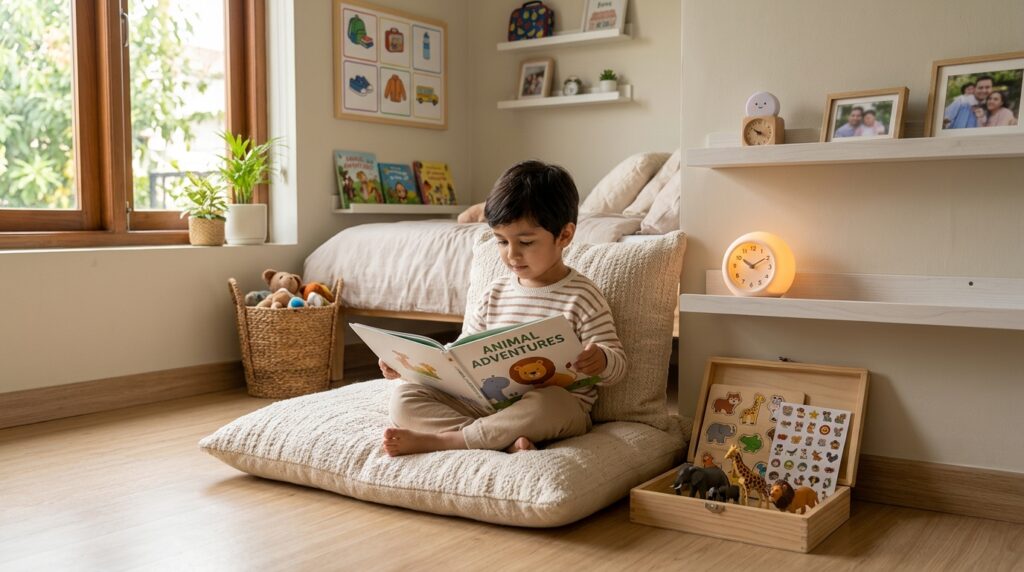
The day your child drops their nap can feel like losing your only break. Suddenly there is no quiet hour in the afternoon, your preschooler is cranky by 5pm, and you have nowhere to fit a phone call, a shower or a cup of coffee. Quiet time is the answer many families use: a daily stretch of calm, independent rest in a room, without the expectation of sleep.
This guide explains when children typically drop naps, why quiet time still helps, and exactly how to set it up so it actually works.
When Do Kids Stop Napping?
Most children move from two naps to one sometime between about 12 and 18 months, and most drop their last nap somewhere between ages 3 and 5. There is a wide normal range. Some 3-year-olds still need a long nap every day, while others stop before their third birthday.
According to the American Academy of Sleep Medicine, children aged 3 to 5 need 10 to 13 hours of sleep in total per 24 hours, including naps. If your child is getting that at night and is cheerful through the late afternoon, they may be ready to stop napping. Common signs include:
- Regularly taking a long time to fall asleep at nap time, or not falling asleep at all
- Bedtime getting much later on days they nap
- Waking very early in the morning after a nap day
- Staying in a good mood through the afternoon on days without a nap
Why Quiet Time Still Matters
- A reset for busy brains. Preschoolers spend all day learning, moving and managing big feelings. A calm hour lowers stimulation and can make late afternoons smoother.
- A chance to fall asleep if they need it. During the transition, many children nap on some days and not others. Quiet time leaves the door open.
- Practice playing independently. Learning to entertain themselves for a stretch is a valuable skill. (See our guide to encouraging independent play.)
- A break for parents. Rested parents are more patient parents. That is a good enough reason on its own.
How to Set Up Quiet Time: Step by Step
1. Pick a consistent time
Keep quiet time at roughly the same time the nap used to happen, usually right after lunch. A predictable spot in the day makes it part of the routine rather than a negotiation.
2. Choose a safe space
Your child’s bedroom is the most common choice. Make sure the room is fully childproofed, since your child will be playing without direct supervision: furniture anchored to the wall, cords and blind strings out of reach, and no small objects for children who still put things in their mouths.
3. Start short and build up
Begin with 15 to 20 minutes, then add 5 to 10 minutes every few days. Many families work up to 45 to 60 minutes for preschoolers. Starting too long is one of the most common reasons quiet time fails.
4. Use a visual clock or timer
Young children cannot tell time, so “stay in your room for an hour” is meaningless. A toddler clock that changes color when quiet time is over, or a simple visual timer, tells them when they are done without needing to call you.
5. Prepare quiet time bins
Fill two or three small boxes with calm, independent activities and rotate them so they stay interesting. Ideas:
- Board books and picture books, or audiobooks on a simple player
- Puzzles with a manageable number of pieces
- Stickers and paper, or a sticker activity book
- Lacing cards or large beads to thread (for children past the mouthing stage)
- Small figures, animals or dolls for pretend play
- Building blocks or magnetic tiles
- A water-reveal coloring book (less mess than markers)
Keep the bins for quiet time only, so they feel special. Our toy rotation guide explains why novelty helps children stay engaged.
6. Set simple rules
Keep the rules short and the same every day: “Quiet time means you stay in your room and play quietly. You can rest on your bed or play with your bin. When the clock turns green, quiet time is over.” Explain that they can always come and get you if they need the bathroom or are hurt.
7. End on a positive note
When quiet time is over, greet your child warmly, notice what they did (“You built a big tower!”), and move into a snack or outdoor time. A positive ending makes tomorrow easier.
What About Screens During Quiet Time?
It is tempting to use a show to keep the peace. Screens can work in a pinch, but they tend to turn quiet time into screen time and make it harder for a tired child to fall asleep if they need to. Audiobooks, quiet music or story podcasts made for children are good screen-free alternatives that still help children settle.
Common Quiet Time Problems
“My child keeps coming out of the room”
Calmly walk them back with as few words as possible: “It’s still quiet time. The clock isn’t green yet.” Shorten quiet time temporarily if needed, then build back up. Consistency over a couple of weeks matters more than any single day.
“They say they’re bored”
That is okay. A little boredom often leads to creative play. Make sure the bins are rotated, and add one new or rarely used item to each.
“They fall asleep and then won’t go to bed at night”
If your child dozes off late in quiet time, try waking them after 30 to 45 minutes, or move quiet time a little earlier. On days they do nap, a slightly later bedtime may be fine.
“Late afternoons are a meltdown”
Children who have just dropped their nap are often tired by early evening. An earlier bedtime for a few weeks, sometimes by 30 to 60 minutes, often helps during the transition.
Frequently Asked Questions
How long should quiet time last?
Aim for 30 to 60 minutes for preschoolers, starting shorter and building up. School-age children on weekends or holidays can still benefit from 30 minutes of quiet reading or play.
What age should quiet time start?
Many families start when their child begins skipping naps, often between ages 2 and a half and 4. You can also introduce a short quiet time while your child is still napping on some days.
Can siblings have quiet time together?
It is usually easier in separate spaces, because siblings together tend to play actively. If they must share a room, give each child their own bin and spot.
The Bottom Line
Dropping the nap does not have to mean losing the afternoon break. Quiet time gives children a calm reset, leaves room for sleep on days they need it, builds independent play skills, and gives you a breather. Keep it at the same time every day, start short, use a visual clock, prepare a few special quiet time bins, and stay consistent. For more on keeping daily rhythms steady, see our guides to family routines and toddler bedtime routines.
Sources
- Paruthi, S., et al. (2016). Recommended amount of sleep for pediatric populations: a consensus statement of the American Academy of Sleep Medicine. Journal of Clinical Sleep Medicine, 12(6), 785–786.
- American Academy of Sleep Medicine. Child Sleep Duration Health Advisory.
This article is for general information only and is not a substitute for advice from your pediatrician.