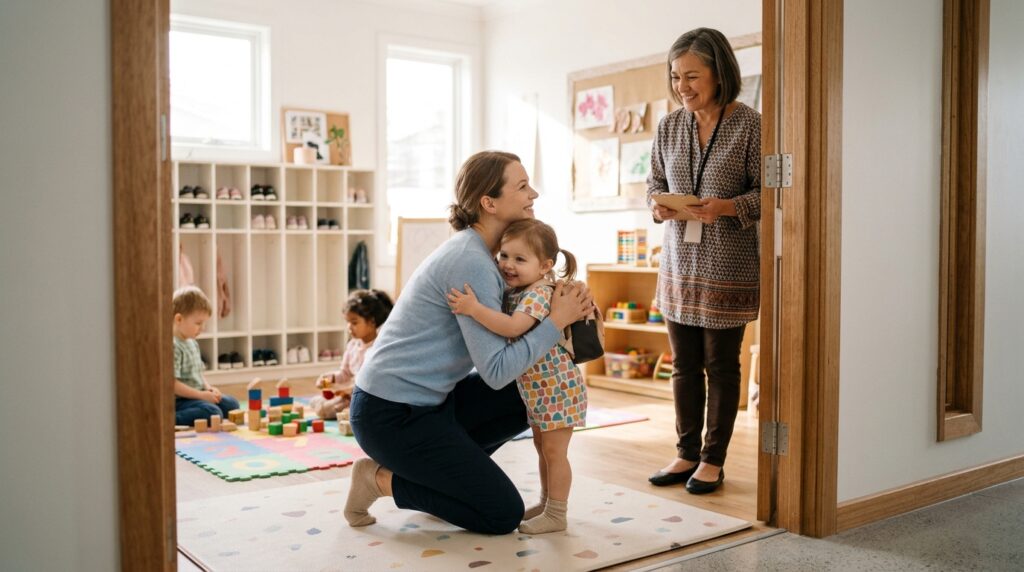
Your toddler clings to your leg, sobs as you hand them over, and the teacher has to gently peel them off while you walk out feeling terrible. Daycare drop-off tears are one of the hardest parts of the day for many parents. They are also extremely common, and in most cases they are a sign of a healthy, secure attachment rather than a sign that something is wrong.
This guide explains why separation anxiety happens, what helps at drop-off, what tends to make it worse, and when it might be more than a normal phase.
What Is Separation Anxiety?
Separation anxiety is the distress young children feel when they are apart from their main caregivers. According to Nemours KidsHealth, it often appears around the first birthday, commonly between about 8 months and 1 year, and some children have a later wave between about 18 months and 2 and a half years. Some children barely show it at all.
It develops because babies learn that people still exist when they cannot see them, but they do not yet understand time. A toddler knows you are gone, but cannot yet understand that you will definitely come back after lunch. That uncertainty is frightening.
Changes and stress can make it stronger, including a new caregiver, a new sibling, a move or tension at home. Being tired, hungry or unwell also makes separations harder.
Before Daycare Starts
- Visit together first. Spend time at the new daycare with your child before their first full day, so the room, toys and teachers feel familiar.
- Practice short separations. Leave your child with a trusted relative or sitter for short periods and build up gradually.
- Start gradually if you can. A few shorter days in the first week can make the transition easier than jumping straight to full days.
- Read books about daycare and goodbyes. Picture books help children understand what will happen.
- Time it wisely. KidsHealth suggests, where possible, avoiding starting new childcare right at the peak of separation anxiety around 8 months to 1 year.
What Helps at Drop-Off
1. Create a short, predictable goodbye ritual
A special goodbye, such as two hugs, a high five and “See you after nap!”, gives your child a clear signal of what is about to happen. Do it the same way every day. Predictability is calming.
2. Keep goodbyes brief, warm and confident
Long, drawn-out goodbyes usually make tears last longer. Give your full attention for the goodbye, say it with a calm, confident voice, then go. If you look worried, your child will pick up on it.
3. Never sneak out
Slipping away while your child is distracted can feel kinder in the moment, but it often backfires. Children can become more anxious and clingy because they never know when you might disappear. Always say goodbye.
4. Once you say goodbye, leave
KidsHealth’s advice is simple: when you say you are leaving, mean it. Coming back in after a tearful goodbye usually makes the next separation harder.
5. Tell them when you will be back, in their terms
Toddlers do not understand “at 5 o’clock,” but they do understand routines. “I’ll pick you up after snack time” or “after your nap” is much more meaningful.
6. Always come back when you said
Following through every time builds trust. Your child learns that goodbyes are always followed by hellos.
7. Bring a comfort object
A small stuffed animal, a family photo or a piece of clothing that smells like home can help, if the daycare allows it.
8. Hand off to a familiar teacher
Ask a teacher your child knows to greet them and help them move into an activity. A smooth handoff to a trusted adult is often what calms a child fastest.
What Helps at Home
- Protect sleep. Tired children cry more at drop-off. A consistent bedtime routine makes mornings easier.
- Make mornings calm. Rushed, stressful mornings set everyone up for a harder goodbye. Our morning routine guide has practical ideas.
- Talk about the day. At pickup and at home, talk about what your child did, who they played with and what they ate. This helps daycare feel connected to home.
- Give extra connection time. A few minutes of focused, one-on-one play after pickup can help a child who has had a hard separation refill their tank.
How Long Do Drop-Off Tears Last?
Most children settle within a few minutes after their parent leaves, often much faster than parents expect. Ask the teacher to send a quick message or photo after drop-off for the first few days; it can be very reassuring to see your child playing happily ten minutes later.
For many children, tears fade over several days to a few weeks as the new routine becomes familiar. It is also common for separation anxiety to come back temporarily after holidays, illness or a big change at home.
When to Talk to Your Pediatrician
Separation anxiety in toddlers is normal. KidsHealth notes that intense separation anxiety that continues into the preschool or school years and interferes with daily life may be a sign of separation anxiety disorder. Talk to your child’s doctor if your child:
- Has panic symptoms before separations, such as vomiting, nausea or trouble breathing
- Has frequent nightmares about being separated from you
- Worries constantly that something bad will happen to you or to them
- Still cannot settle at daycare after many weeks
- Shows other changes, such as trouble sleeping, loss of appetite or seeming unhappy at home
Sudden, strong reluctance to go to a daycare your child previously enjoyed is also worth looking into, since it can sometimes point to a problem with the childcare setting itself.
Frequently Asked Questions
Is it bad that my toddler cries at daycare drop-off?
No. Crying at separation is a normal sign of attachment. What matters more is whether your child settles after you leave and seems happy during the rest of the day.
Should my partner do drop-off instead?
Sometimes, yes. Some children separate more easily from one parent than the other. If drop-offs with one parent are much smoother, it can help to switch for a while.
My child is fine at drop-off but melts down at pickup. Why?
This is very common. Children often hold it together all day and release their feelings when they see the person they feel safest with. Offer a snack, a hug and some quiet time after pickup.
The Bottom Line
Separation anxiety at daycare drop-off is normal, common and usually temporary. Prepare your child before daycare starts, use a short, predictable goodbye ritual, never sneak out, leave once you have said goodbye, and always come back when you promised. Protect sleep and calm mornings at home, and talk to your pediatrician if anxiety is intense or long-lasting. For more on daycare challenges, see our guide to toddler biting at daycare.
Sources
- Nemours KidsHealth. Separation Anxiety.
This article is for general information only and is not a substitute for advice from your pediatrician.