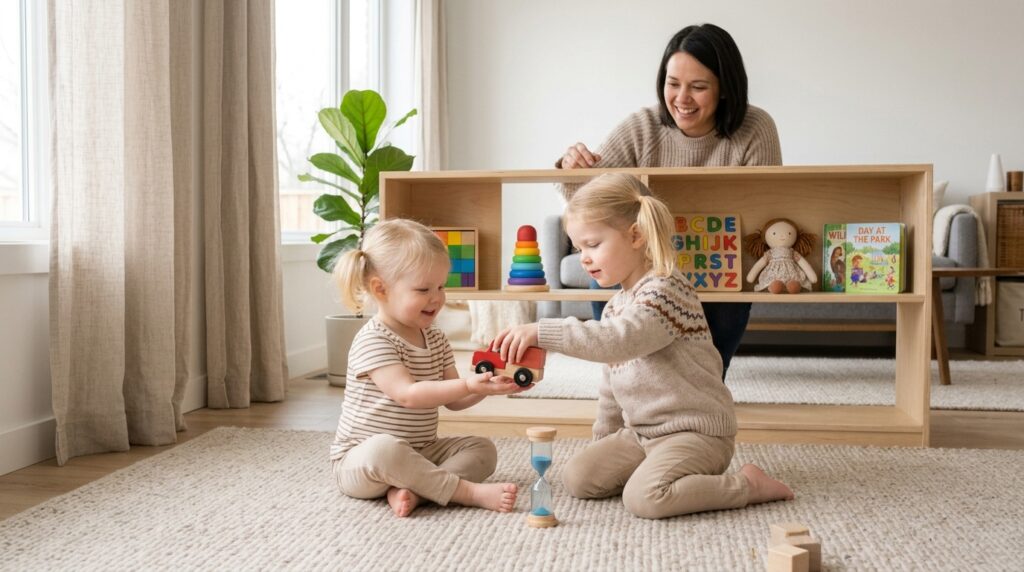
“Mine!” “I had it first!” “MOM!” If your kids fight over toys several times a day, you are living through one of the most universal parts of family life. Sibling conflict over possessions is especially common when children are close in age, and it often peaks when a younger sibling becomes mobile enough to grab an older child’s things.
The good news is that toy fights are also one of the best chances children get to practice sharing, negotiating and handling frustration. This guide explains why siblings fight over toys and gives you scripts, by age, for what to say when it happens.
Why Siblings Fight Over Toys
- Competition for attention. Pediatric sources such as Nationwide Children’s Hospital list competition for a parent’s attention as one of the main drivers of sibling rivalry. A fight brings an adult running.
- Different developmental stages. A 1-year-old does not understand ownership. A 4-year-old understands it very well. That gap guarantees conflict.
- Age and closeness. Children less than about two years apart, and same-sex siblings, tend to compete more.
- Limited words and self-control. Young children cannot yet say “I’m not finished, can you wait?” so they grab, push or scream.
- Fairness. Preschoolers and school-age children are very alert to anything that seems unfair.
- Tiredness, hunger and boredom. Most toy fights happen at predictable times: before meals, late afternoon, or after long stretches indoors.
When to Step In and When to Wait
Not every squabble needs an adult. Children learn negotiation by practicing it. A useful rule of thumb:
- Step in right away if anyone is being hurt or could be, if there is hitting, biting or throwing, or if one child is much younger and cannot defend themselves.
- Coach from nearby if voices are rising but no one is in danger. A few words from you can help them find a solution themselves.
- Stay out of it if they are bickering but working it out. Notice it later: “I saw you two figure out the train track together.”
What to Say: Scripts by Age
When one child is under 2
Babies and young toddlers grab because something looks interesting, not to be unkind. Protect the older child’s play and redirect the younger one.
- To the older child: “Your sister doesn’t understand yet. Let’s put your tower up on the table where she can’t reach.”
- To the younger child: “That’s Leo’s. Here’s your truck.” Then offer a similar toy.
Ages 2 to 4
This is the age of “Mine!” Children can begin to wait, but only for short periods, and they need help with the words.
- “You both want the red car. That’s hard. Ava had it first, so Ava’s turn now. Then Max’s turn.”
- “Max, you can say, ‘Can I have a turn when you’re done?'”
- “I’ll set the timer for three minutes. When it rings, it’s Max’s turn.”
Ages 5 and up
Older children can solve problems with less help. Your job is to set up the conversation rather than hand down a ruling.
- “It sounds like you both want the tablet. What ideas do you have so it feels fair to both of you?”
- “You two have five minutes to come up with a plan. If you can’t, the game goes on the shelf for now.”
- “I’m not going to decide who’s right. I’ll help you find something you can both live with.”
Strategies That Prevent Many Toy Fights
1. Let each child have a few “special” toys
Not everything has to be shared. Let each child choose a small number of special belongings that they never have to share, kept in a basket or shelf of their own. Knowing their most precious things are safe often makes children more willing to share everything else.
2. Use turns instead of forced sharing
Making a child hand over a toy the moment a sibling asks teaches that grabbing and crying work. Turn-taking (“When you’re finished, it’s his turn”) is clearer and feels fairer to both children. A visual timer makes turns concrete for young kids.
3. Have duplicates of the most-fought-over items
If the same toy causes fights every day, a second one can be worth it, especially for items like cups, ride-ons or a favorite type of car.
4. Give younger siblings their own play space
Older children building something detailed need a space a toddler cannot reach, such as a table or a different room. Protecting their work reduces resentment.
5. Keep fewer toys out
Fewer toys can sound like it would cause more fights, but a calm, uncluttered play area often makes play more focused and easier to share. Our guide to toy rotation for toddlers explains how to set this up.
6. Plan for the hard times of day
If fights always break out at 5pm, offer a snack earlier, start a quiet activity, or separate children for 20 minutes of independent play before dinner.
7. Give each child one-on-one time
Because competition for attention drives so much sibling conflict, even 10 minutes a day of undivided time with each child can reduce fighting. Let them choose the activity and keep phones away.
What Not to Do
- Do not always side with the younger child. Older siblings notice, and it builds resentment.
- Do not compare. “Why can’t you share like your brother?” makes rivalry worse.
- Do not try to figure out who started it. You usually cannot know, and it turns you into a judge. Focus on what happens next.
- Do not punish both children for everything. Blanket punishments can feel unfair to the child who was trying to cooperate.
If the Fight Turns Physical
Stop it calmly and immediately. Separate the children, check on the one who was hurt first, and use the same short words each time: “I won’t let you hit. Hitting hurts.” Once everyone is calm, talk about what they could do instead. For more on handling hitting at younger ages, see our terrible twos survival guide, and for holding limits without shouting, see how to discipline a toddler without yelling.
When to Get Help
Some sibling conflict is normal. Talk to your pediatrician or a family therapist if one child is regularly hurt or frightened, if one child is always the target, if fighting is constant and intense despite consistent responses, or if a child shows signs of stress such as regressing in toilet training, trouble sleeping or not wanting to be at home.
Frequently Asked Questions
Should I make my kids share everything?
No. Adults do not share everything either. A mix of shared toys, special personal toys and clear turn-taking is fairer and easier for children to follow.
My older child is always mean to the baby. Is that normal?
Some jealousy after a new sibling arrives is very common. Give the older child extra one-on-one time, involve them in small “big sibling” jobs, and protect their play space. If they try to hurt the baby, stay close and step in every time.
Will they grow out of it?
Fights over toys usually decrease as children develop language, patience and empathy, though conflict often shifts to other topics as they grow. Teaching problem-solving now helps them handle those later disagreements, too.
The Bottom Line
Siblings fighting over toys is normal, frequent and, handled well, a chance to learn real-life skills. Step in when someone could get hurt, coach rather than judge when they are arguing, use turns instead of forced sharing, let each child keep a few special things, and give each child time alone with you. Calm, consistent responses will not end every fight, but they make fights shorter and help children learn to solve problems on their own.
Sources
- Nationwide Children’s Hospital. Sibling Rivalry. Helping Hands patient education.
This article is for general information only and is not a substitute for advice from your pediatrician or a qualified family professional.